Moray Coast, Speyside Way and Dava Way Trails

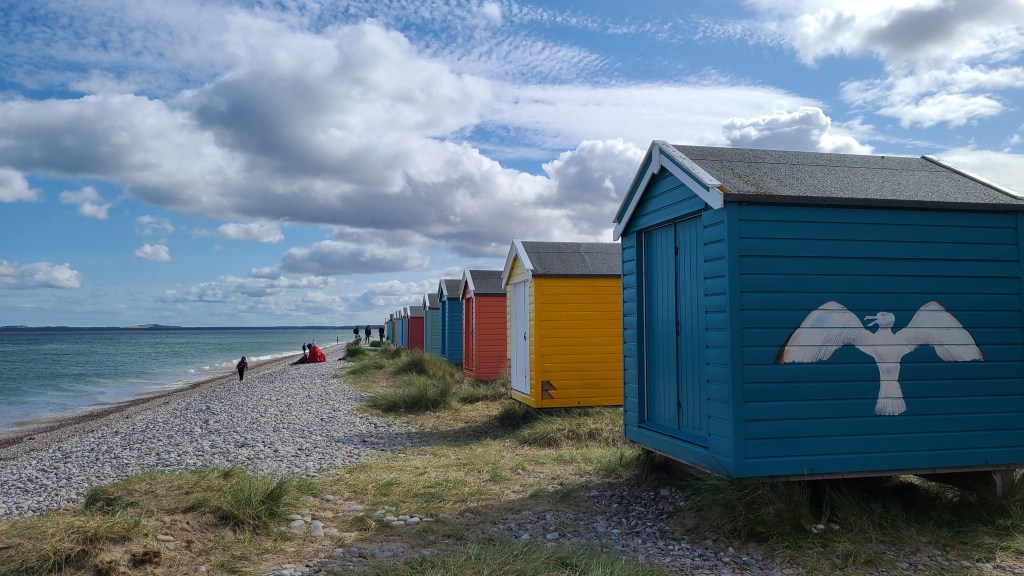
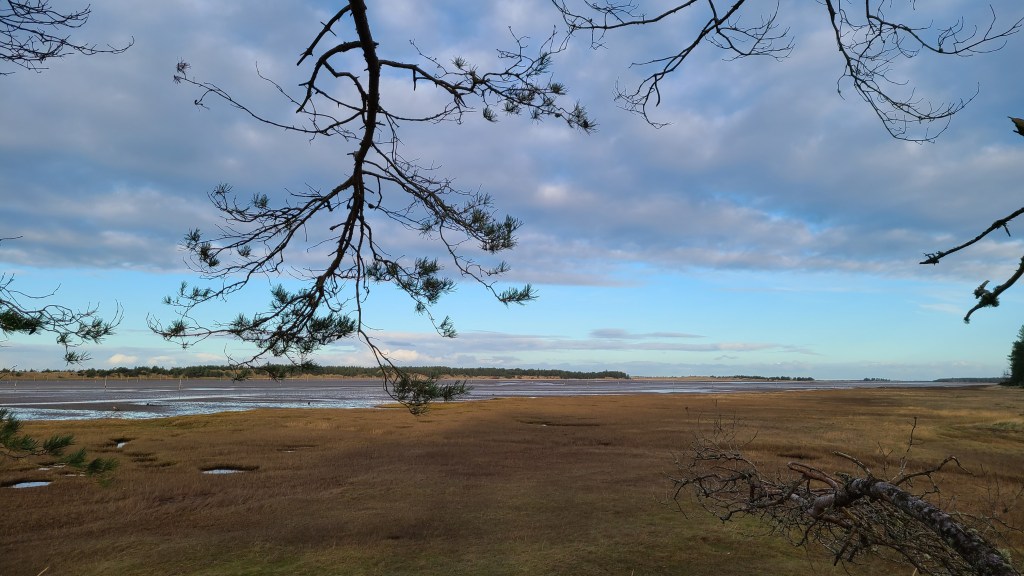
These are three well marked trails in the north east of Scotland providing easy walking at low levels and that are mostly doable all year round. Combining the trails creates a loop called the Moray Way. This page has an overview of each with some pictures from our hikes.

MCT -Moray Coast Trail, DW Dava Way, SW Speyside Way, Moray Link

In addition there are also short sections on sea kayaking along the Moray Coast and the ‘Moray Link’, an unmarked route that links the town of Forres to Inverness and thus connecting these trails up with the John O’ Groats Trail and Great Glen Way/South Loch Ness Trail.

Moray Coast Trail 74km

Speyside Way 138km

Dava Way 38km

Moray Link about 60km

Moray Coast sea kayaking

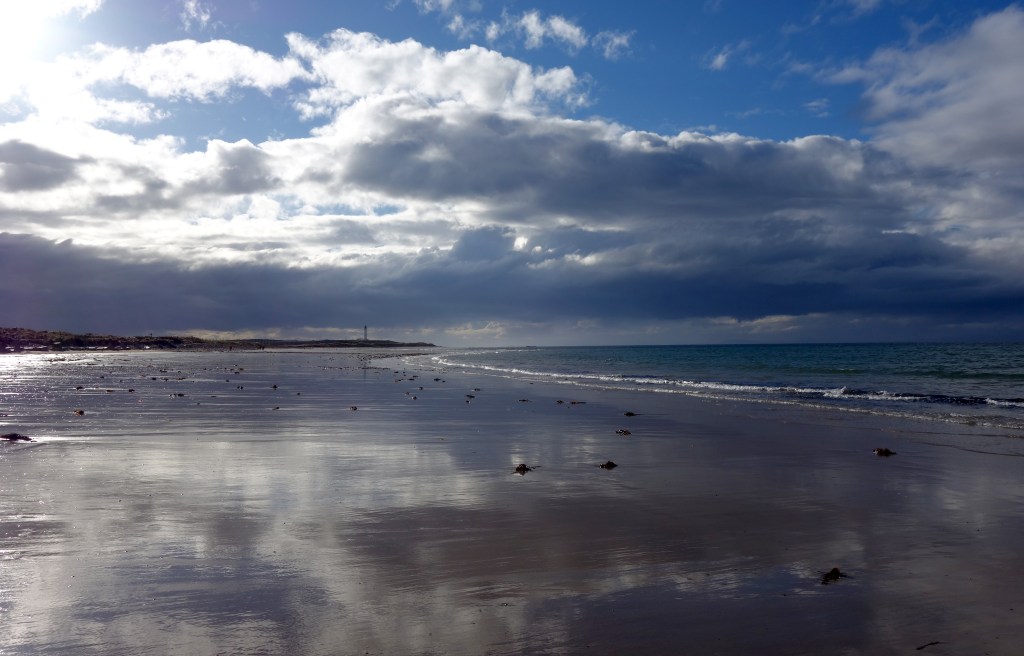
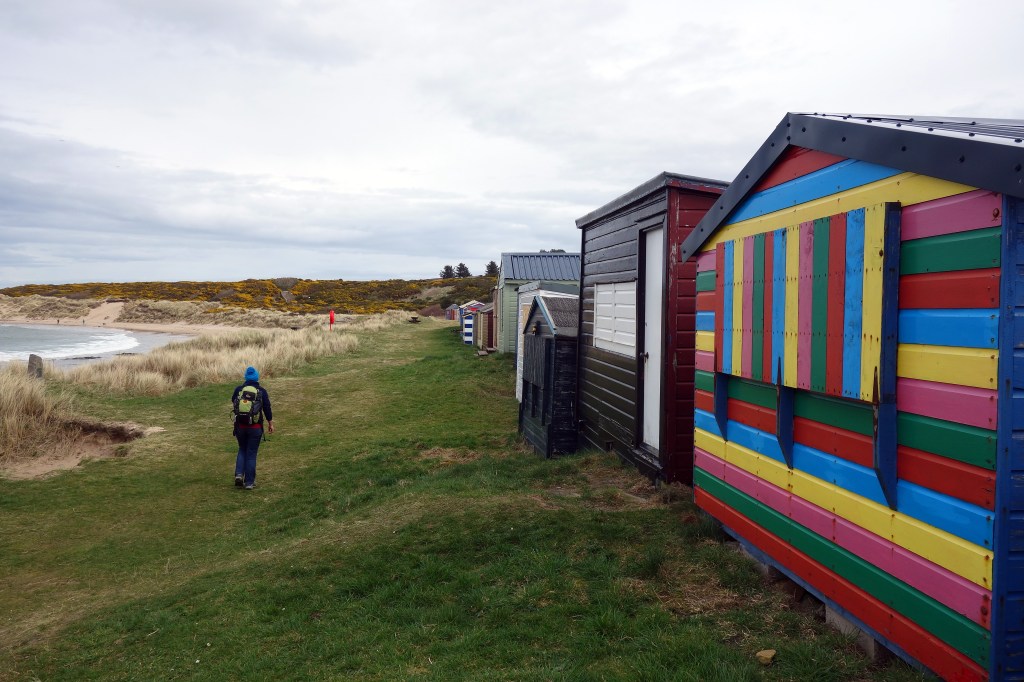
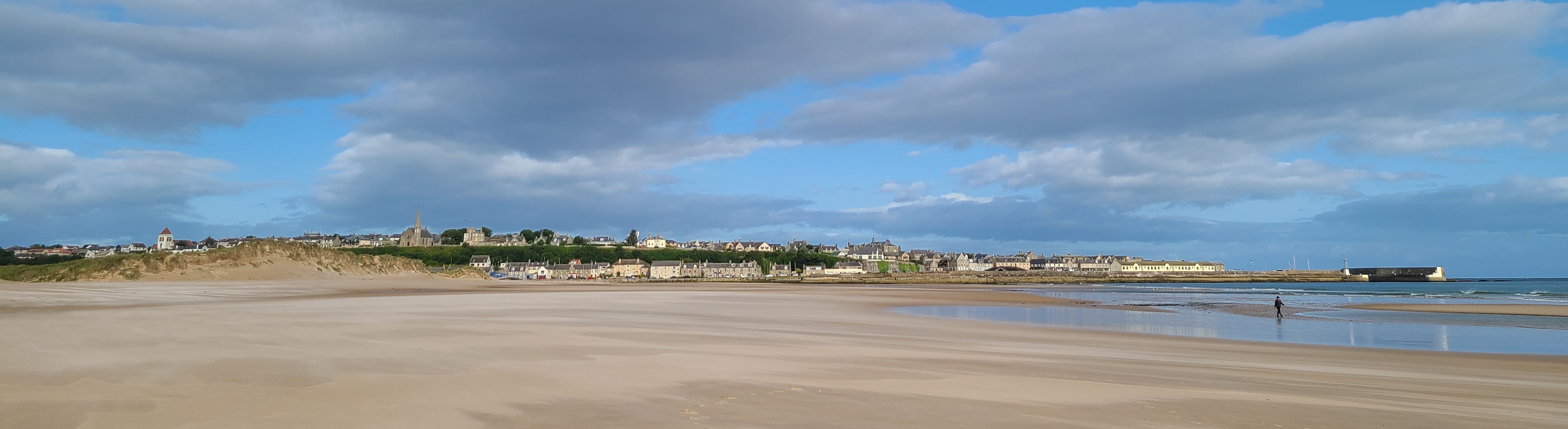
This is a pleasant flat hike along a coastline with plenty of beaches and towns and some beautiful cliff scenery. I have an ascent comparison of trails and this one comes out the flattest by some margin!

Walkhighlands has good descriptions, maps, gpx -splitting the trail into 4 days.

The weather on this coast tends to be drier than say the mountains in the west and it could be a good choice as a first or early backpack, given; the weather, quite a few towns along the way, it’s at sea level and on mostly well signposted trail. It could be possible to hike this through the winter too (if the short days don’t bother you).

Forres to Burghead 20.5km
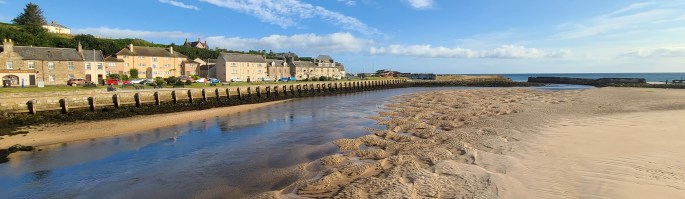
Burghead to Lossiemouth 14.5km
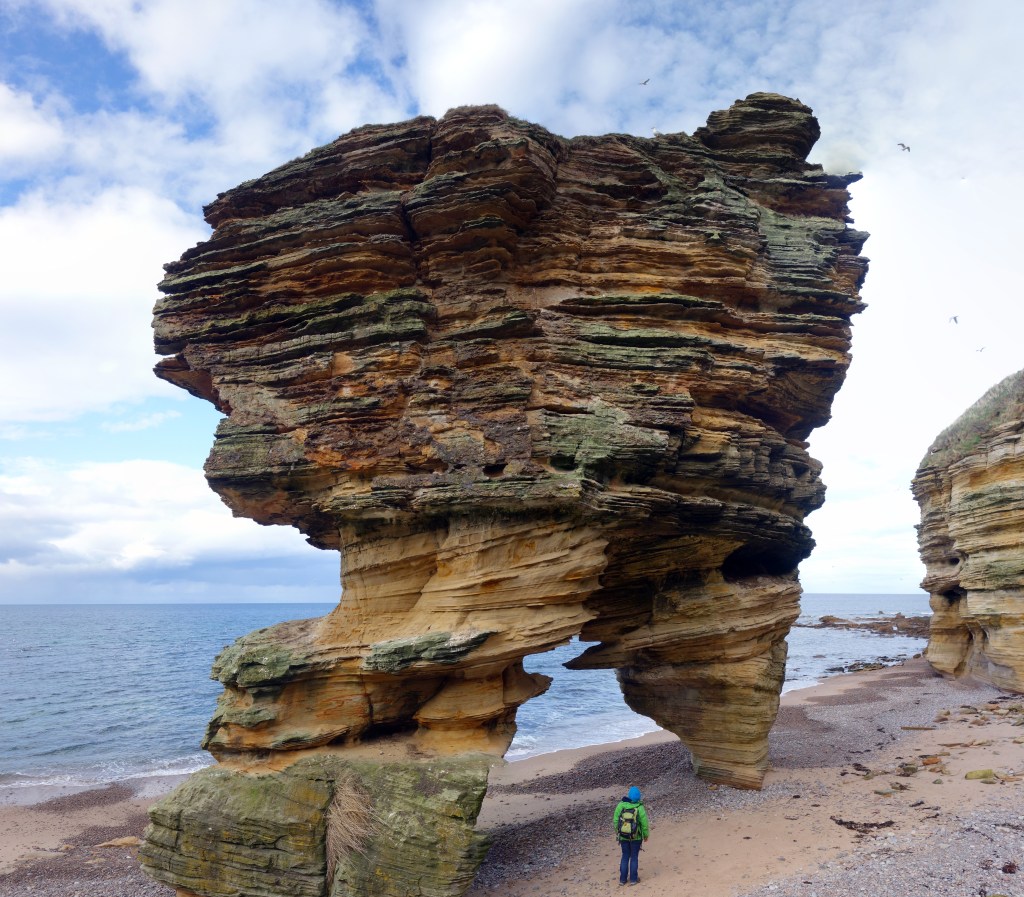
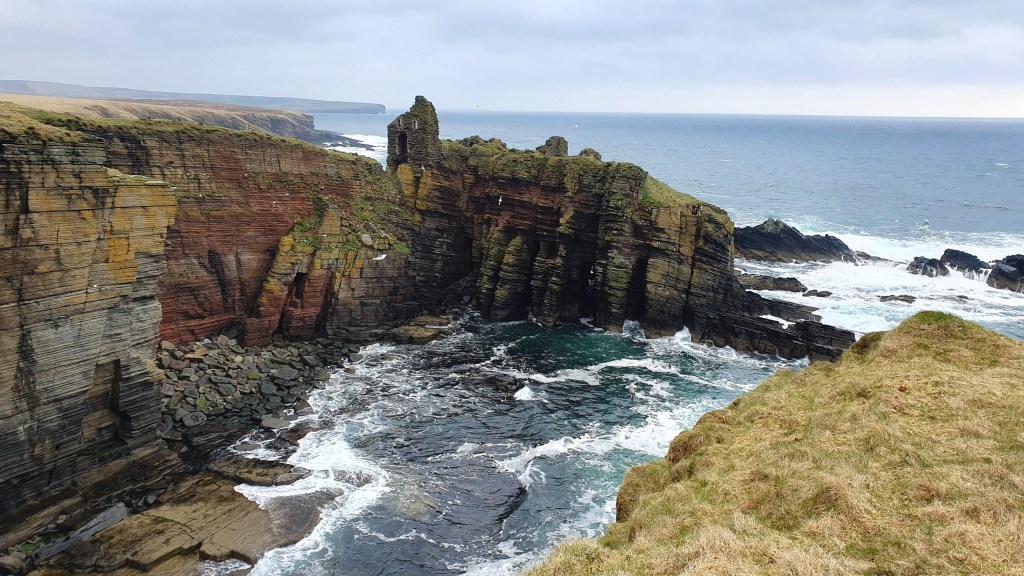
Arch near Cummingston (the trail itself is above on the field margins here, we dropped down at low tide onto the shore to walk past this and the coast cliffs)
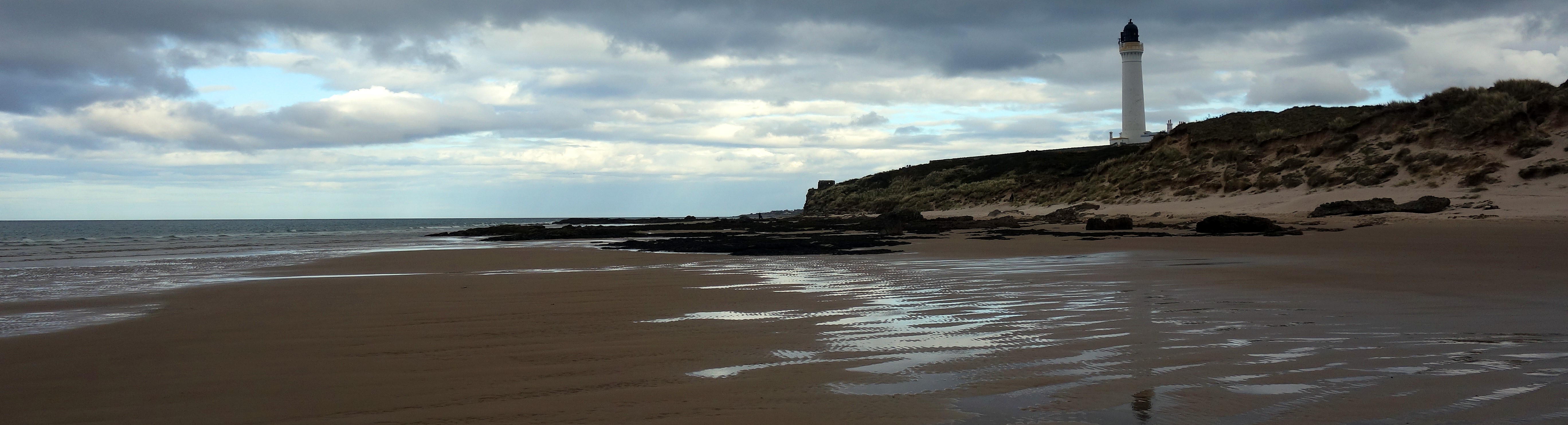
Covesea lighthouse

Lossiemouth to Buckie 25.25km

Buckie to Cullen 12km
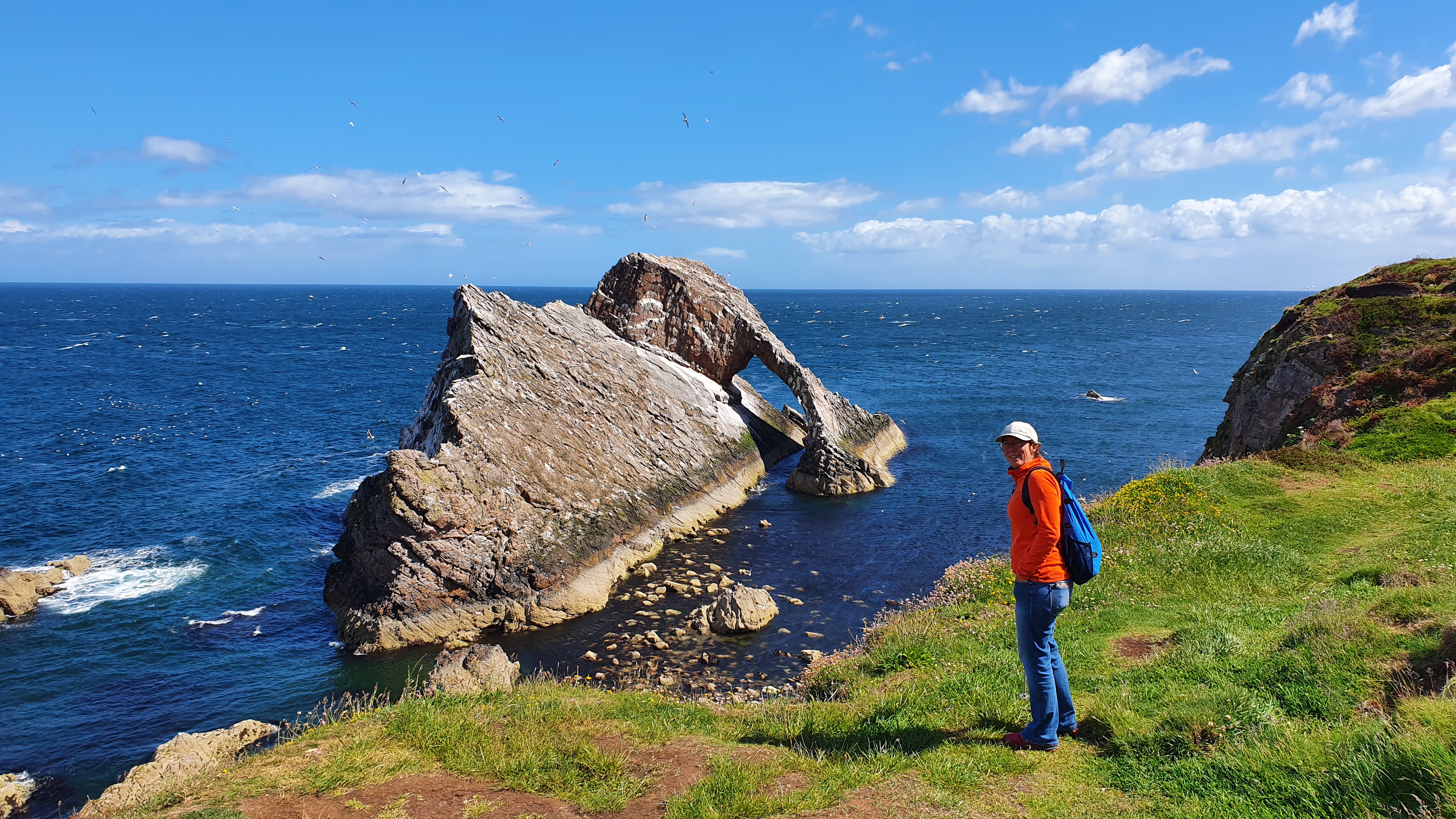
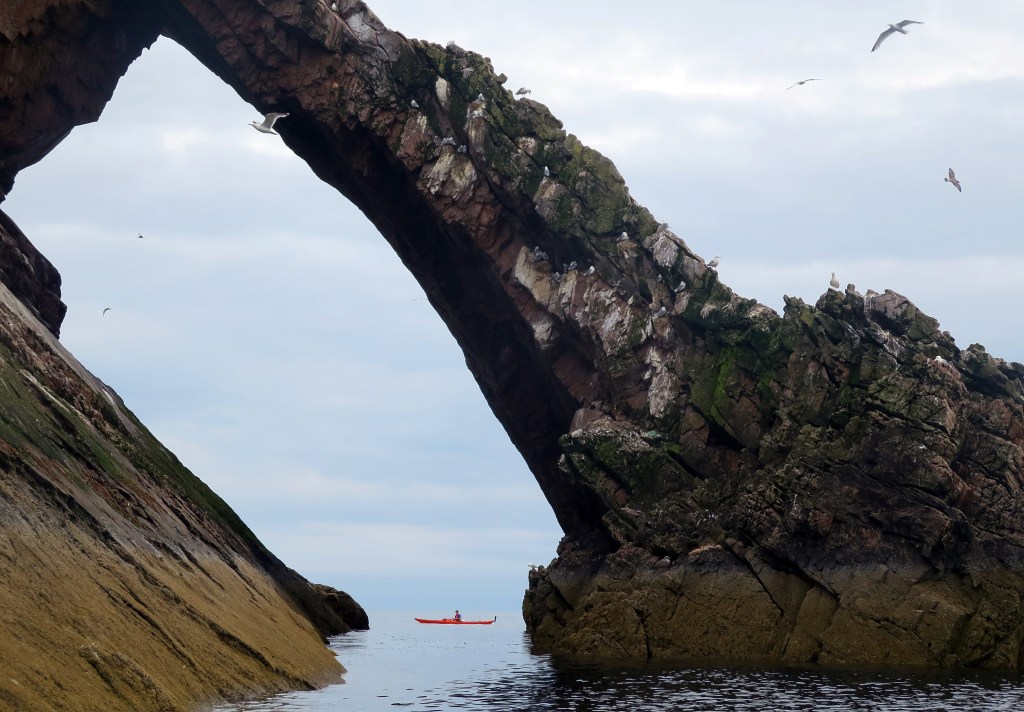
Bowfiddle rock
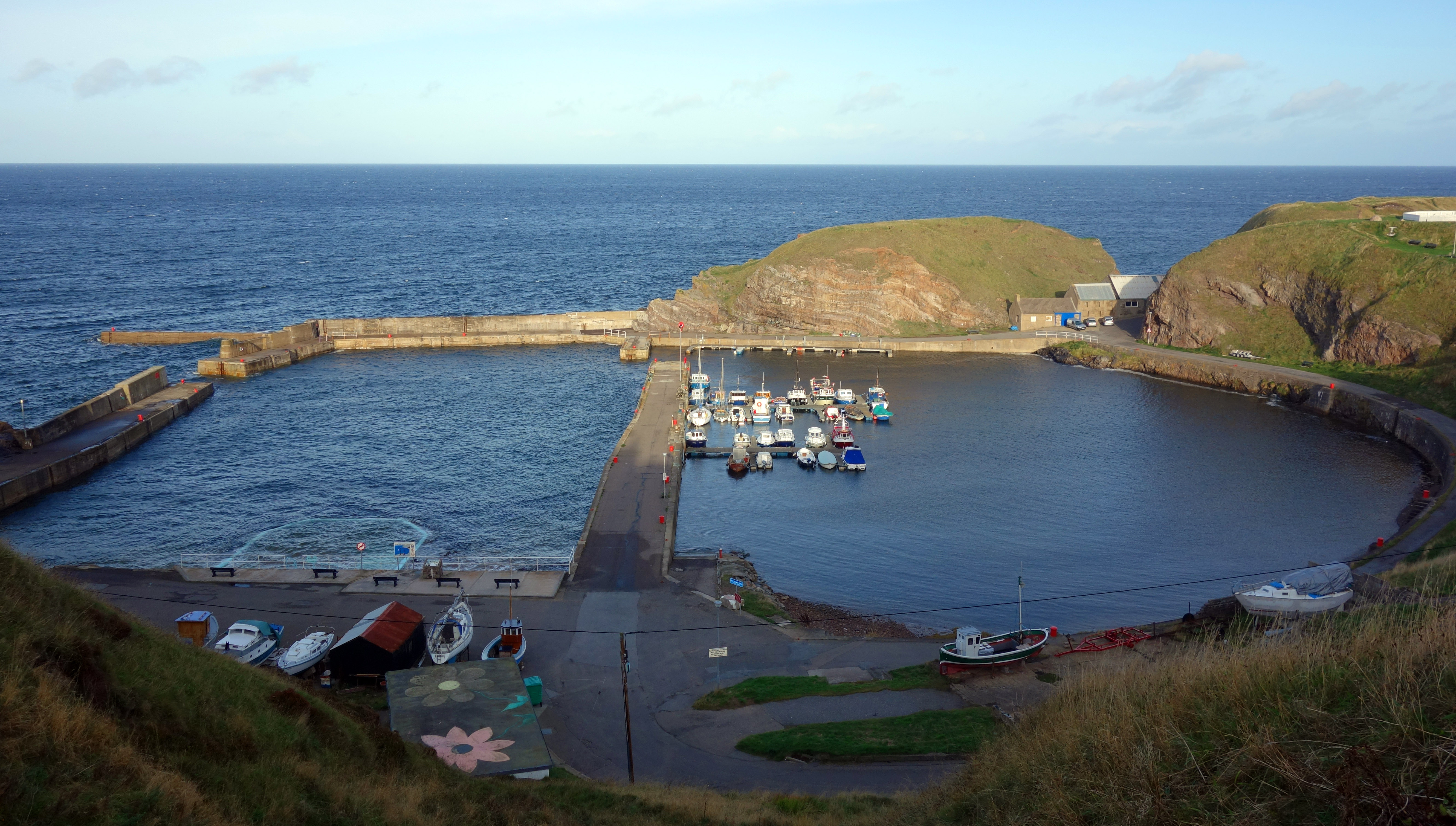
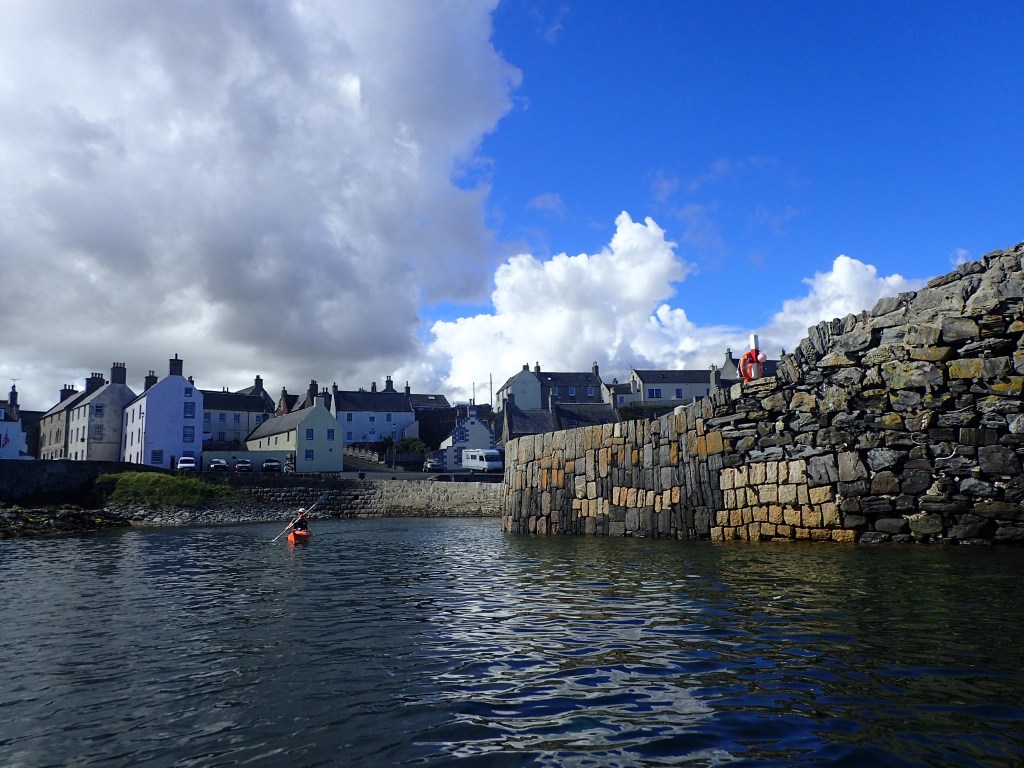
Portknockie harbour

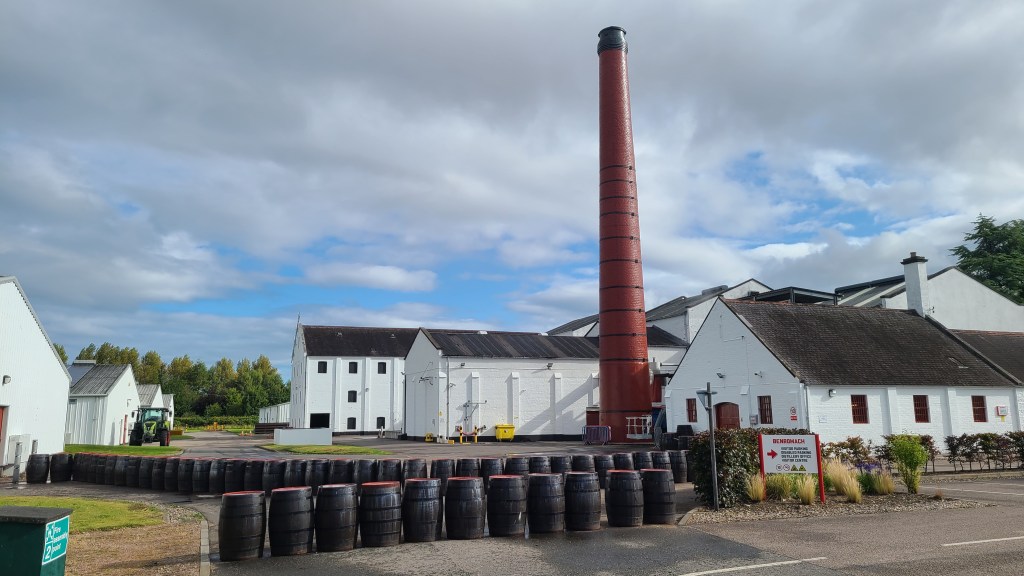
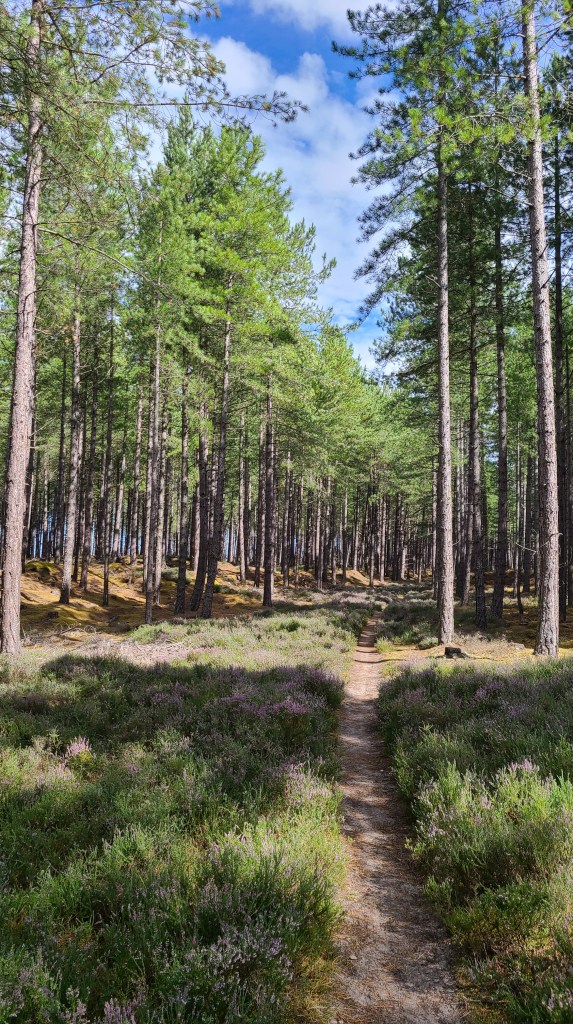
This trail takes you from the Moray Coast in the north roughly following the River Spey to Kingussie. Its very well sign posted and again is a fairly gentle walk with a good well made path. There are loads of whisky distilleries along the way too!

Walkhighlands has good descriptions, maps, gpx -splitting the trail into 8 days.
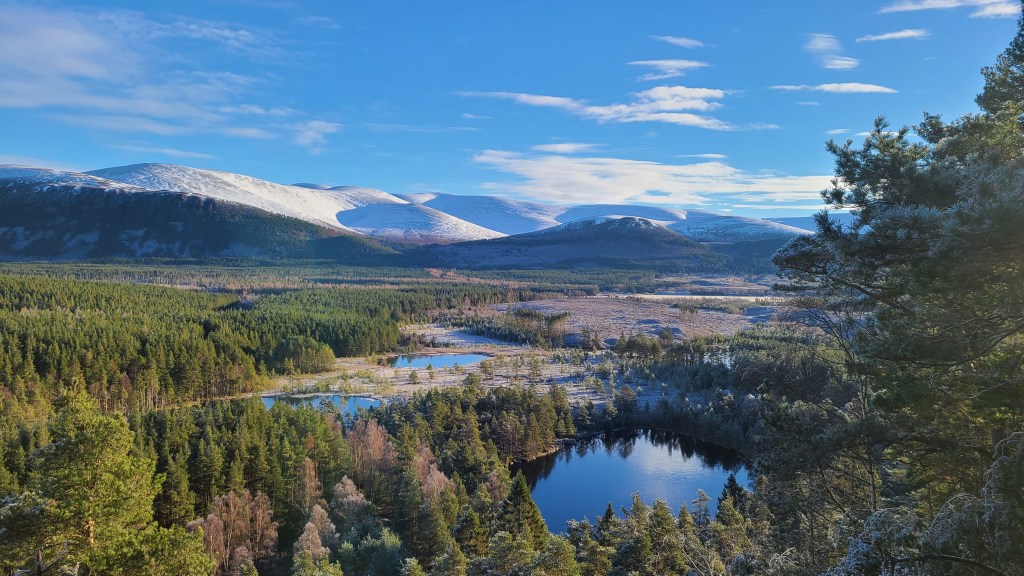
Uath Lochans between Kincraig and Kingussie

Dava Way 38km

This is a particularly gentle hike as it mostly follows an old railway line connecting the Speyside Way at Granton to the Moray Coast Trail at Forres. We have only done a short part of this route as part of a longer loop hike in the area.

Walkhighlands has good descriptions, maps, gpx -splitting the trail into 3 (short) days.

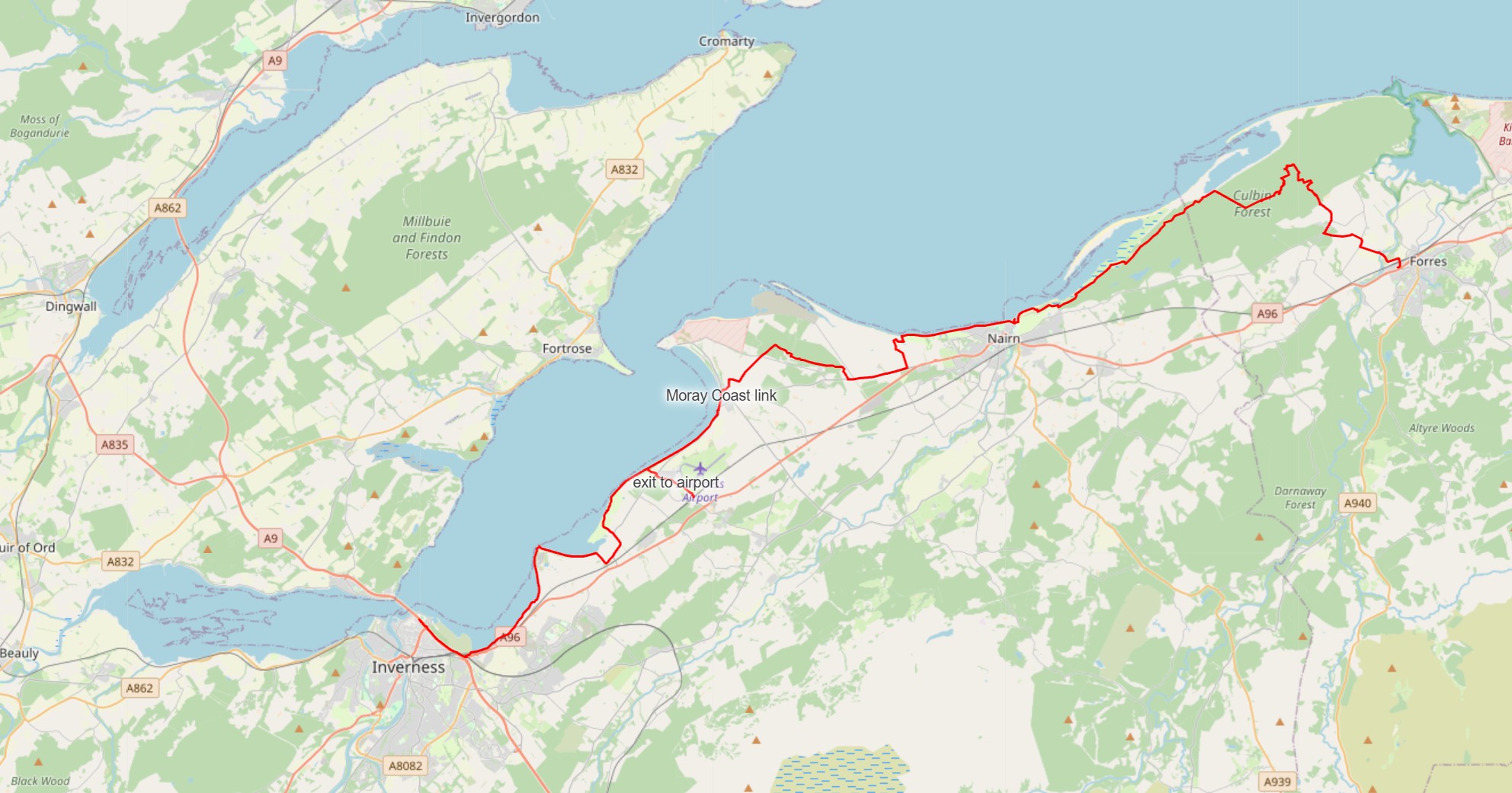
This is an unmarked route following the Moray coast that links the town of Forres to Inverness and thus connecting the Moray Coast Trail and Dava Way up with the John O’ Groats Trail and Great Glen Way/South Loch Ness Trail. I have split the walk into 2 stages below but it could also be done in 3 stages with a break at the village of Ardesier.

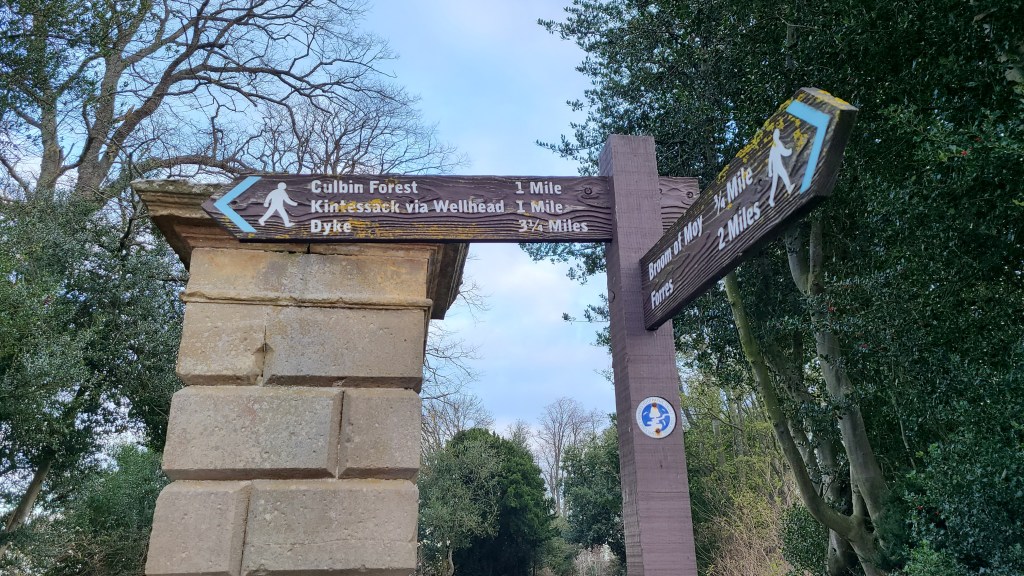
Forres to Nairn (about 22.5km)
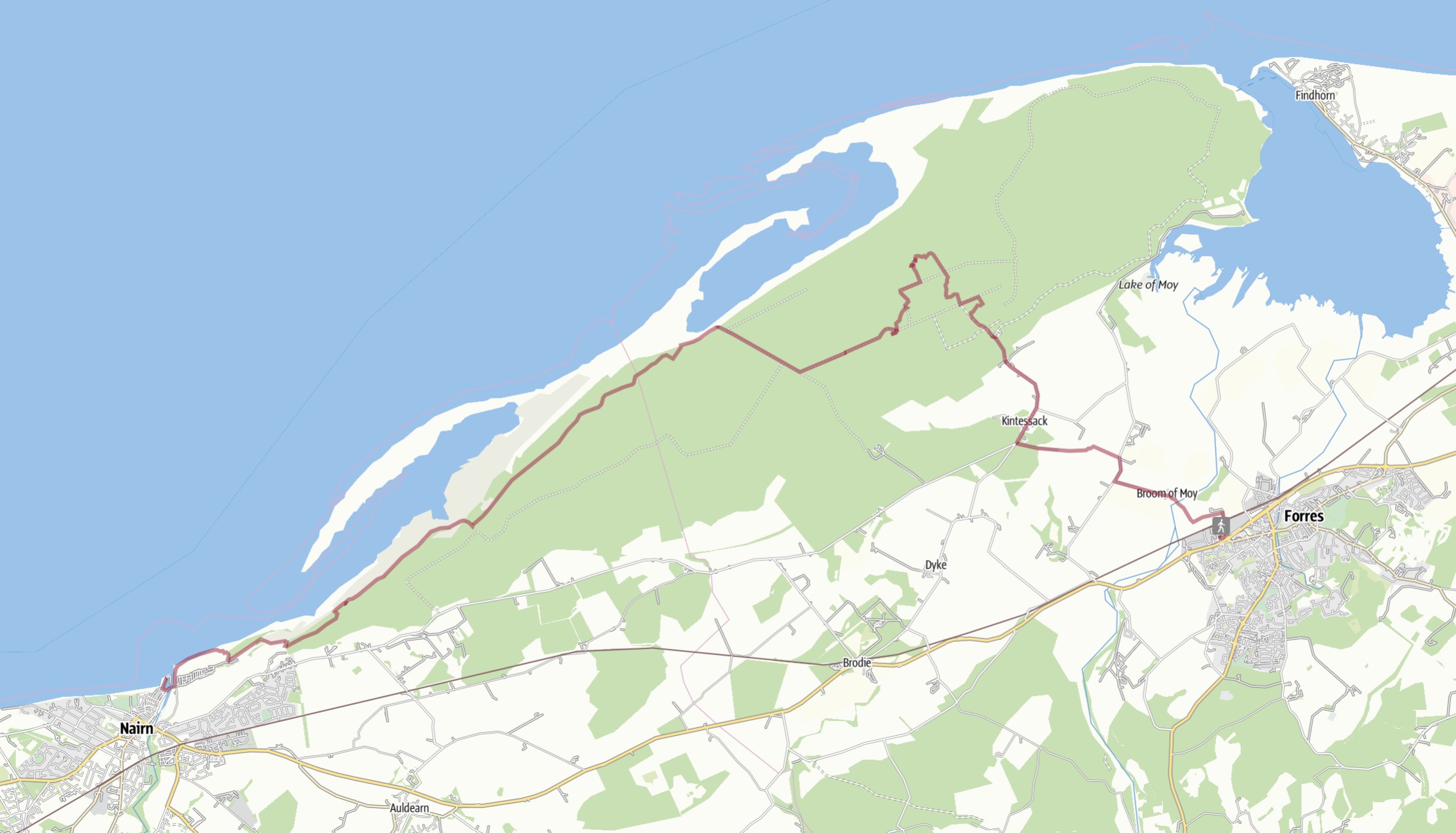
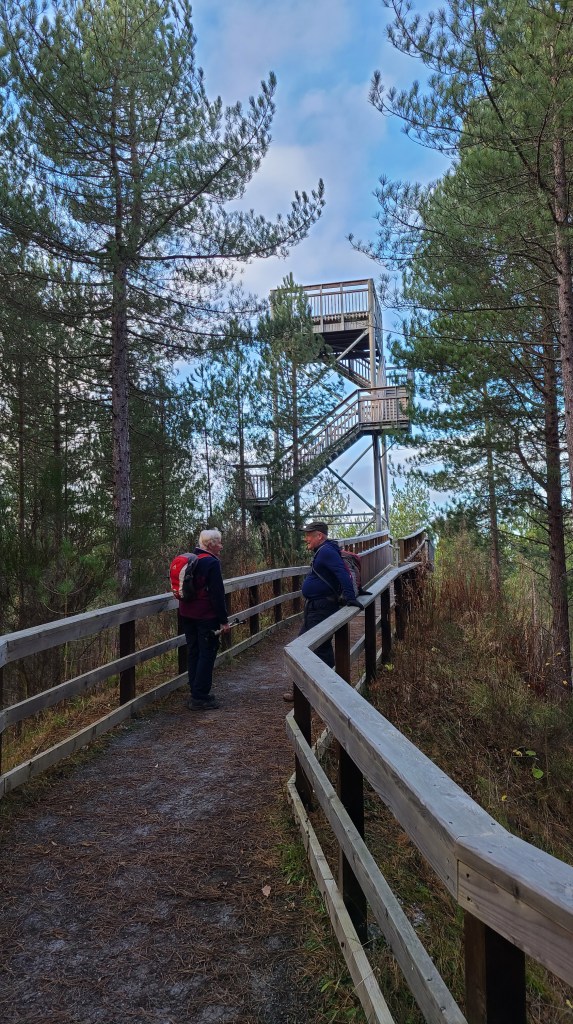
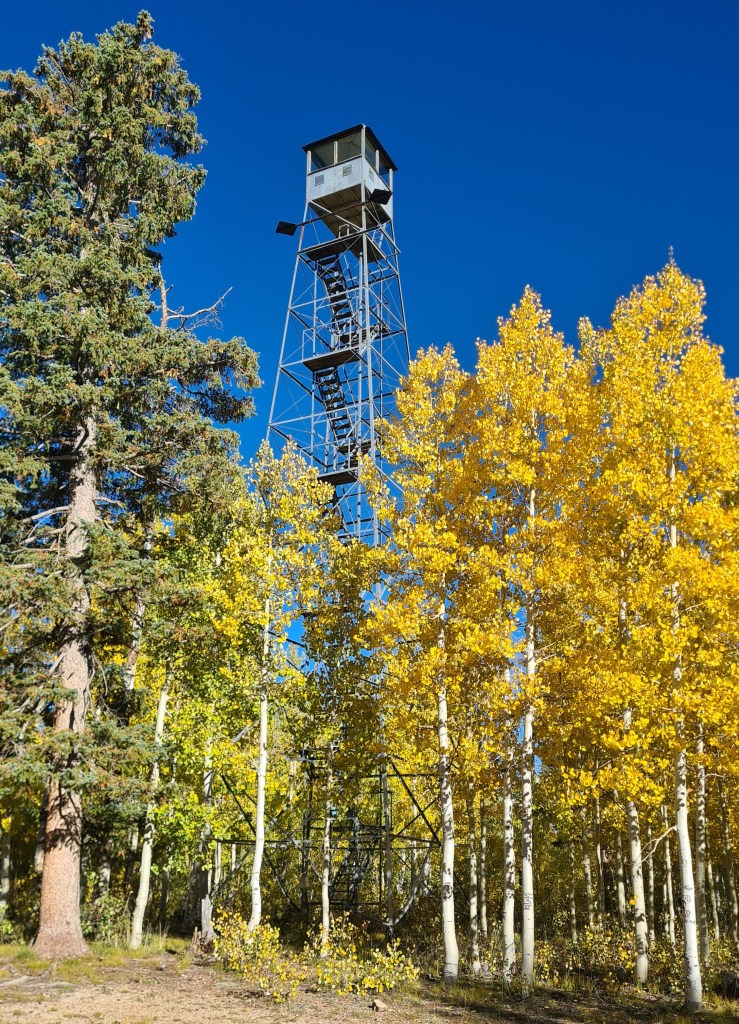
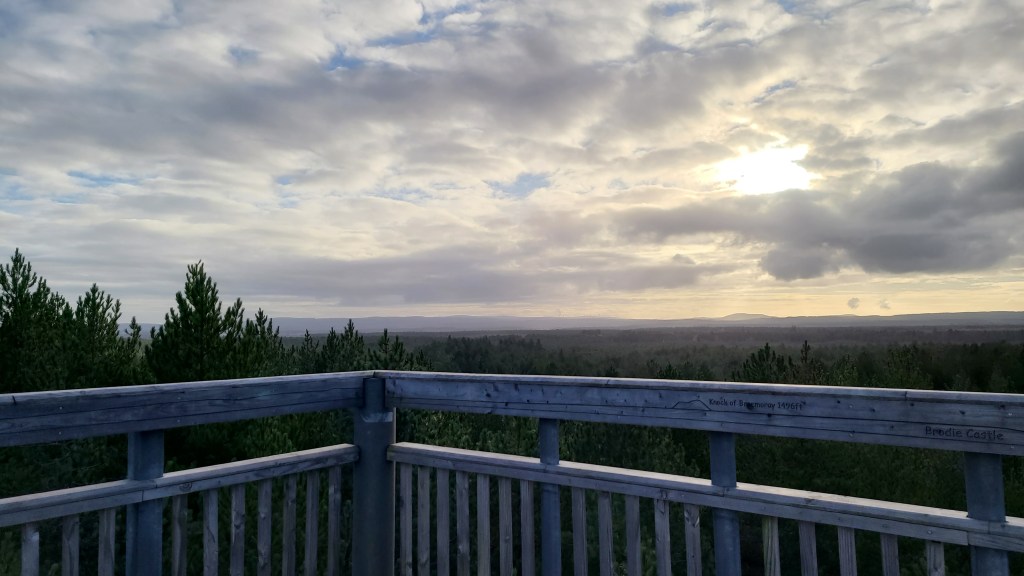
I think this is currently the better of the two stages where you can follow existing trails and forest tracks with some short minor roads. The map above shows the rough route we have taken but other options are available. Of note are the lookout tower in Culbin Forest providing good views above the forest canopy, and the hike along the edge of the saltmarsh in Culbin. Oh also take note that its pretty flat!

There are bus connections between Forres and Nairn.
Nairn to Inverness (about 34km)

This is a longer stage that could easily be split at the coastal town of Ardersier or at Inverness Airport (roughly halfway). There is accomodation and good transport links at both to Inverness, Nairn and beyond.

The route is mostly along the shore or on minor roads but also with occasional pleasant trail. The shore sections mean that it is best done at lowish tides.

The Google Map above shows a possible route Brian hiked and below is more detail for the eastern section between Nairn and Ardersier.
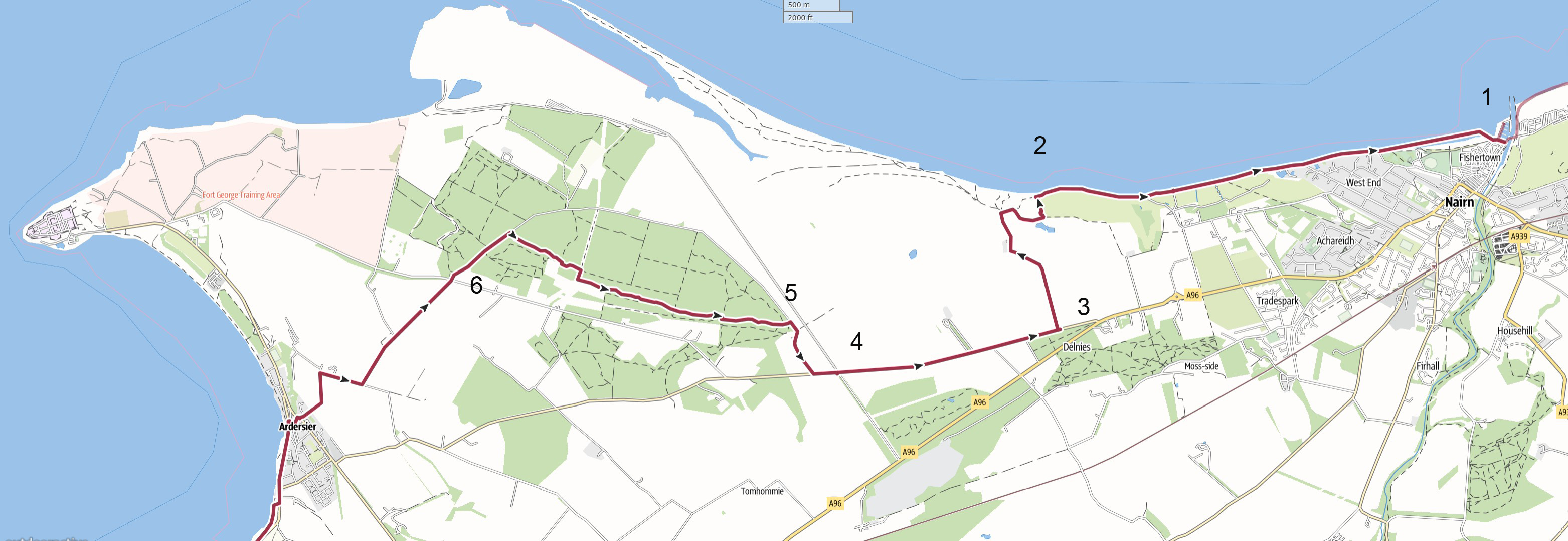
Nairn-Ardersier
  • 1 Nairn You can just walk the pavement west from the harbour. Brian walked the scenic beach along the golf course at the ouskirts of Nairn (but you can probably walk the edge of the golf course on grass at high tides).
  • 2 Hilton of Delnies Head inland southwards after the golf course to pick up a narrow vehicle lane to the B9092. Brian’s track here followed a signposted trail around the edge of the course but there may be a more direct way.
  • 3 B9092 Brian walked the road for about 2.5km. The traffic was light but fast moving and overall it’s not that great. However a direct hike may be possible between points 2 and 4 on the map through the Carse of Delnies – but I didn’t explore.
  • 4 Haventus Port entrance The road going north west from here is fenced off with security so acts as a bit of a barrier to the possible direct hike above- or to going around Fort George. At least I was able to take the next minor road on the right and past the cottage (with Kebbuck standing stone in the garden!).
  • 5 Carse Wood Turn left (west) onto nice trails through Carse Wood. I hiked below (north of) the escarpment but it may be possible to hike along the top for a while then drop down.
  • 6 Minor lanes into Ardersier

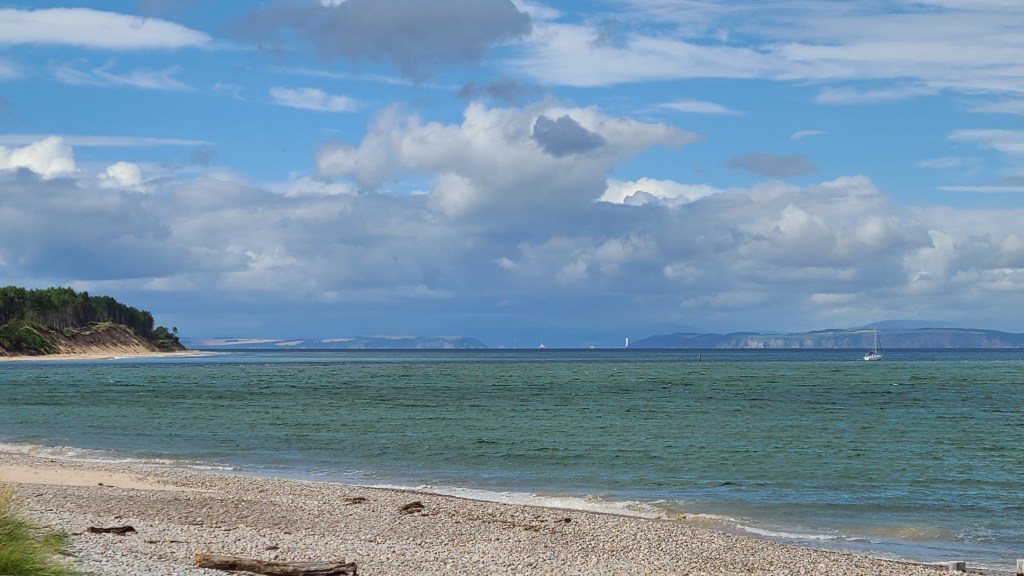
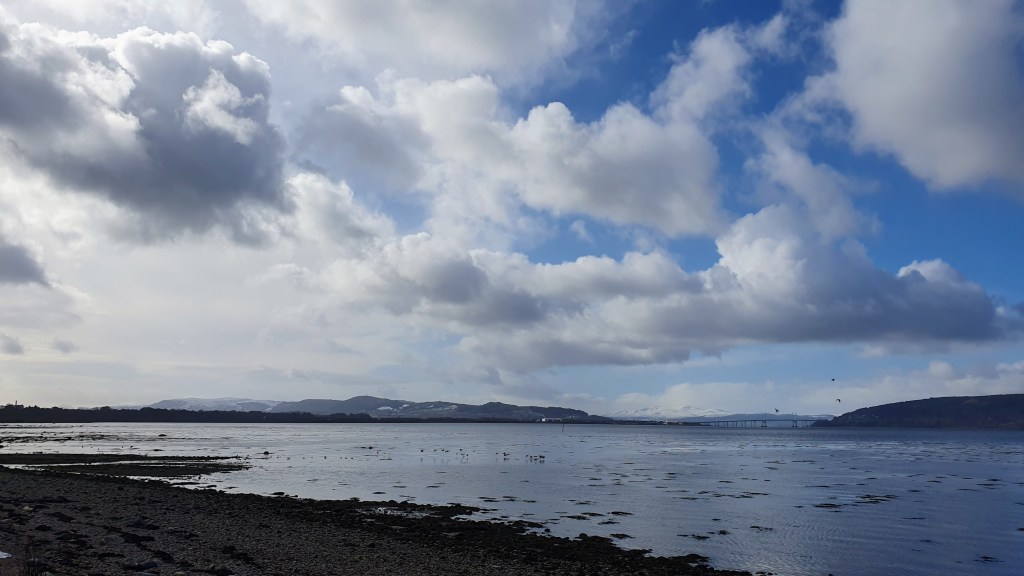
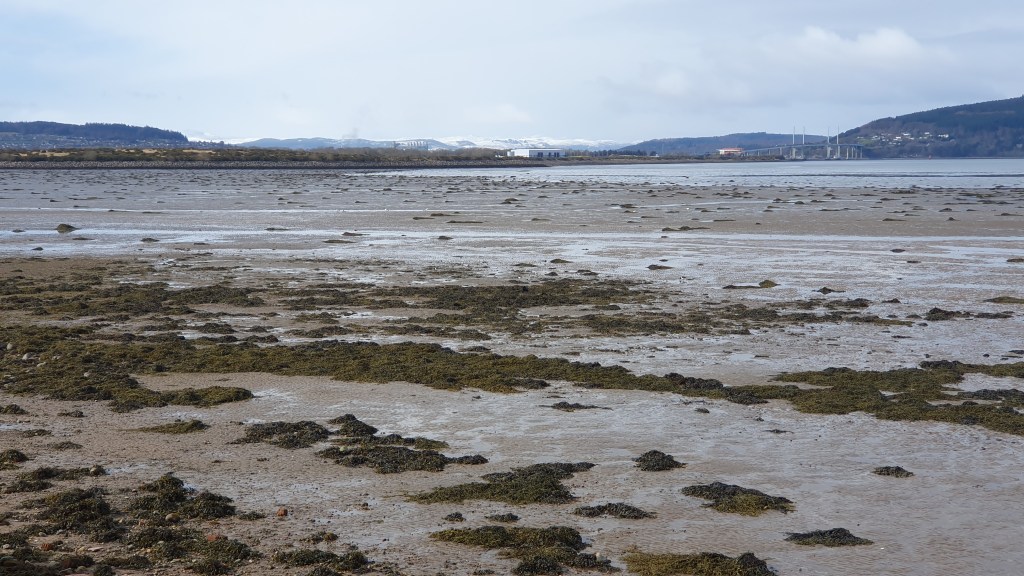
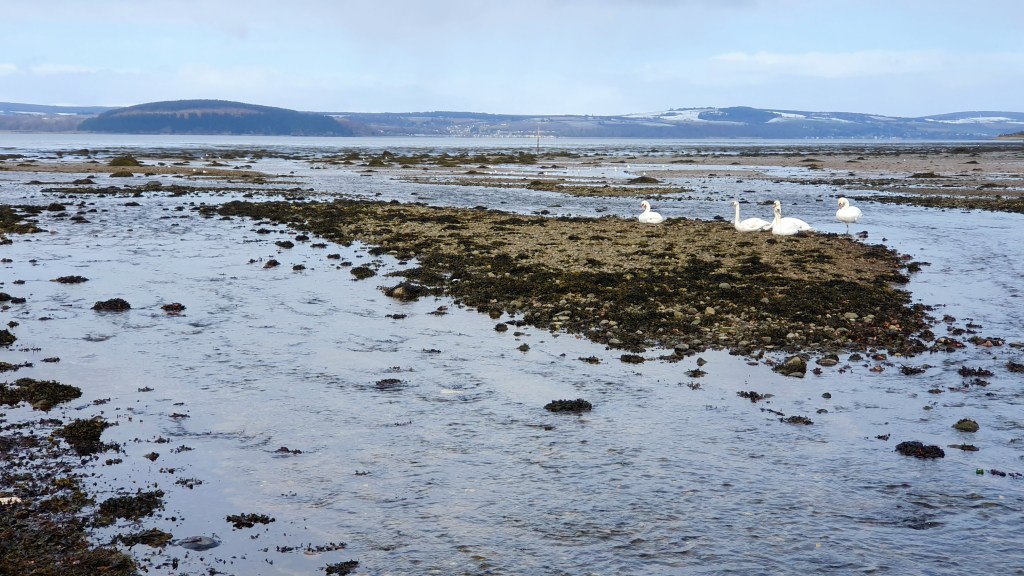
This part of the coast has spacious views across the Moray Firth to the Black Isle in the north and there should be plenty of bird life around.
Moray Coast sea kayaking

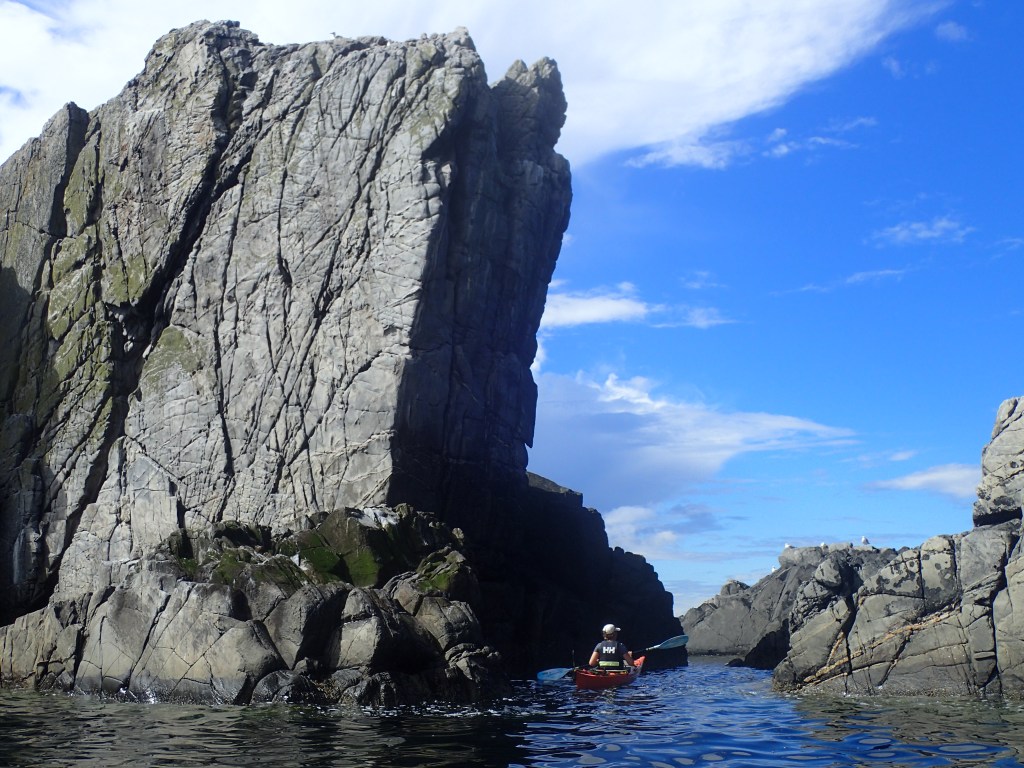
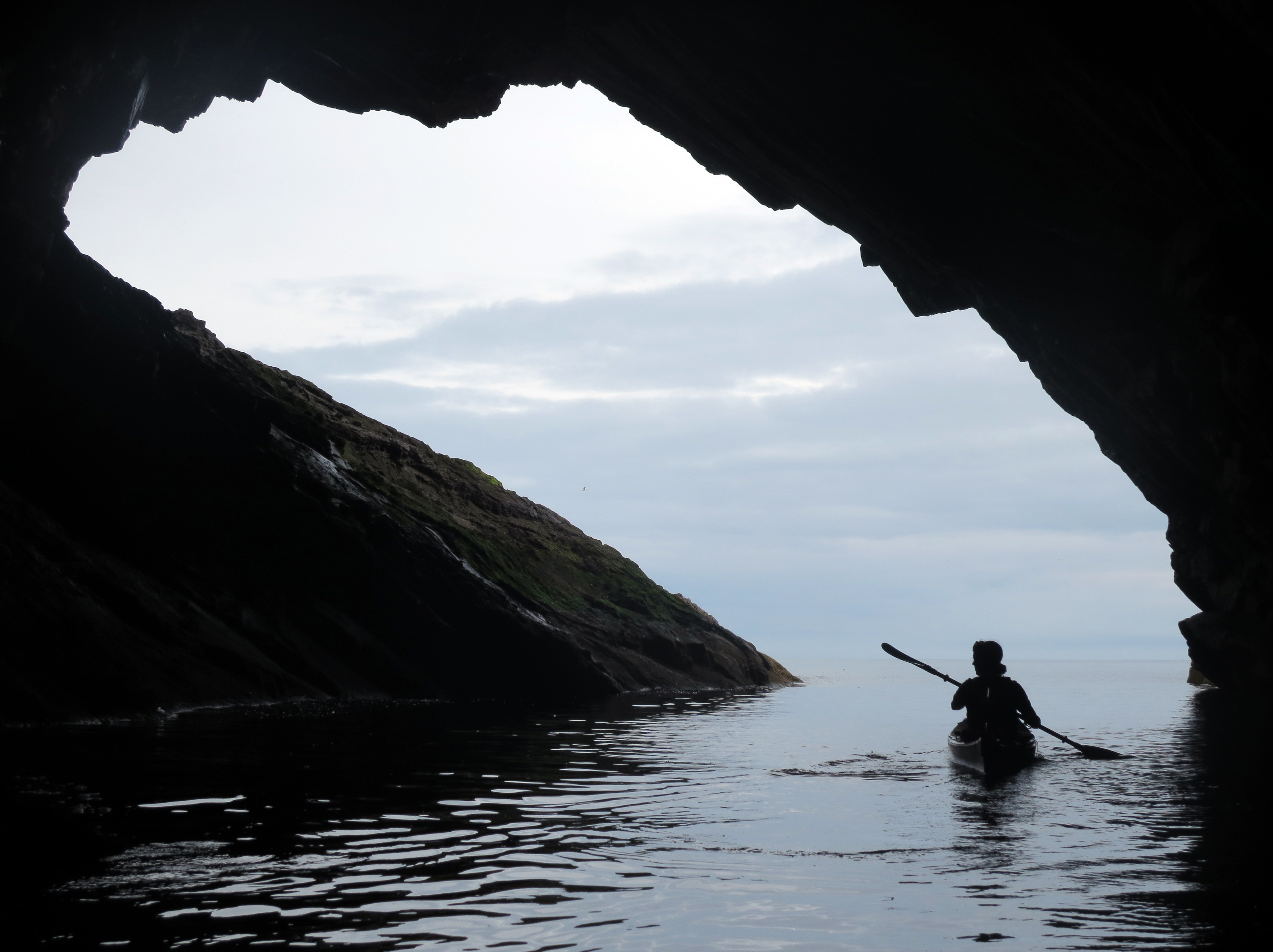
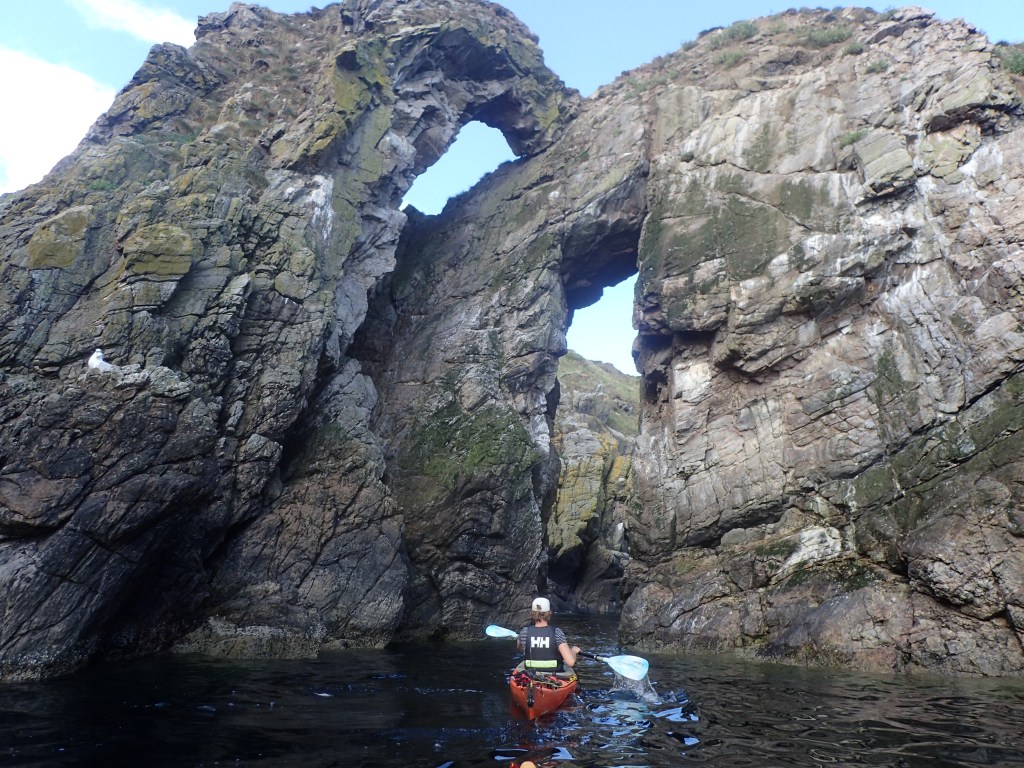
In some ways kayaking along the Moray Coast provides better scenery than the walking trails. The coast has plenty of birdlife, cliffs, cave, arches with a chance of seeing dolphins and whales. Add in some old castles, lighthouses, lovely harbour towns… and its a great kayak destination. The coast is exposed to a north or north east swell so we find it’s best when the swell is down (forecasts at Surfline) and avoiding a north easterly on shore wind allowing us to weave in and out of caves and tunnels.

A great guidebook is North & East Coasts of Scotland Sea Kayaking.
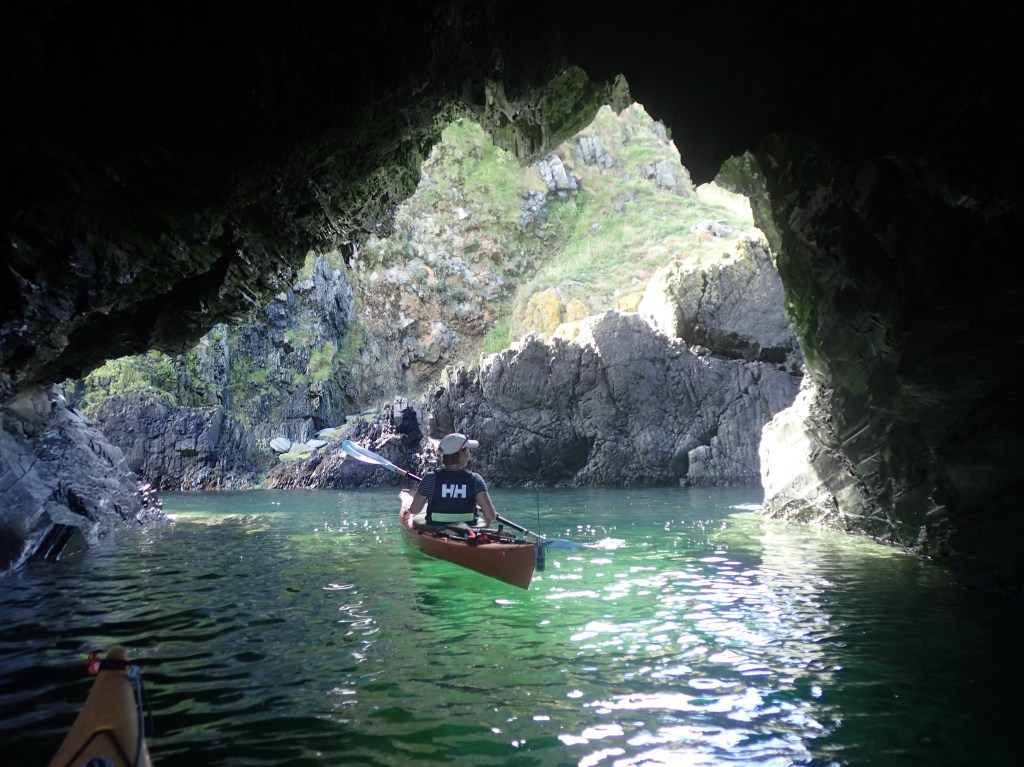
At Bowfiddle rock

Austria – Karwendel and Stubai Alps 2024

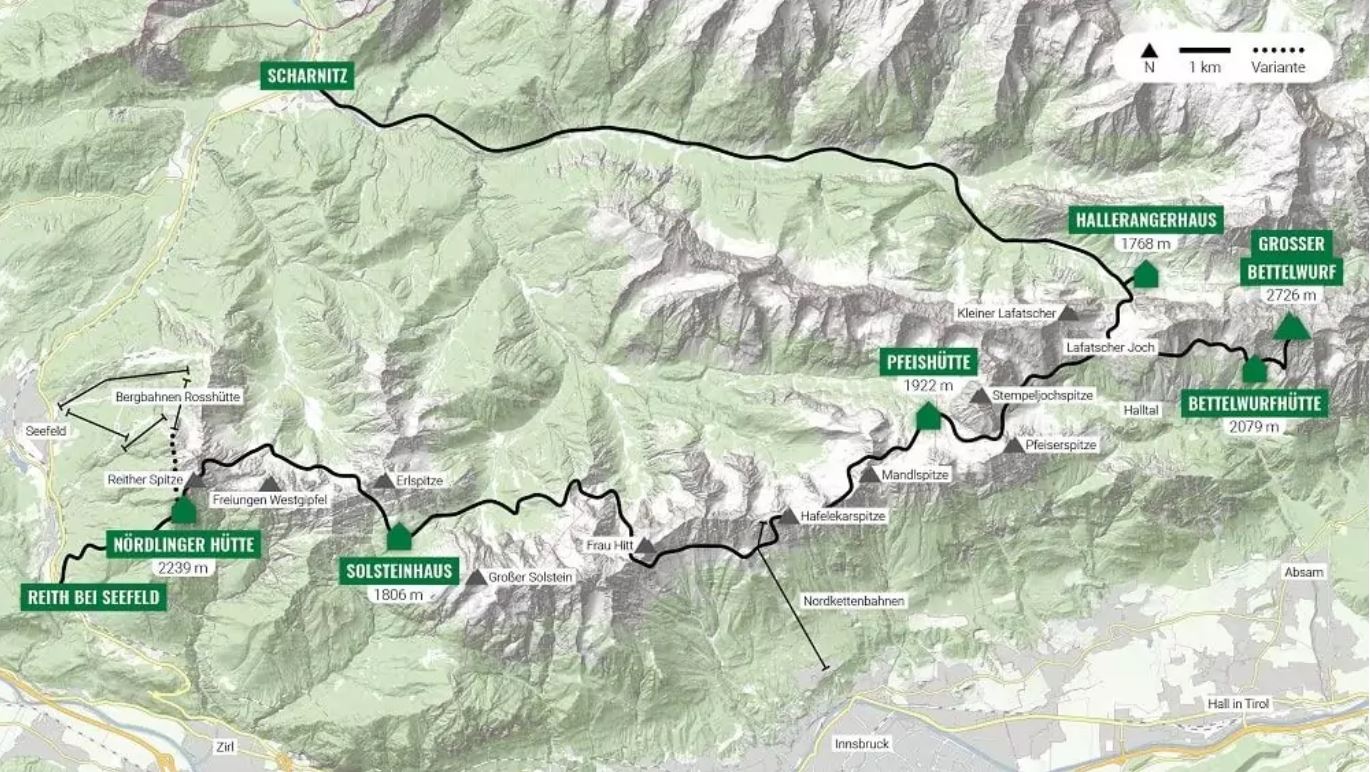
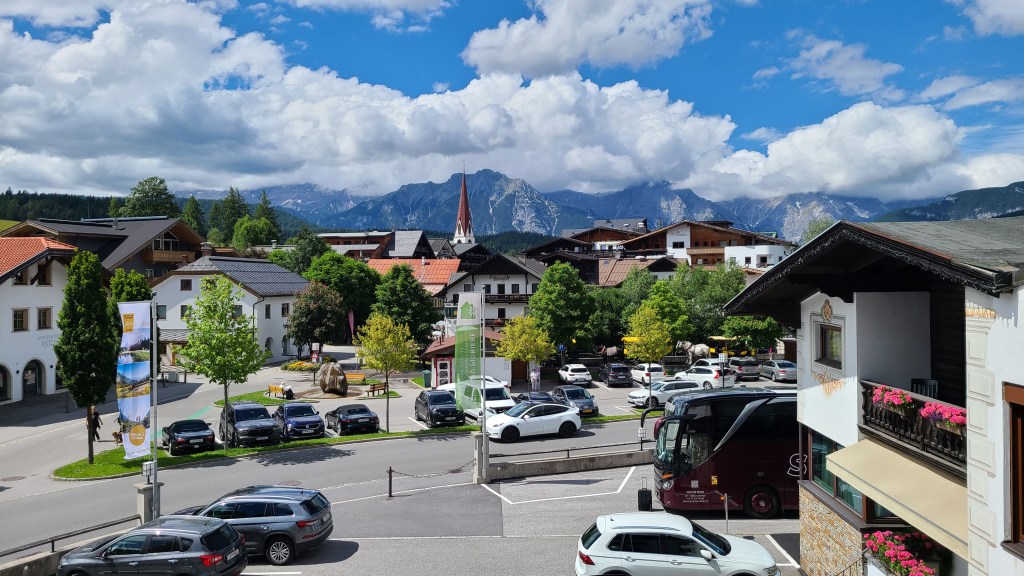
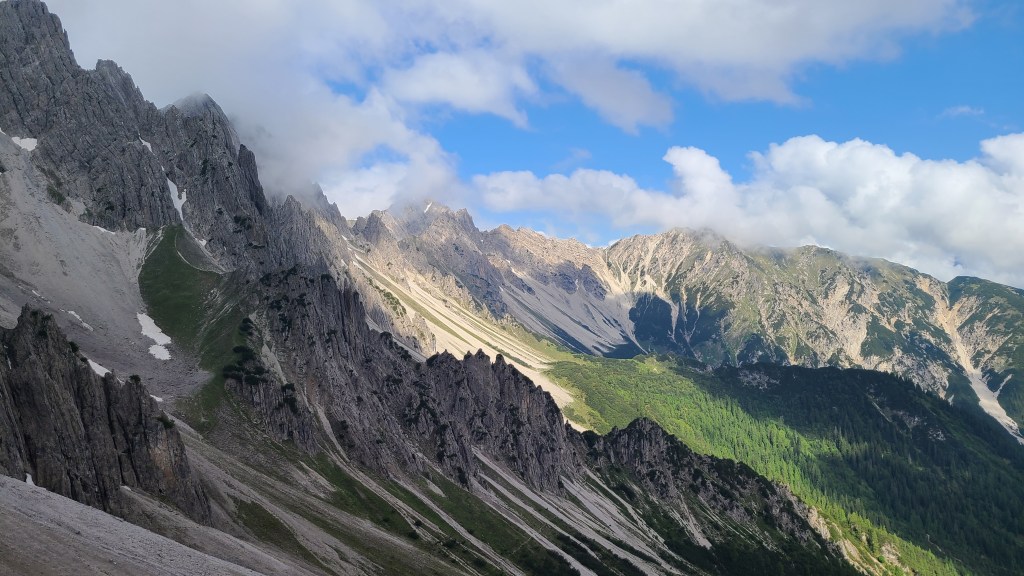
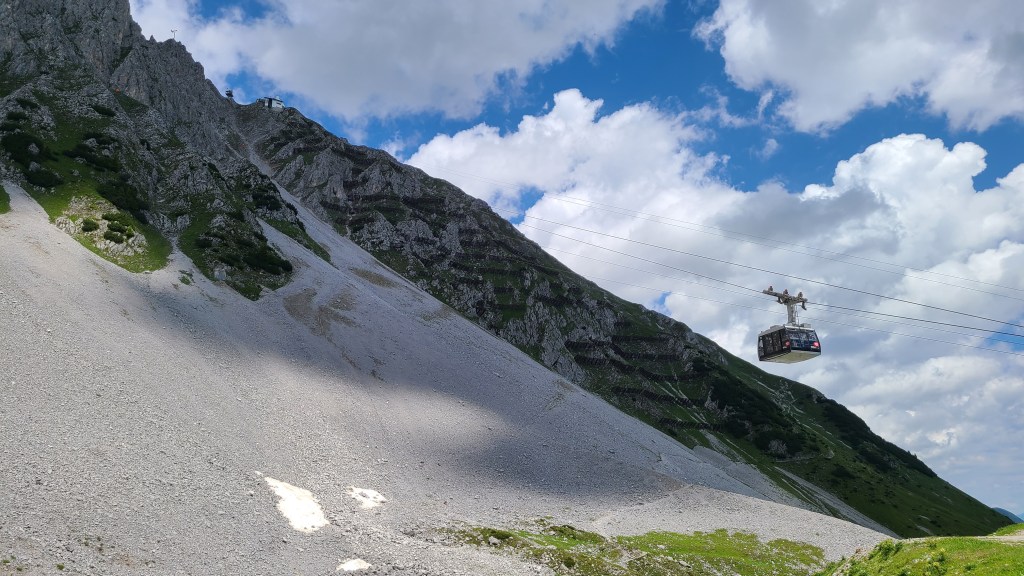
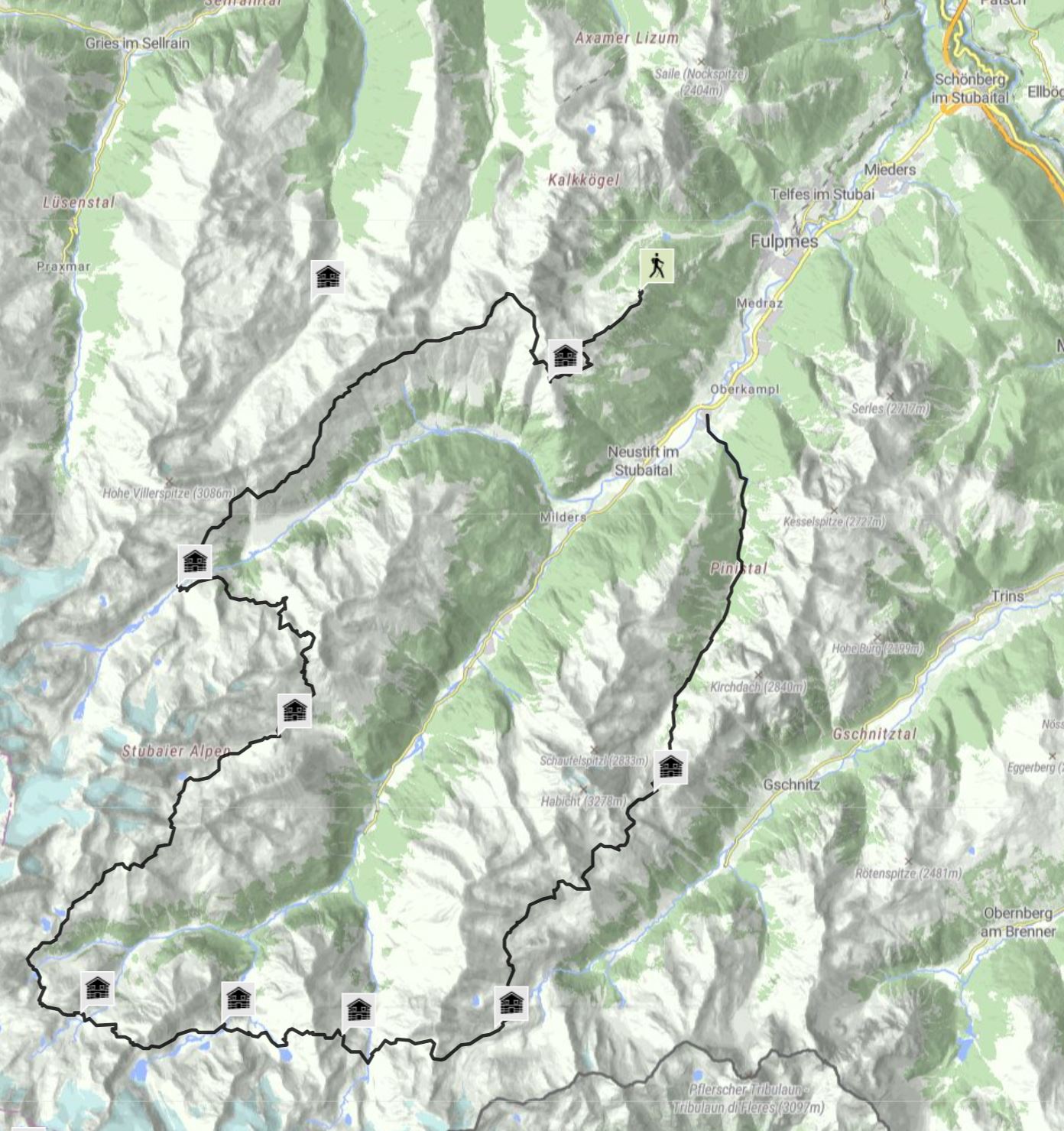
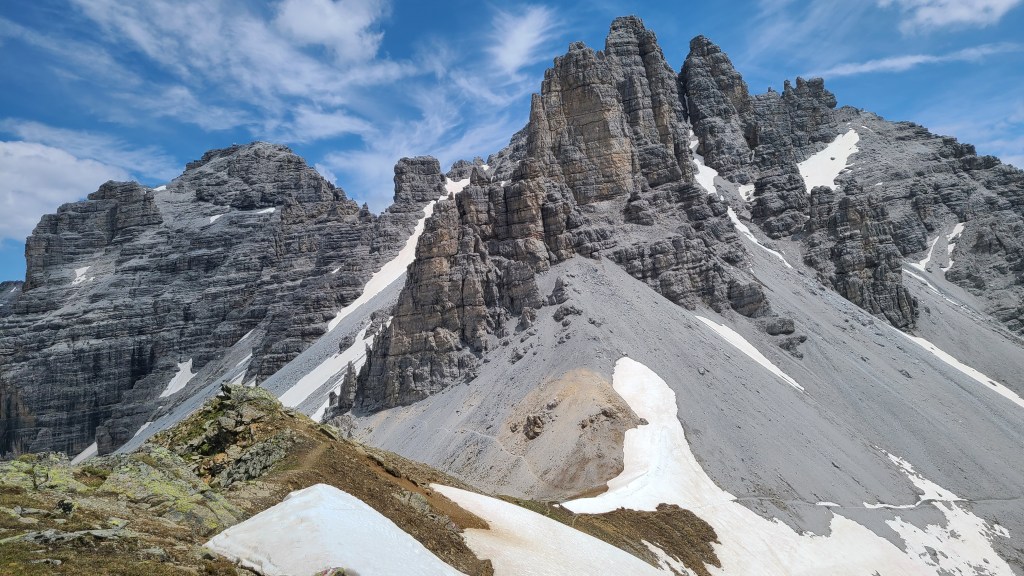
Brian had 4 days at the end of June to hike near to Innsbruck. Firstly I went to the Karwendel, a range of jaggy limestone mountains between Innsbruck and the German border to the north. They are crossed by a few hiking routes; the 6 day Karwendel Hohenweg, the longer 324km Adlerweg running east- west and the even longer 570km north- south Munich to Venice Traumpfad or Dream Way. I sampled a section of the Karwendel Hohenweg between Seefeld in the west to the Nordkettenbahnen cable car above Innsbruck.

Map of Karwendel Hohenweg, Austria near Innsbruck
Karwendel Hohenweg

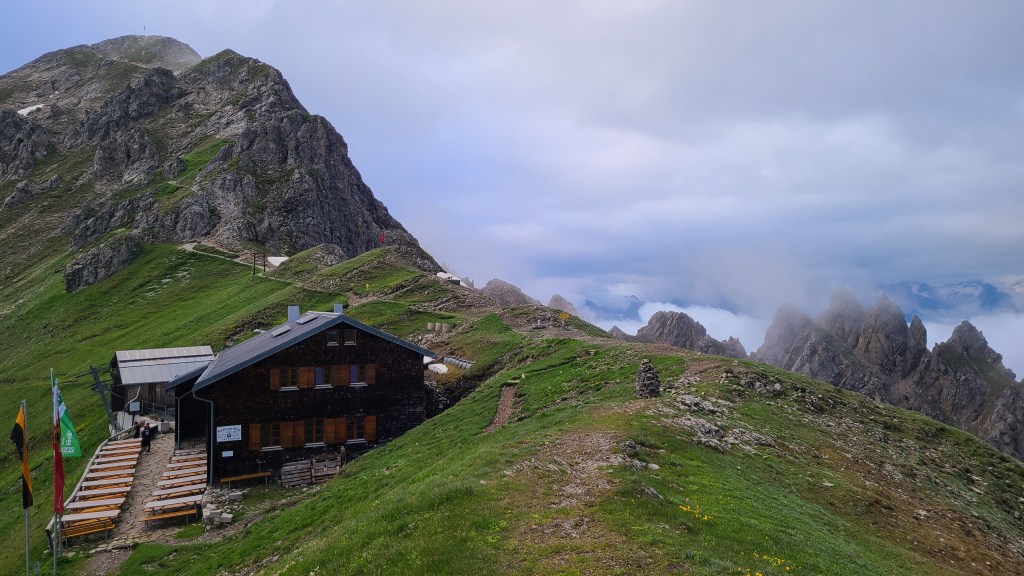
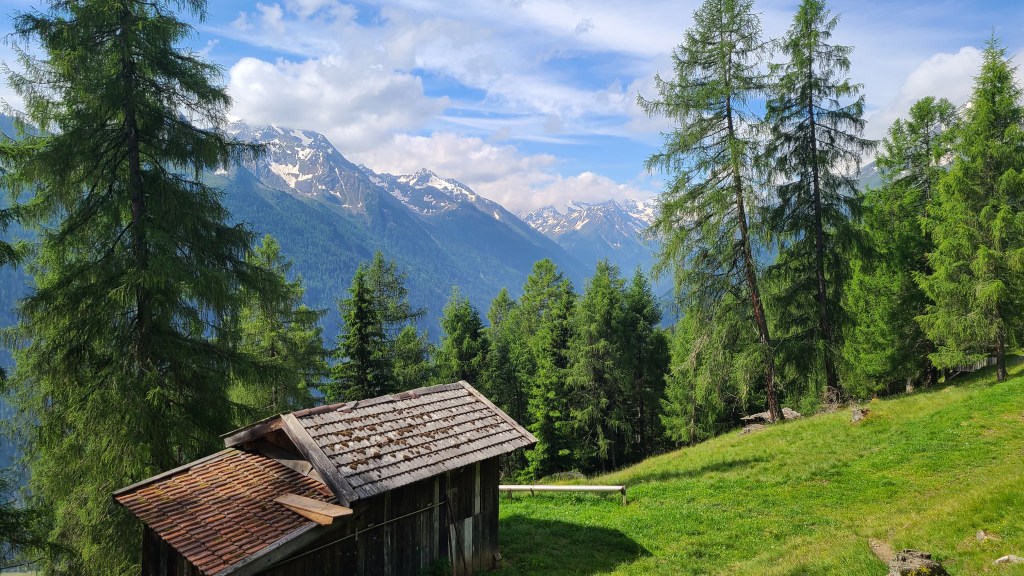
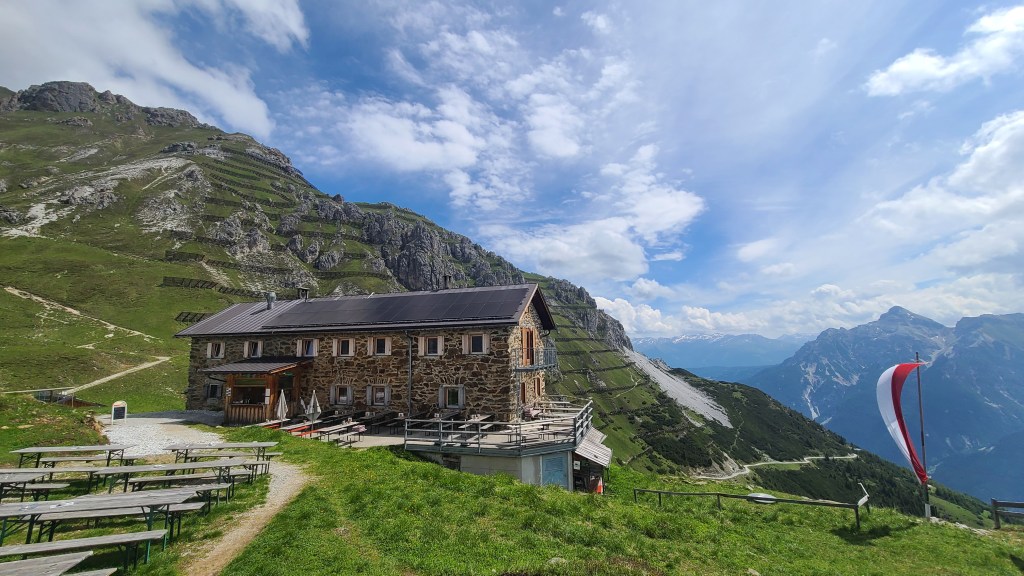
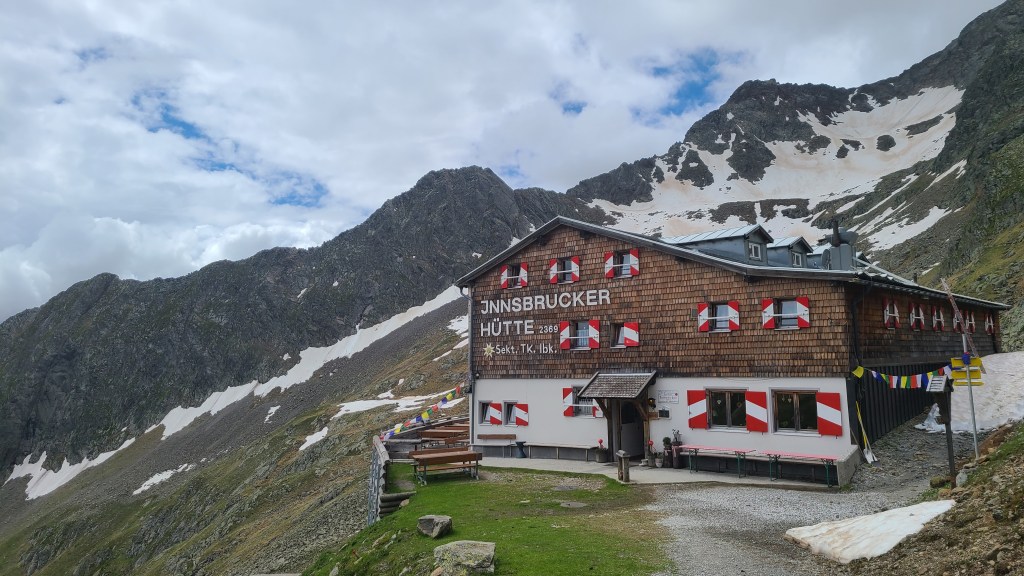
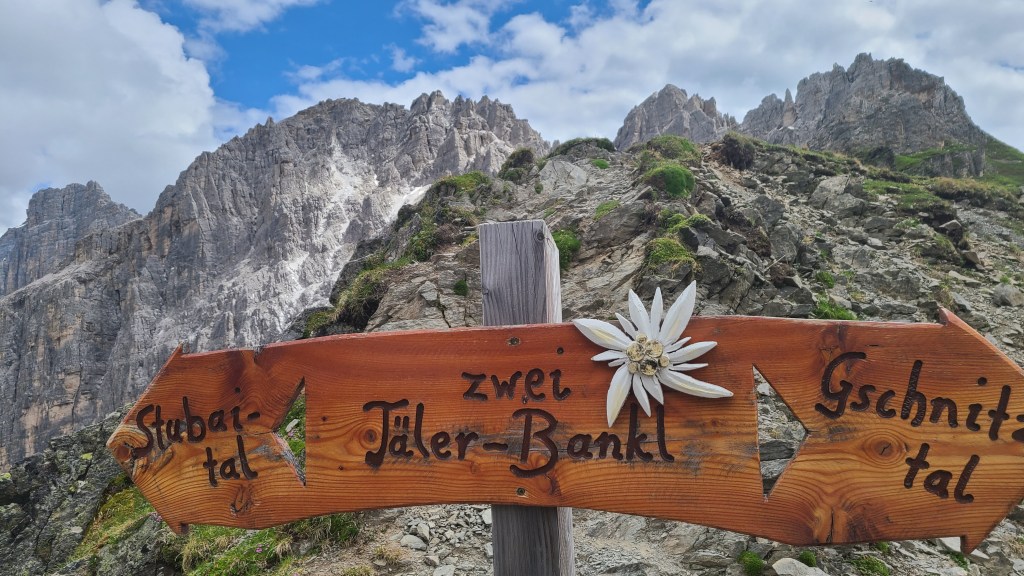
I left my tent behind (its a Nature Park and it seems like wild camping is prohibited) and stayed in the Nordlinger Hutte the first night which was lovely, with friendly staff and great views once the cloud cleared.

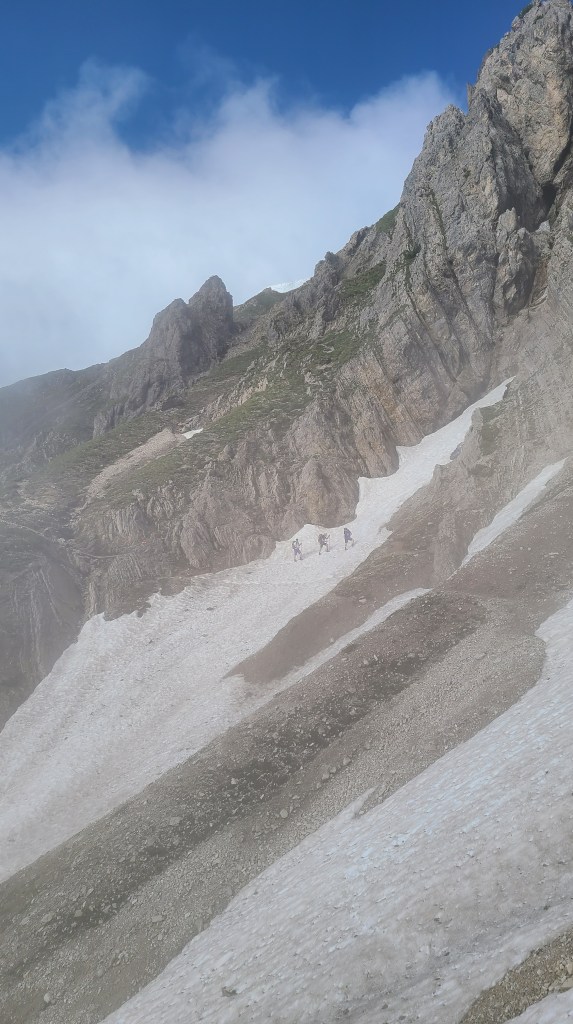
This is still early season in the mountains and there were quite a few snow patches around. Since the mountains can be really steep sided, lingering hard snow can make hiking in summer gear a bit tricky- I wore running shoes but also carried microspikes and an ice axe. I only used the axe but was happy to carry the spikes as well just in case.

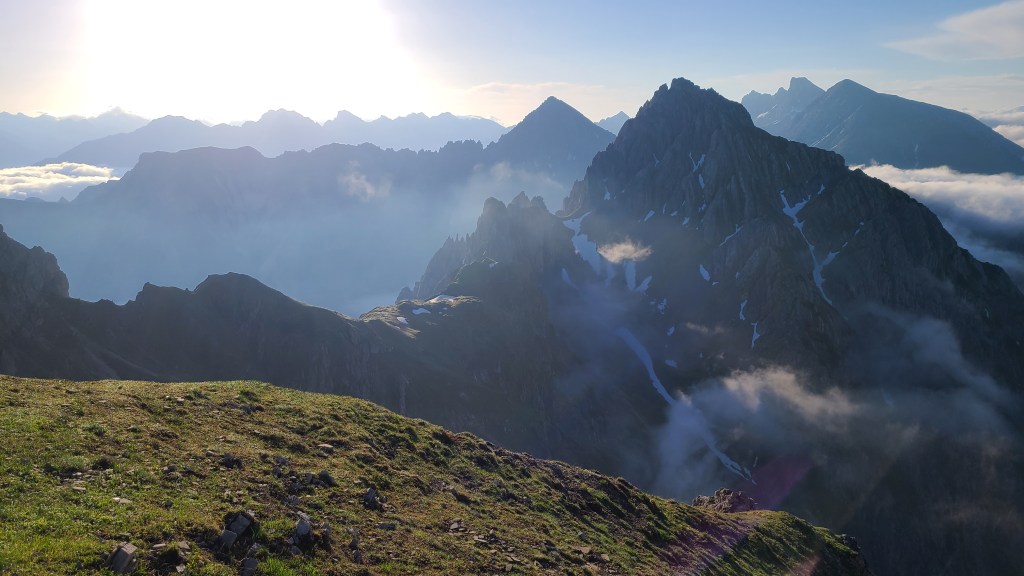
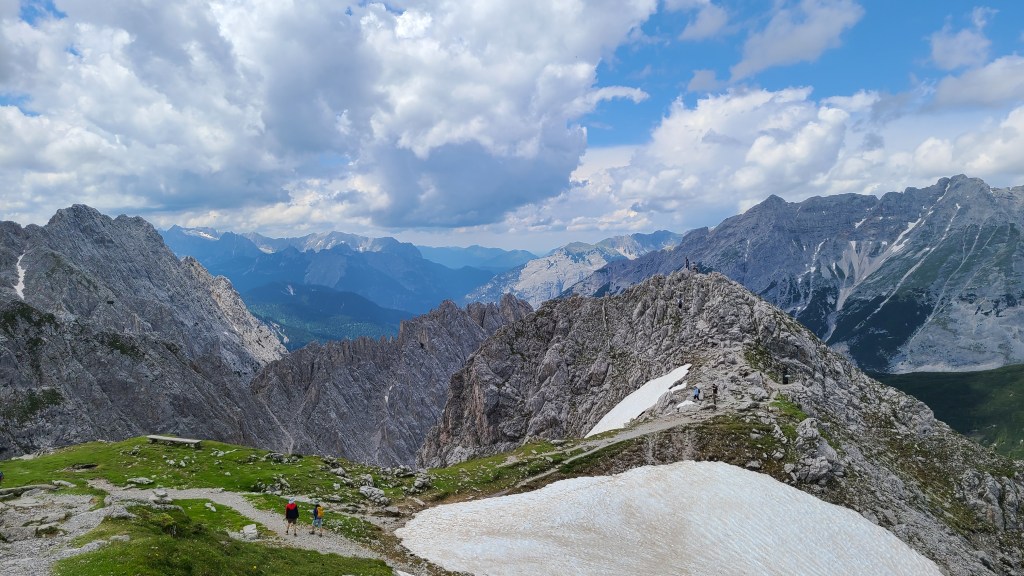
Overall the mountains are incredibly steep and scenic with good, well signposted trails going in all directions. There are options for scrambling or Via Ferrata and this would be a great area for longer multi-day hikes. My only caveats are that wild camping is limited so staying at huts are the main option and that I suspect these get a bit busy in the peak season of July-August so may need to be pre-booked. Overall though I had a lovely short sample of this area.

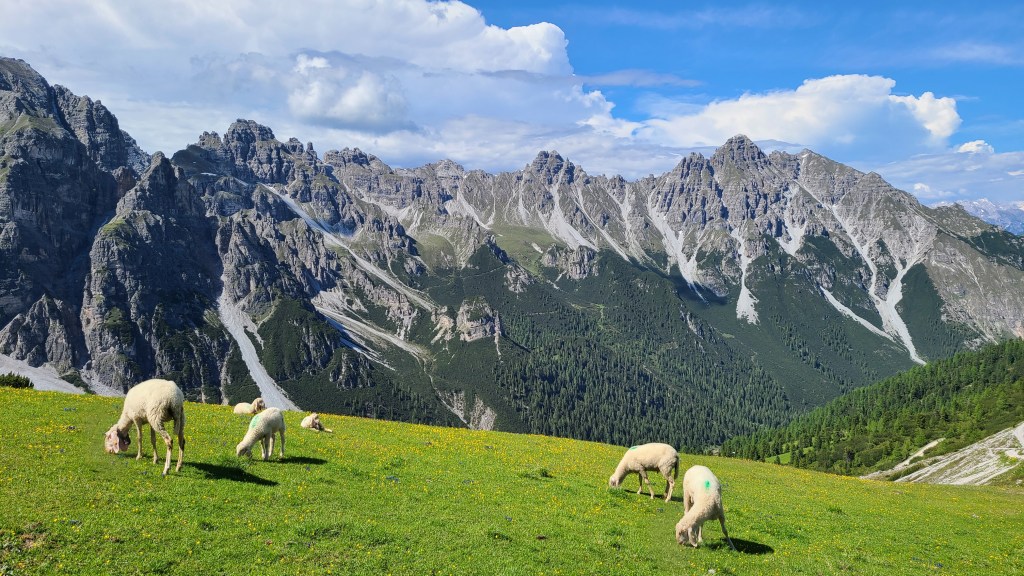
Next I went to the Stubai Alps to the south of Innsbruck and explored the start and end of the Stubai High Route. This is in the higher central alps and there is a transition from limestone in the north to the schists and granites prevalent in the main alpine ranges with more snow, glaciers and great alpine scenery.

Stubai High Route (Innsbruck is to the north of the map)

I found the food in Austria to be excellent, the huts provide a vegetarian option for evening meals and the breads and cakes in the local bakeries and huts are superb.

We hiked part of this route in 2018 in a longer link up with the Zillertal and Otztal ranges. I would heartily recommend the Stubai High Route for a hut to hut hike that traverses amidst magnificent mountain scenery that takes about 6-8 days.

Arizona Trail IV AZT hiker info and bonus trips

Here are some of my notes on the Arizona Trail for other hikers…

Hiker references Being quite a popular walk, there is a lot of planning information already out there….

  • Arizona Trail Association A great first stop and worthwhile joining the Association to support the trail.
  • Average Hiker, Ellie Thomas has a good website setting out the logistics.
  • The Trek has a guide to trail towns for resupply and resting. A web search will find many more…
  • Facebook There is lots of info and a place for hikers each year to ask questions on Facebook- really helpful- just search with this text for your planned year ie Arizona Trail Class of 2023

Maps and guides I love maps, I love imagining what it represents on the ground and then actually travelling through the territory displayed. For hiking, call me ‘old skool’, but paper topographic maps are my first choice. Easy to use, great for navigation, but also showing the surrounding countryside and a reasonably large area of land to provide context on distant features. I fold the current pages in the pocket of my shorts so I can easily refer to them whilst walking.

I do also download maps to my phone as a backup and to utilise the GPS.

It adds a lot to my enjoyment to have something on say the local geology, flora, fauna and history. I often take extracts from paper books or electronic documents on my phone for this- really nice to read overnight in the tent.

On this trail I cut out map pages from the Arizona Trail guidebook, which to be honest in this case didn’t offer much useful information except a rough overview and were limited value for either navigation or wider context.

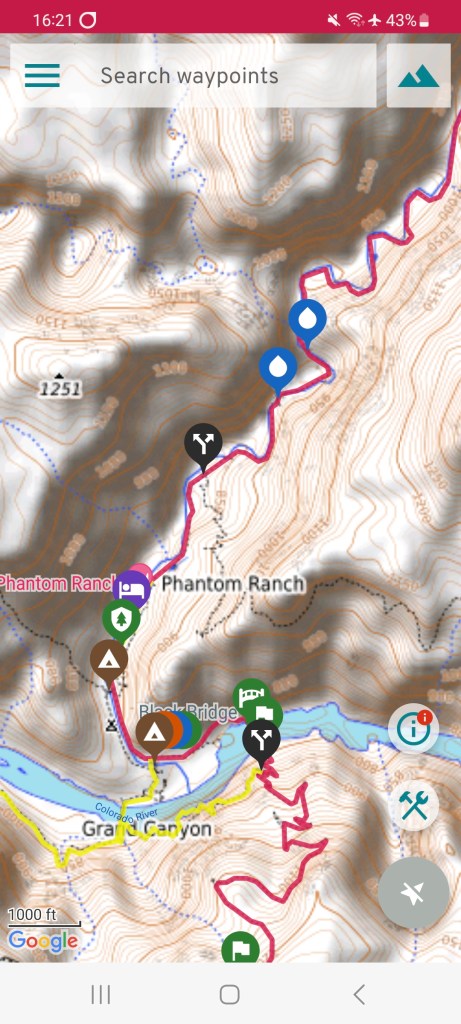
In addition I had the FarOut app on my phone which has the trail marked against a low definition background map. The best use for me though was the ability to view comments from others against features (and add my own). This was superb for getting up to date info on water sources in particular and was worth paying for the app just for that alone. On the downside, I found FarOut rather reduced the trail to a line ahead with a series of waypoints of gates, fences and water tanks! Its a pity it doesn’t offer any other interesting information such as on the flora/fauna.

If hiking the trail again I would prepare my own topo maps using online mapping software such as Caltopo, add a GPS track and my comments, then print out colour map sheets in advance. I would also still take FarOut app on my phone, mostly for water and trail updates and find some more flora/fauna background reading for along the way.

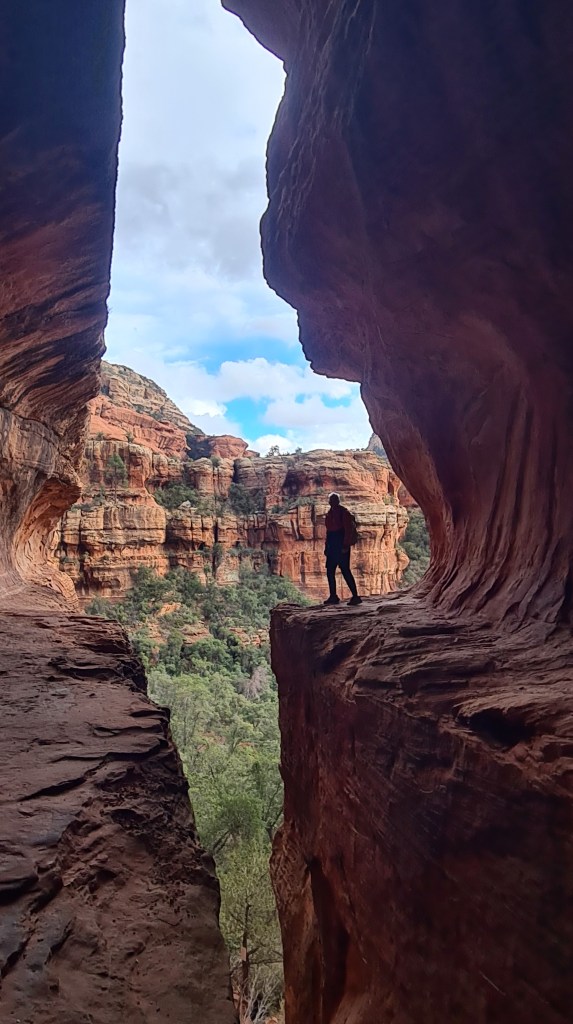
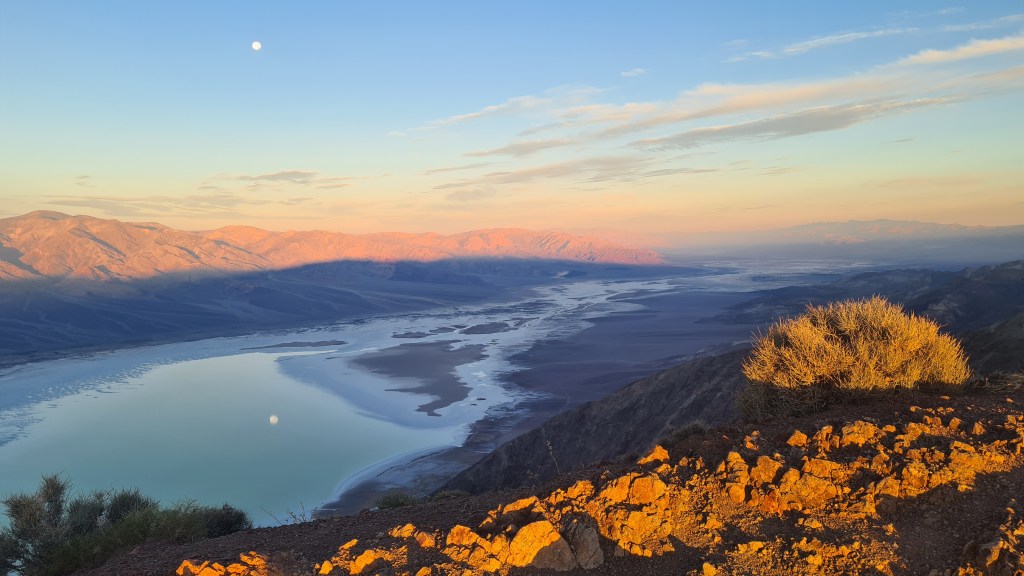
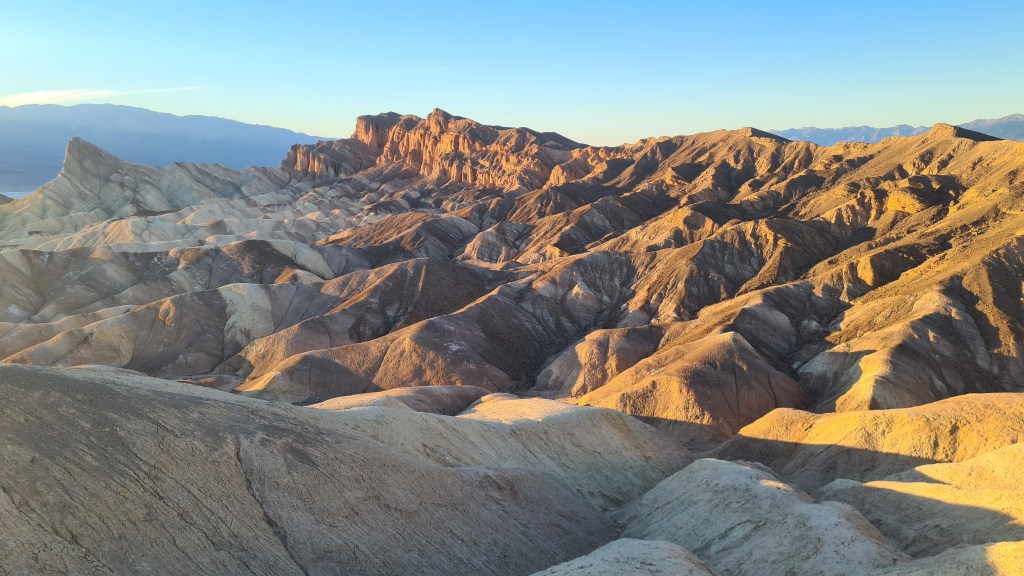
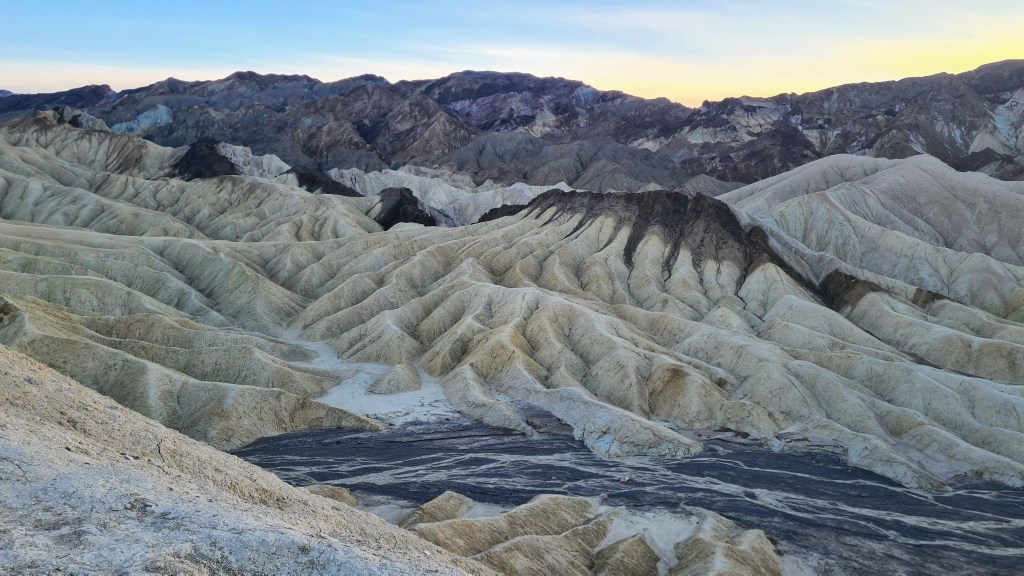
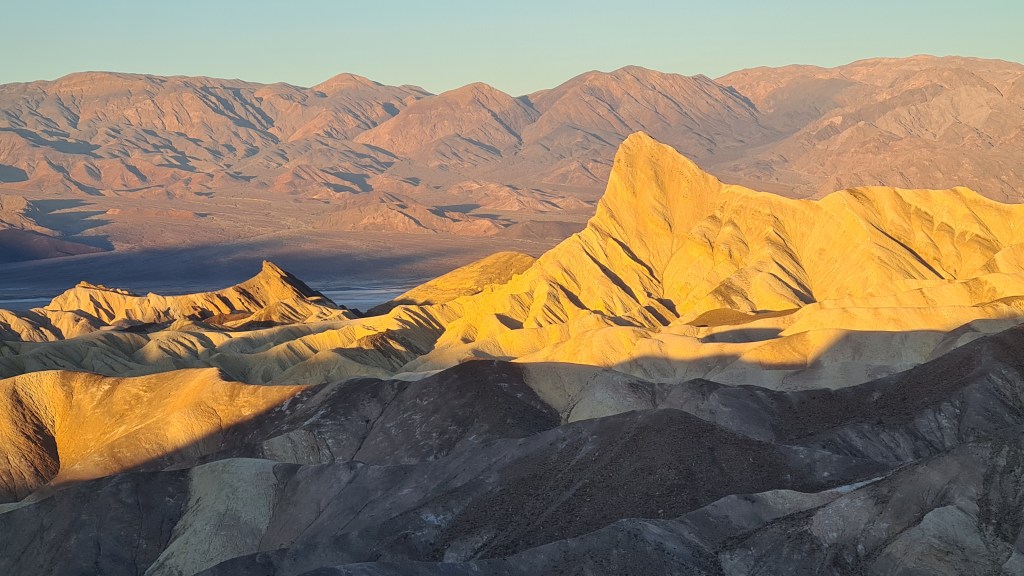
After the Arizona Trail… I had a few days spare before flying out of Las Vegas back to Scotland and made good use of these for some shorter hikes near Sedona then Red Rocks Canyon, Nevada and Death Valley National Park, California.

Previous Arizona Trail III Tucson to the Mexican Border

Photo gallery here….

Arizona Trail Part III Tucson to Mexican Border

Section 7 Molino Basin Trailhead to Gabe Zimmerman Trailhead 12th November 48 miles Oh that was a great stop in Tucson, and feeling refreshed I got an Uber back out to Molino Basin via Safeway for a food restock, bagels and coffee. I sat outside the supermarket at the trolley bay charging my phone at a mains socket, sifting food and munching bagels. It was wonderful and I had 3 people come up to me and chat asking about the Arizona Trail, maybe they felt sorry for me looking a bit trashy!

At the trailhead I was restarting where I left off following a well made undulating path southward with ever closer views of the next ‘sky island’, Mica Mountain. It was pleasant coolish hiking at between 18-22C and I made quick time to camp in the dark at the edge of Rincon Wilderness Boundary a little of the way up the climb. Away by 6am next morning in the dark I enjoyed the steady climb into Saguaro National Park and up to the top at about 8,600 feet. I had seen a torch light a few miles below me to the north and it was nice to know another hiker was out there too.

Boy but it was cold up there, it felt well below freezing and I happily headed downhill through the trees and out below into open saguaro cactus country.

Section 8 Gabe Zimmerman Trailhead to Patagonia 15th November 67 miles After a stopover with Josh and Suzanne, two kind people who let me stay with them near Colossal Cave, I kept going across I10, the last of the east-west highways, and onto lower flatter terrain again. I made good miles from here to Patagonia, assisted by some weather including clouds overhead and even the odd thunderstorm to cool things down.

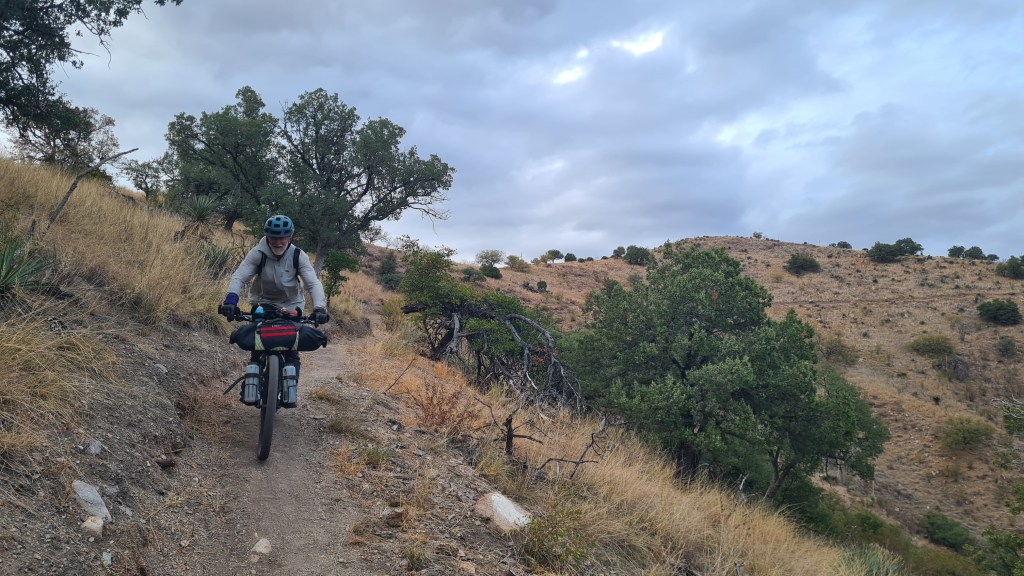
Highlights included spotting a bobcat, 2 bikepackers and some pretty good water sources along the way. Hitching into Patagonia turned out to be easy and rather inevitably I headed straight to a diner for an extended brunch!

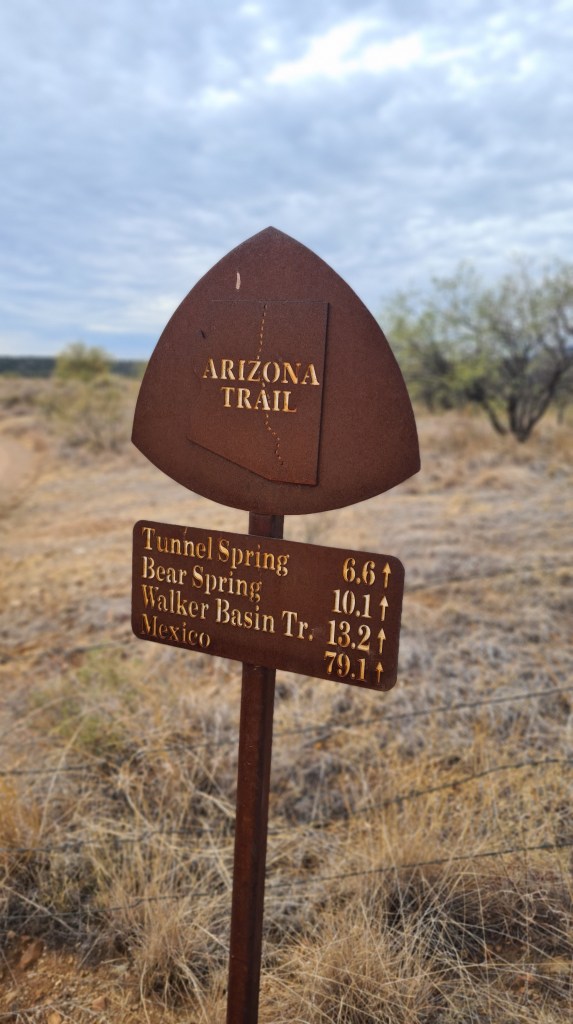
Section 9 Patagonia to Mexican Border 19th November 53 miles Well refreshed again after another welcoming town of Patagonia, I left for the final push to Mexico with Swig and Firecracker, hitching a lift back to the road crossing.
Conditions got cold and windy once we climbed up to about 8,000 feet on the flanks of Miller Peak for one bitterly cold last camp. On the last day 20th November, I nipped up to the top of Miller Peak which was covered in frost before the steady descent to the border. Finishing there with other hikers Swig, Firecracker and Cheese Curd was fun, but it felt a little anti climatic with the weird section of high metal fencing and the super high winds…… But 800 miles of Arizona was a really great experience overall and it was superb to share it off and on with so many cool people!

Next Arizona Trail IV AZT hiker info and bonus trips

Previous Arizona Trail 2023 – II Flagstaff to Tucson

Photo gallery here….

Arizona Trail 2023 – II Flagstaff to Tucson

Section 3 Flagstaff to Pine 20th October Another long fairly flat walk of 115 miles on the next stretch to the tiny town of Pine was again going to be tough on my feet!

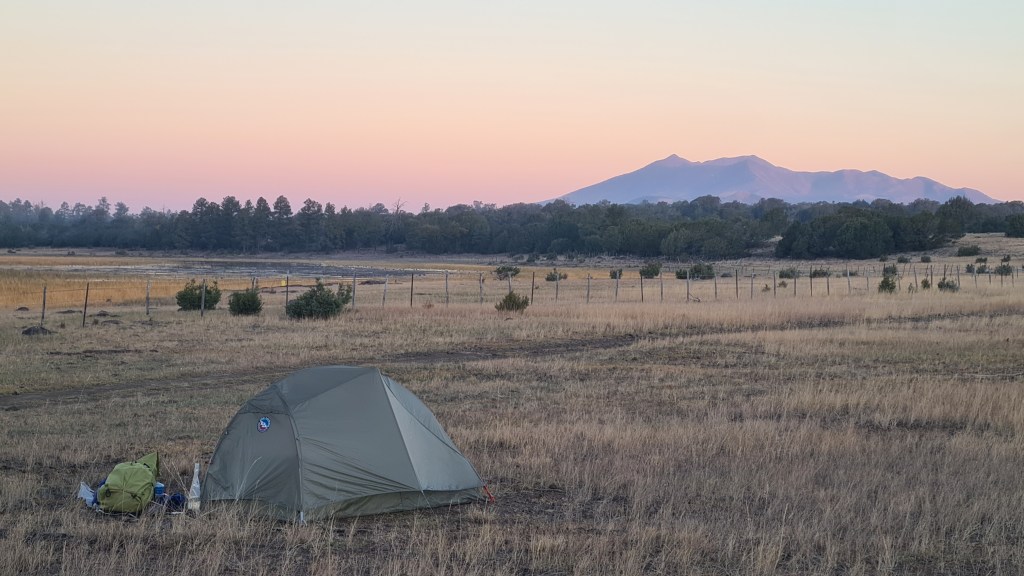
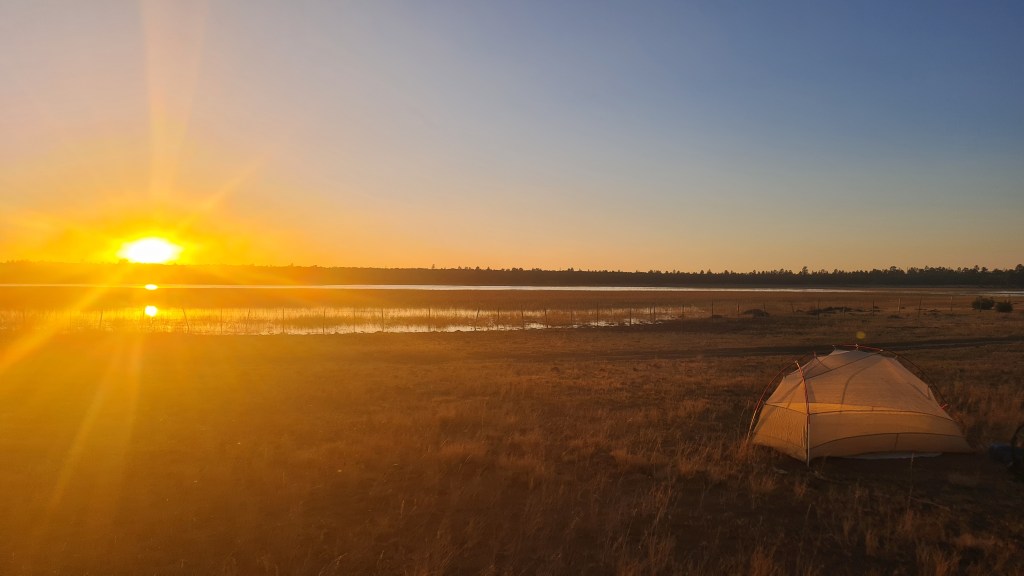
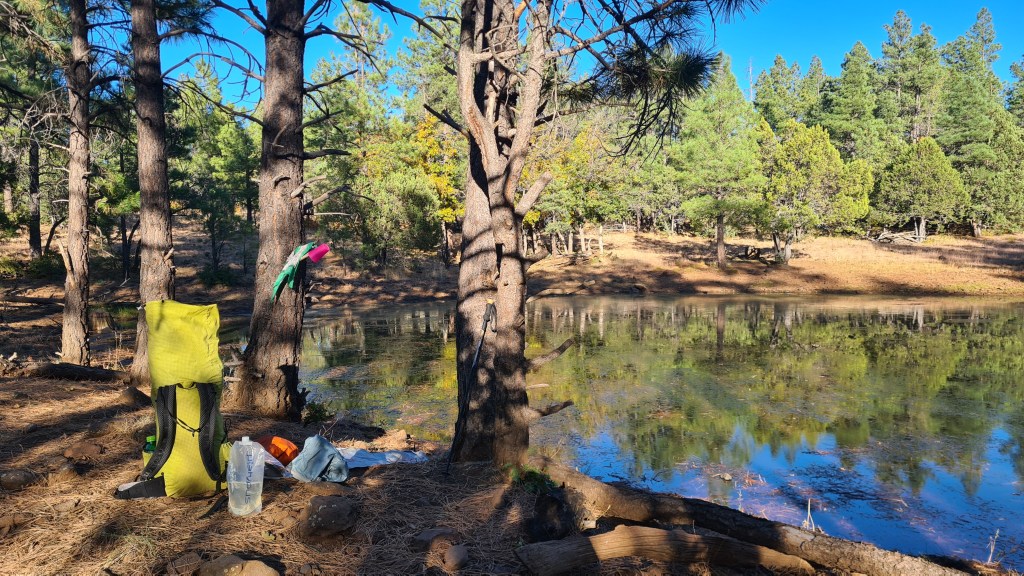
Leaving Flagstaff after crossing Route 66 on the ‘Urban Route’ variation of the AZT, I was back into the countryside surprisingly quickly. Ponderosa pines again dominated but then gave way to more sparse pinyon juniper. I chatted with ‘Fliss(?)’, ‘Mo’ and ‘Firecracker’ heading out of town but ended up camping solo at Horse Lake that night. Sunset here was stunning across the flat grasslands and lake, with noisy geese, elk and coyote adding to the ambience.

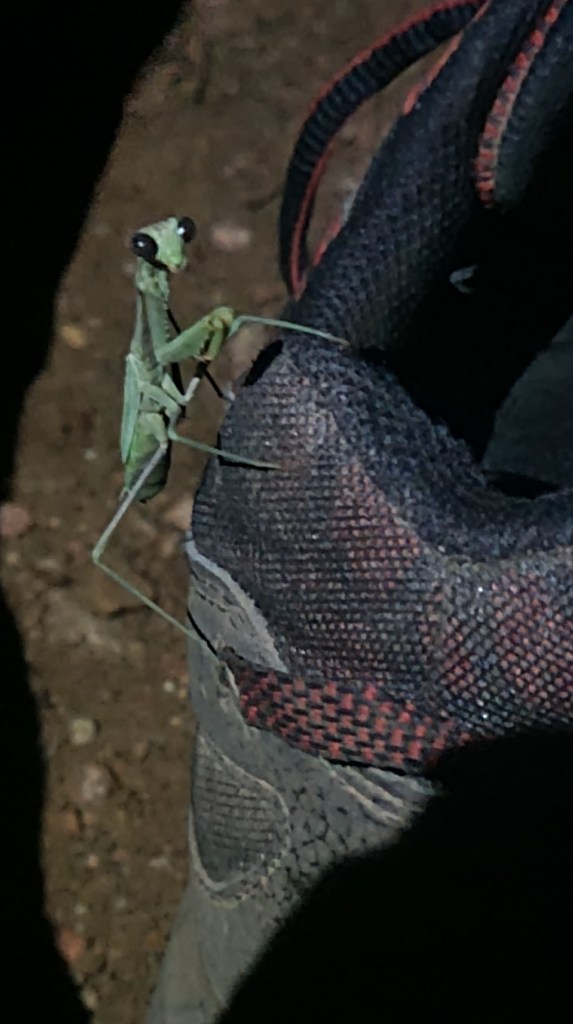
On the 2nd day out from Flagstaff I hiked round a prescribed fire set off by the Forestry Service which filled the air with thick smoke for an hour or two, before cutting off trail to the small settlement of Mormon Lake for lunch at the bar and a food top up. I came across a few of these 8 legged wonders along the way….

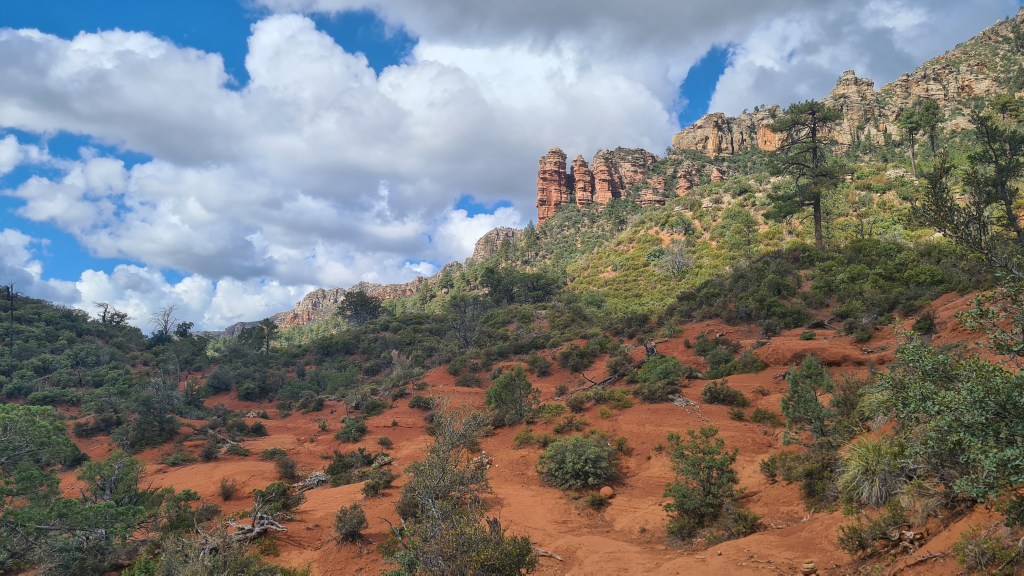
After another 3 days I eventually hit the pleasant Highline Trail and dropped off the ‘Mogollon Rim’, an escarpment descending from the Colorado Plateau with some welcome streams, red rock and (a rarity so far) clouds! The trail took me into the tiny town of Pine- arriving at 8.30am and diving into the Early Bird Cafe to meet a few other hikers for second breakfast. 330 miles or so hiked- hoorah

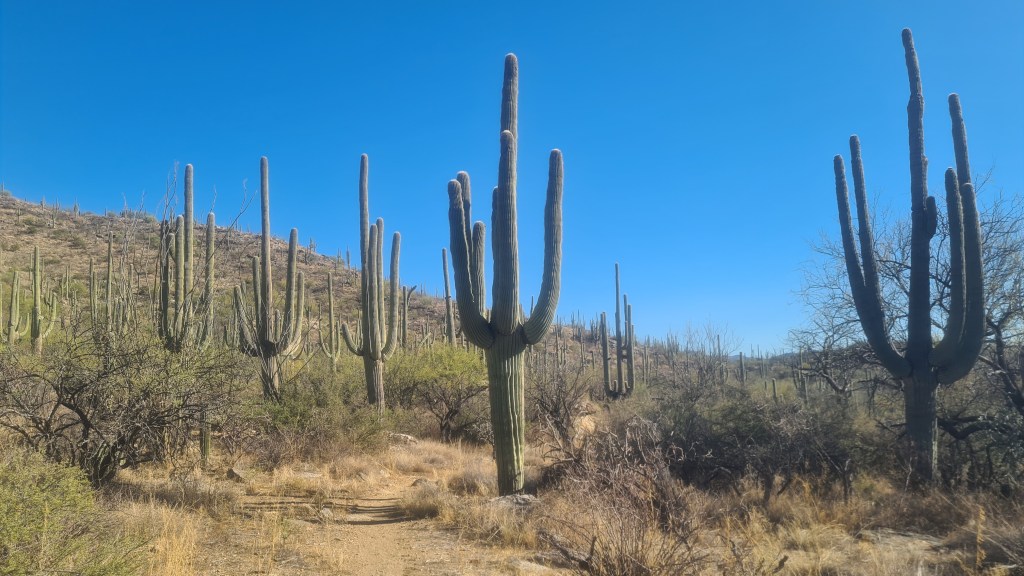
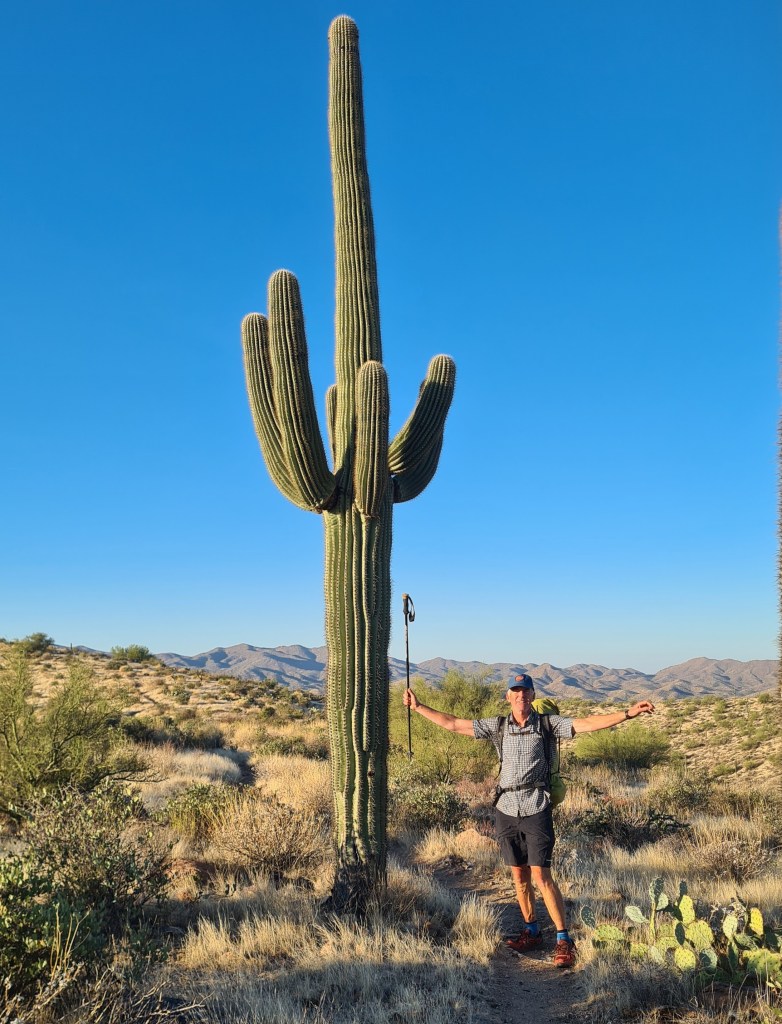
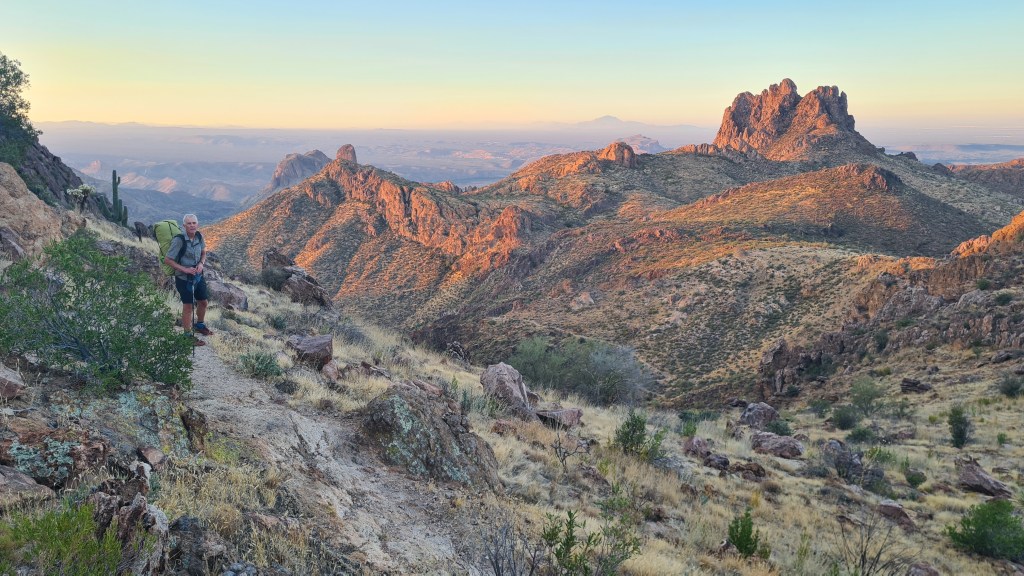
Section 4 Pine to Roosevelt Lake Marina 26th October 115 miles again to my next food resupply at Roosevelt Lake Marina. This one involved some more rugged up and down over the Mazatzal and Four Peaks Wilderness’s. A bit of rocky trail and scratchy shuffling through spikey bushes kept me on my toes. I think this was my favourite stage so far however as the variety was interesting and I saw my first javelinas (small boar that live in groups called squadrons!) ……and stunning saguaro cactus…yipee.

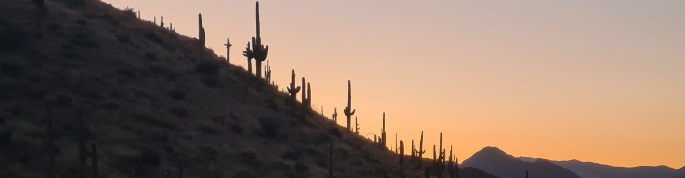
Saguaro cactus at dawn

Section 5 Roosevelt Lake Marina to Kearny 1st November 80 miles Hikers seemed to coalesce at the lake marina with about 10 of us at one point- resting weary legs, eating, sifting gear and sharing tales from the trail.

South from the marina I entered the Superstitions Wilderness, crisscrossing and chatting with fellow hikers Grandpa, Firecracker and Survivorman. It was another fine rocky area but one that dropped in elevation meaning that, despite now in November, the temperature really ramped up in the middle of the day. I took the opportunity for a cooling dip as we traversed alongside the Gila River, the trail’s lowest point at about 1,600 feet, before reaching the mining town of Kearny the next day.

Section 6 Kearny to Molino Basin Trailhead and Tucson 6th November 100 miles Kearny was a super friendly small town; from the offer of a place to stay by ‘Q’, easy hitching in and out, diner, pizza place, supermarket with free coffee for hikers, helpful post office staff etc…. it was just great.

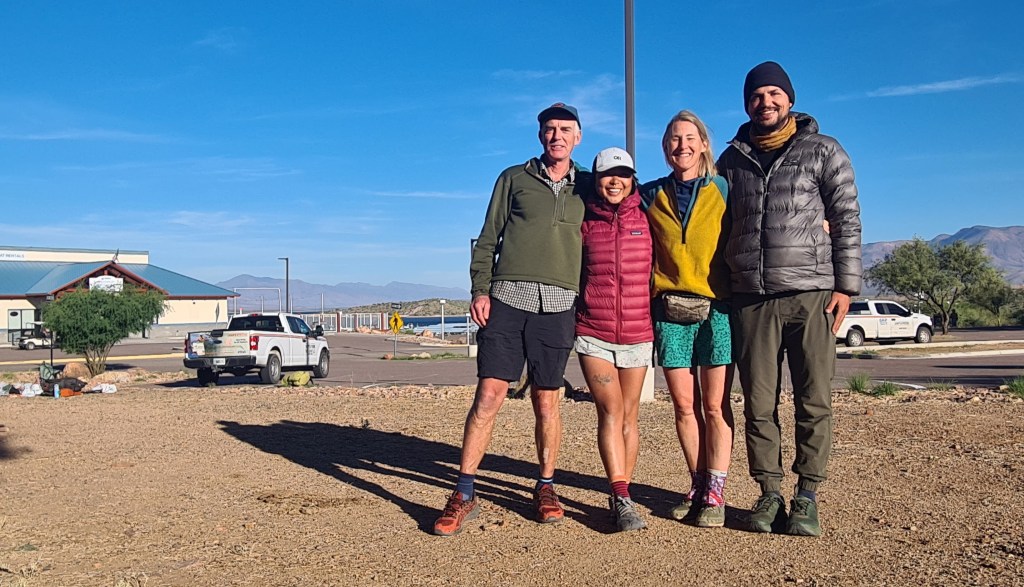
With fellow hikers and ‘Q’, middle right, at her house in Kearny

Setting out from Kearny, the terrain continued as low desert scrub and the temperatures were hot- maybe 30C in the afternoon. I got into a pattern of waking about 5am and hiking by 6 in the dark for a bit to enjoy sunrise and the cool early temperatures. These were my favourite times of the day with hiking into dusk at about 17.30 to 18.00 being a close second. The disadvantage was that I spent most, if not all, of my camping time in the dark!

I met up with Carrie/Firecracker along the way and we hiked together after applying some plasters to patch Carrie up as a result of an argument with a barbed wire fence!

I was glad when the trail climbed up high to about 7.800 feet at Summerhaven (amazingly this far south, a winter ski resort) and Mount Lemmon. A veggie burger with Survivorman was a rare treat here and the granite hills and pine clad slopes were really nice. Leaving early morning was a bit harder with the sub-zero overnight temperatures but the trail remained interesting all the way down to Molino Basin trailhead road crossing. I decided to hitch from here into the city of Tucson for a full day off of luxury; real food, showers, a swim in the motel outside pool(!) and some gear fixing.
Next Arizona Trail III Tucson to the Mexican Border

Previous Arizona Trail 2023 – Part I Utah state line to Grand Canyon and Flagstaff

Photo gallery here….

Arizona Trail 2023 – I Utah state line to Grand Canyon and Flagstaff

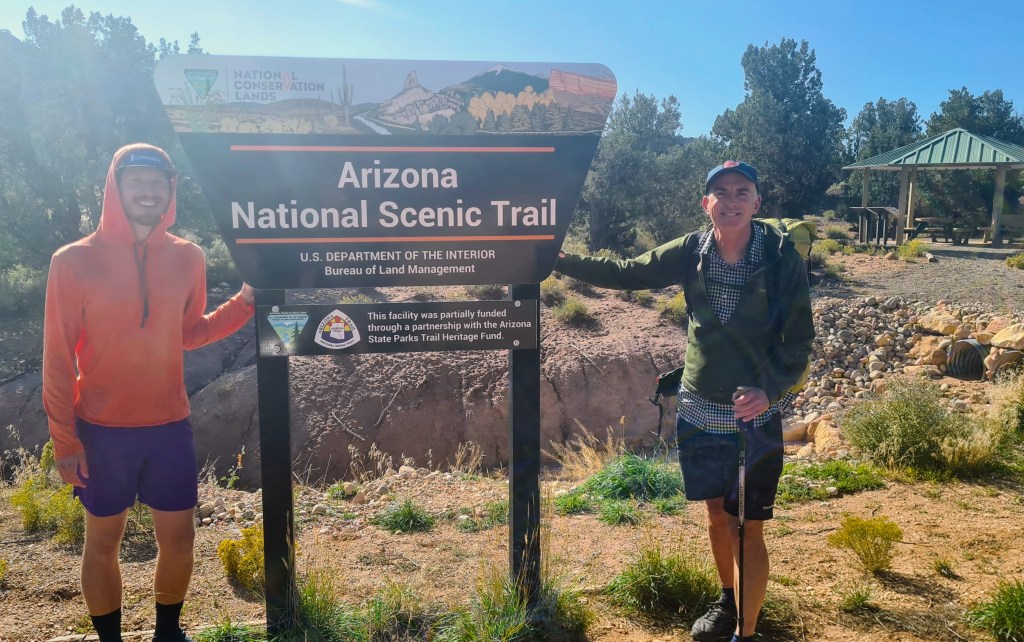
In October-November 2023 Brian walked the 800 mile Arizona Trail southwards from the Utah stateline down to the Mexican border. I wild camped most of the way, but also stayed at designated campsites, with ‘trail angels’ and some motels in town. Overall it was an excellent experience! Here is a short (ish) description of my hike, some pictures, my impressions and links to more info.

Background The Arizona Trail (AZT) is a well defined and maintained trail heading north-south across the state of Arizona. It traverses a mix of desert, high plateau and mountain ranges up to about 9,000 feet (called Sky Islands), crossing two National Parks; the iconic Grand Canyon and less well known Saguaro outside the city of Tucson.

With blazingly hot summer temperatures at low levels and deep snow in winter on the higher sections, the best seasons to walk the whole way (‘thruhike’) are spring and autumn.

Reasons for hiking Martina and I have hiked many times in southern Utah which borders onto the north of Arizona. We have also been in the Grand Canyon in northern Arizona a few times before as part of our two Hayduke Trail adventures in 2014 and 2022, and as another wonderful 2018 loop hike in Kanab Creek area. From these we were aware of the Arizona Trail and have even hiked the northern 100 miles or so as it overlaps the Hayduke.

With Martina starting a new job, Brian chose the AZT as a less risky solo adventure than the cross country, scrambling Hayduke routes whilst providing the opportunity to hike in new areas to the south of our previous travels.

Hayduke in orange and Arizona Trail in blue below…

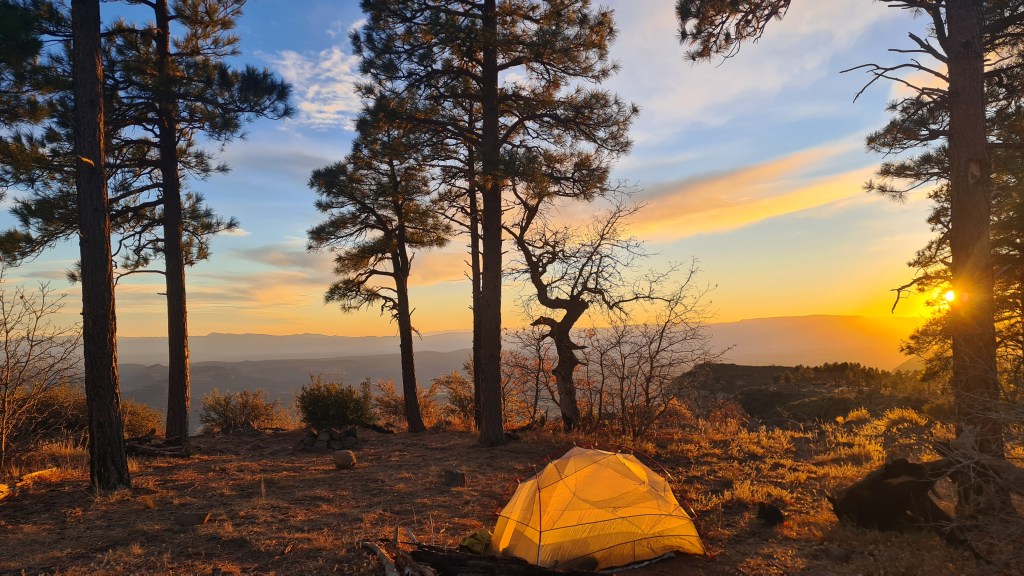
Section 1 to South Rim Grand Canyon 3rd October 2023 I set off from the Utah -Arizona stateline with a heavy feeling backpack and slight trepidation in pleasant cool sunshine and an initial stretch of about 90 miles hiking to reach the north rim of the grand canyon. The trail was well made and I soon climbed up from scrub desert through pinyon-juniper trees to the higher Kiabab plateau dotted with tall ponderosa pines. Trying to take it easy for the first few days to look after my feet and avoid injury, I kept to a moderate pace and under 20 miles per day. Camping was pretty straightforward making use of plenty of clear flat ground under the shelter of trees.

I chatted with 3 other hikers starting that same day; ‘Lentil’, ‘Good News’ and ‘Kidnapper’ – their ‘trail names’ – I decided just to be ‘Brian from Scotland’! That number of hikers was quite typical throughout the trail where I would be aware of other hikers each day, sometimes meeting them but often hiking on my own occasionally seeing signs of others such as their footprints.

The highest plateau elevations (up to 9,000 feet) were really fun with grassy meadows and gorgeous golden aspen trees amidst fir and pines. Temperatures were cool during the day and a chilly sub-zero (Celsius) at night, coating the tent with a layer of ice in the morning. Wildlife was surprisingly good; horned toad, lynx, woodpeckers, elk, deer and the ubiquitous ravens with their croaking and gurgling vocals.
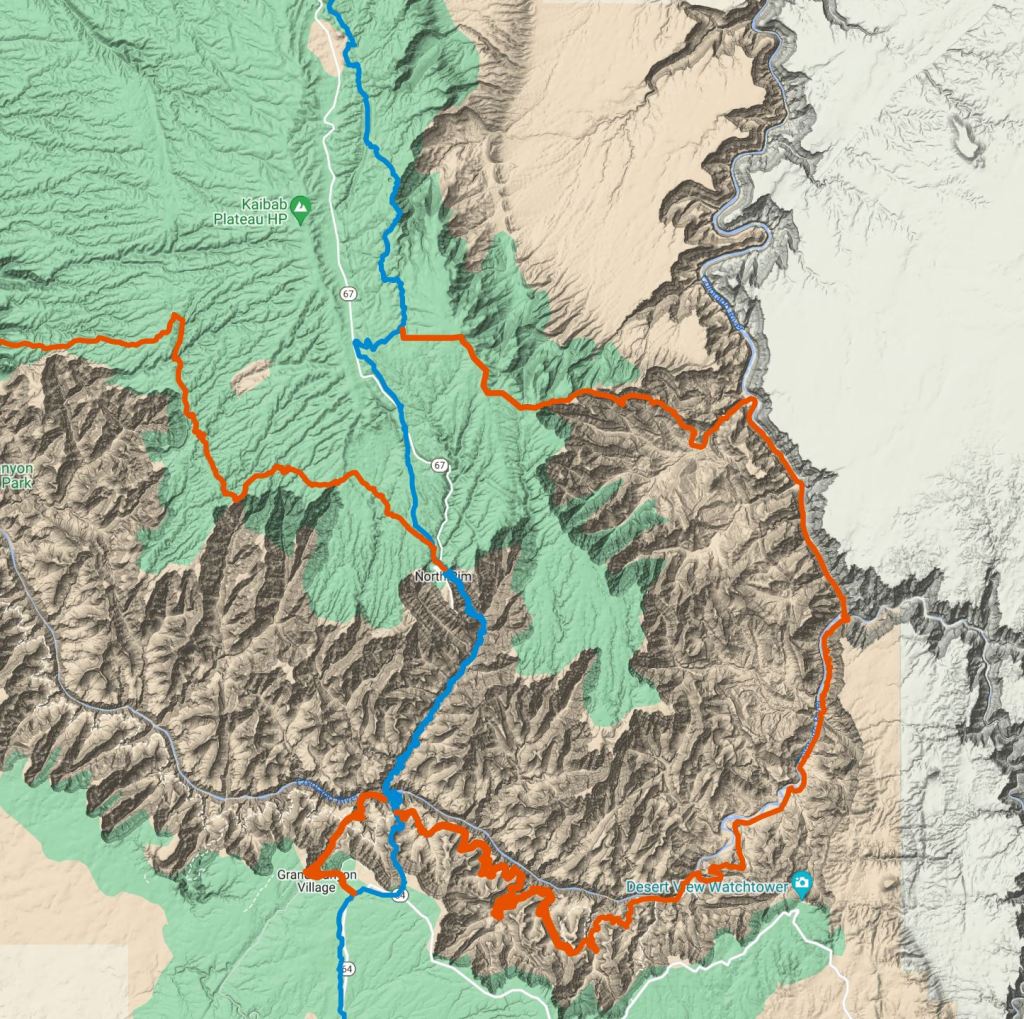
Reaching the north rim of the Grand Canyon felt like a minor but significant success as the first completed section of the trail and the chance to stock up on food at the small store, pick up a camping permit for the crossing of the canyon and meet a few other hikers congregating there.

The map below shows the AZT in blue taking a scenic 26 mile direct crossing of the grand canyon via the ‘corridor trail’ ….. as opposed to the orange line of the Hayduke, a 5-6 day rollercoaster of excitement from North to South Rim. The Hayduke then also has another 7-8 day adventurous and stunning section in the canyon heading west to Kanab creek and beyond.

‘Bonus’ Grand Canyon loop 11th October I made an ‘on the spot’ decision to do an extra loop before leaving the Grand Canyon southwards on the AZT. My reasons were that it seemed a pity to depart the canyon after such a brief visit, I heard of a cool area around the Hermit Trail that I hadn’t been to before, and it gave me the chance to do some bigger climbs but shorter miles than the next couple of weeks of long, flat plateau hiking on the AZT. Fortunately I was able to pick up up a last minute permit easily at the backcountry park office and I set off…..

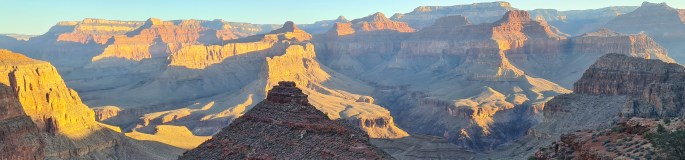
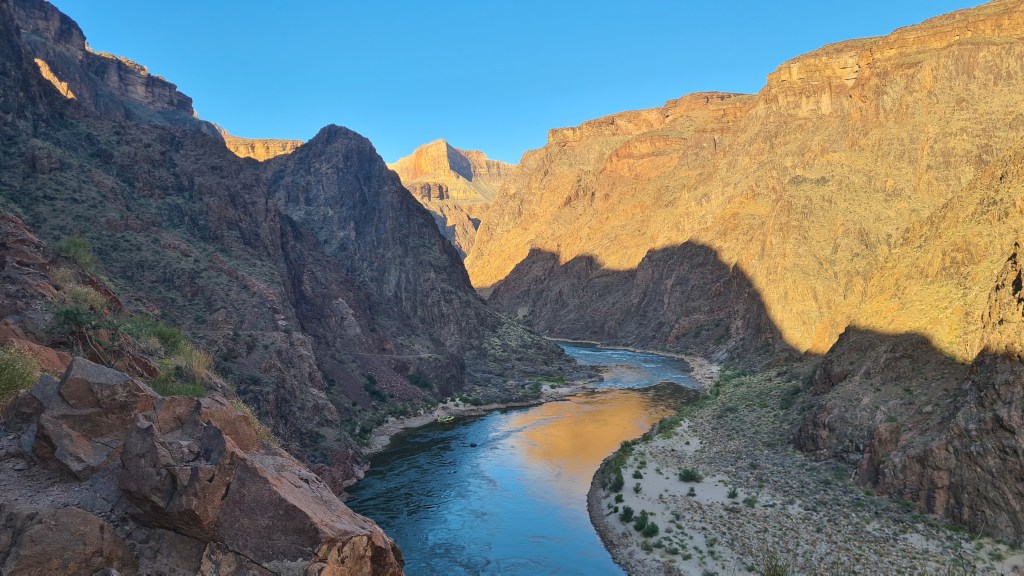
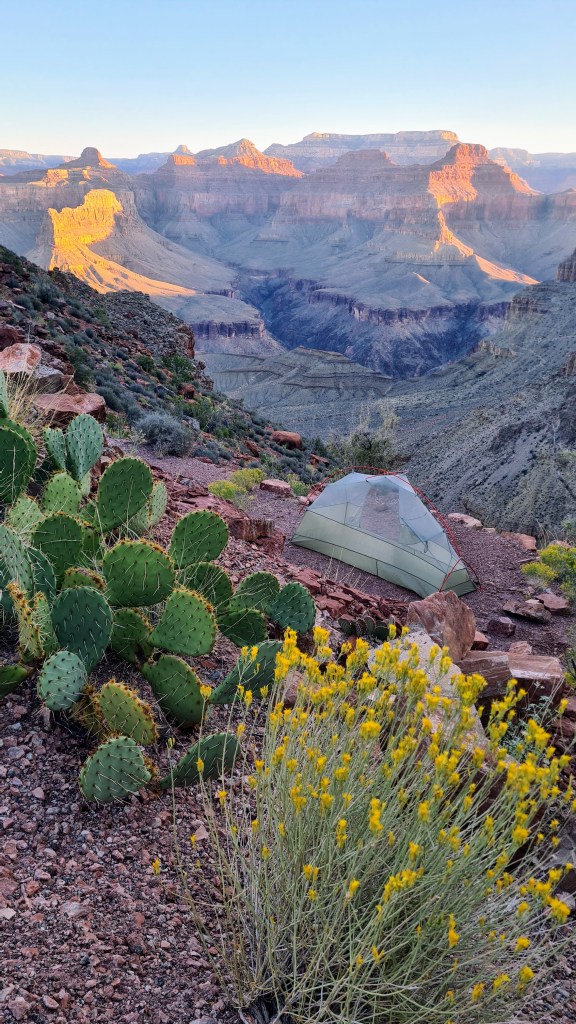
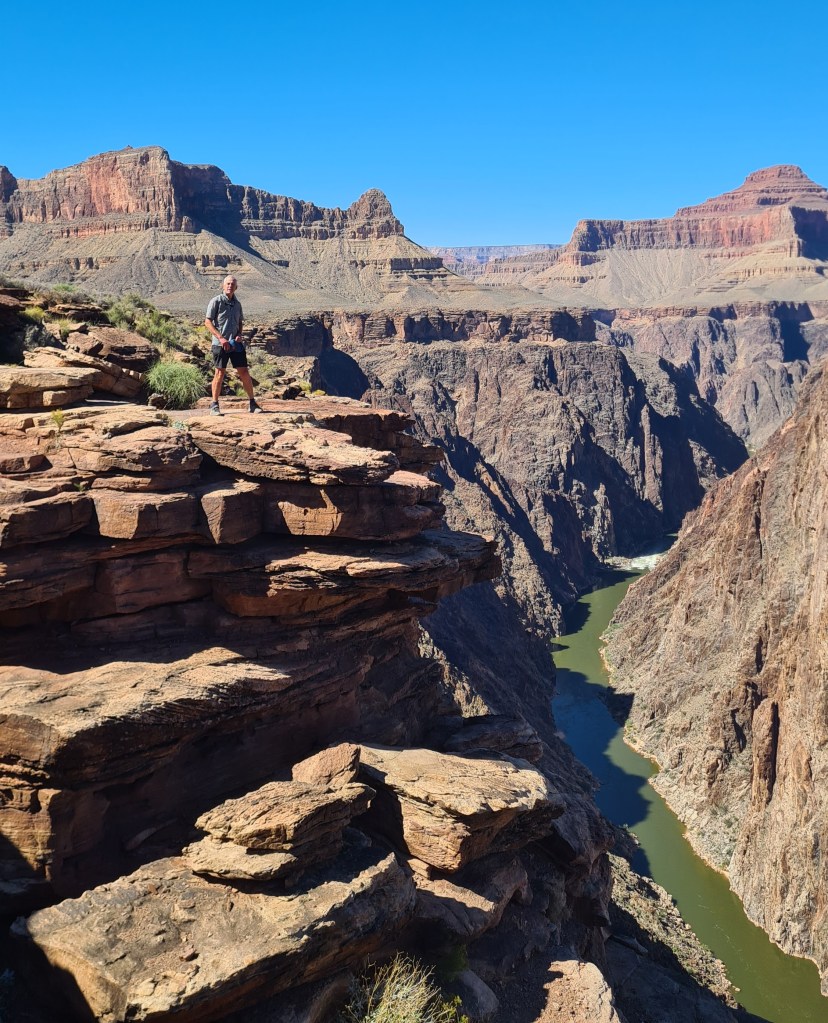
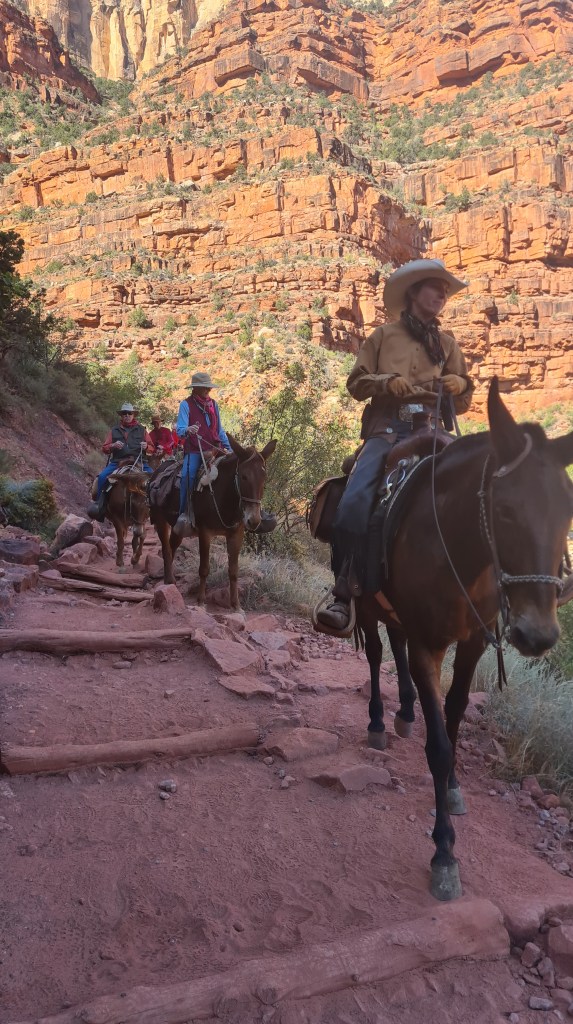
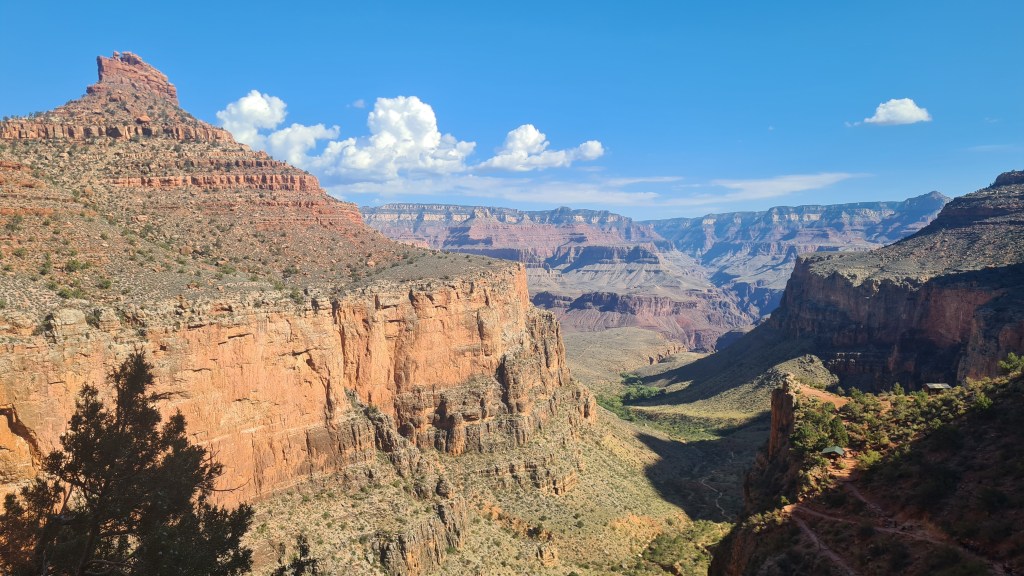
I had 3 1/2 days down the canyon (Bright Angel, Tonto West, Granite Falls and a bit of Boucher Trail) and in summary it was lovely, beautiful views, cool temperatures and away from the crowds.

Section 2 Grand Canyon South Rim to Flagstaff 14th October This section was always going to be tough for me as it was a long 115 miles of flattish high plateau to the next resupply in the town of Flagstaff – it wasn’t playing to my strengths as I like hills! That said the initial hiking through ponderosa pines was mellow, the water sources were sufficient and I was able to hike longer, up to 23.5 miles each day. The undulating terrain gave huge wide vistas, especially to Humphreys peak (the highest in Arizona that we walked up in 2017) and great sunsets and sunrises at camp. I was however relieved to arrive in Flagstaff to take a day off from hiking, sort out gear and food logistics, clean up and rest my battered feet.

Next Arizona Trail II Flagstaff to Tucson

Previous US South West & Hayduke

Photo gallery (or click image)

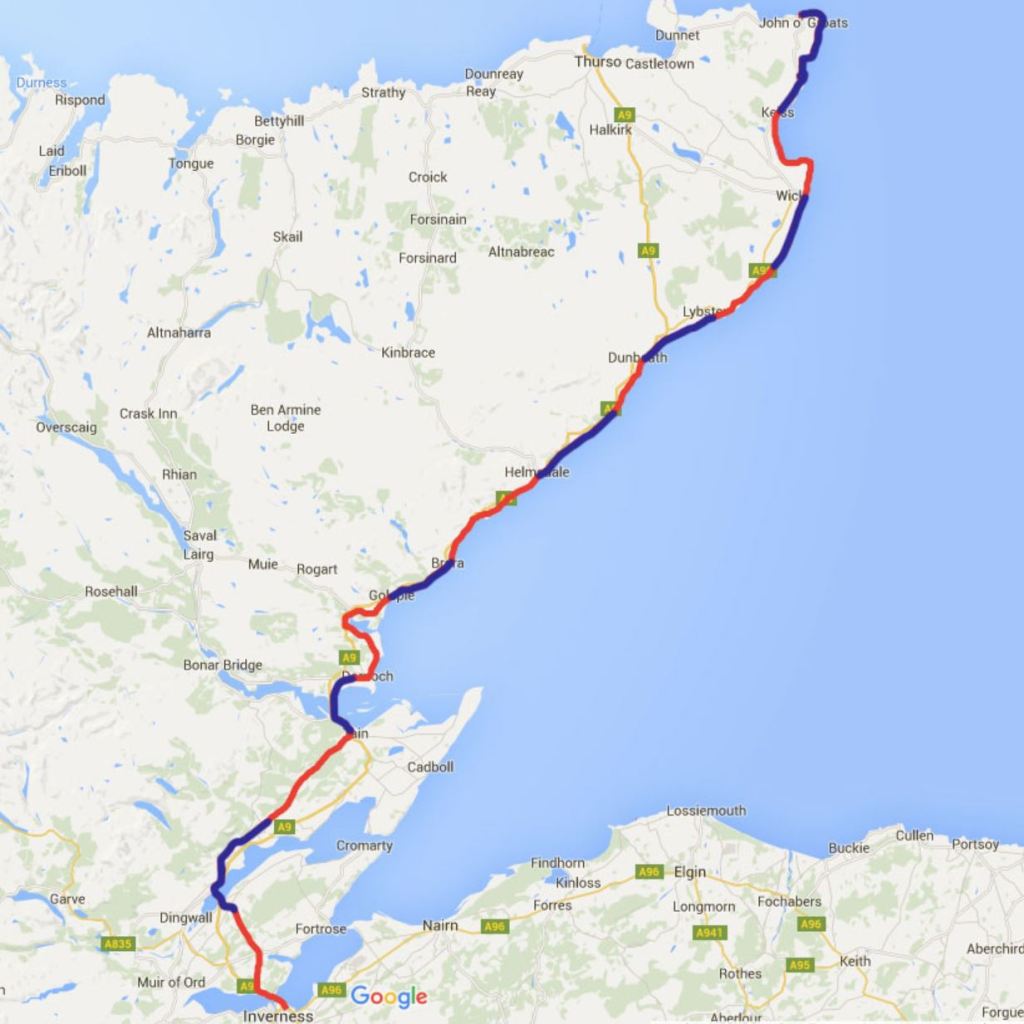
John O’ Groats Trail

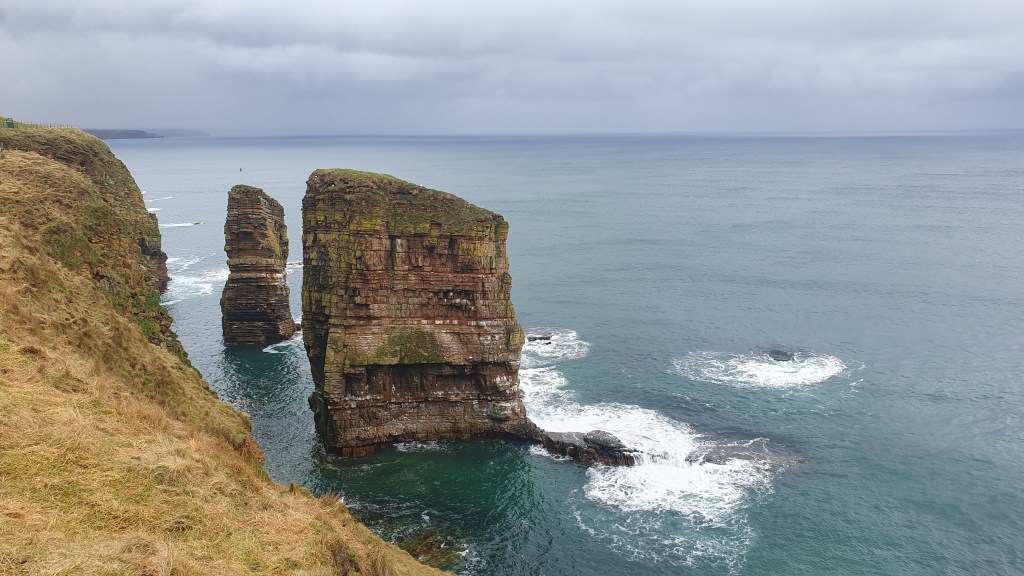
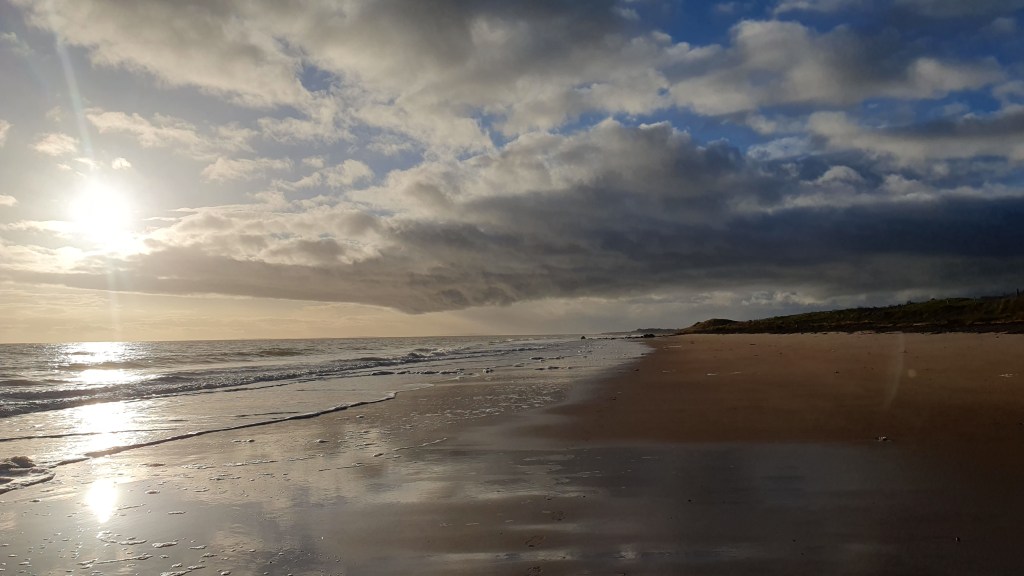
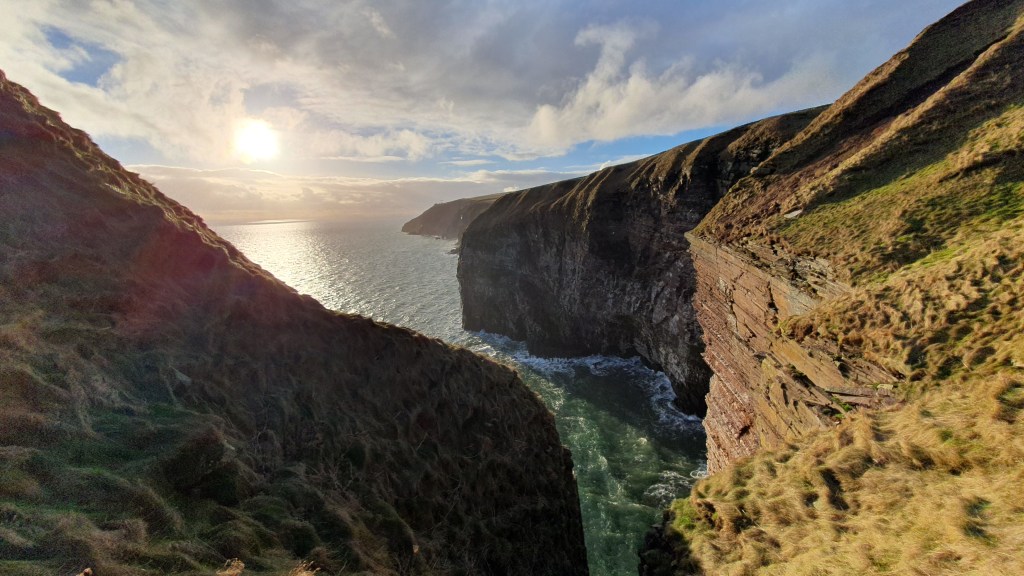
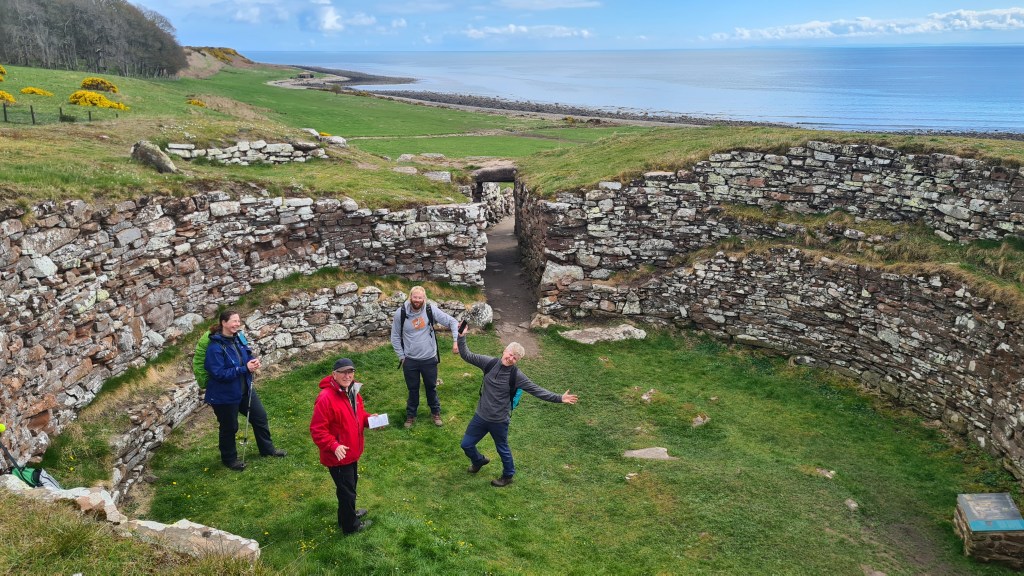
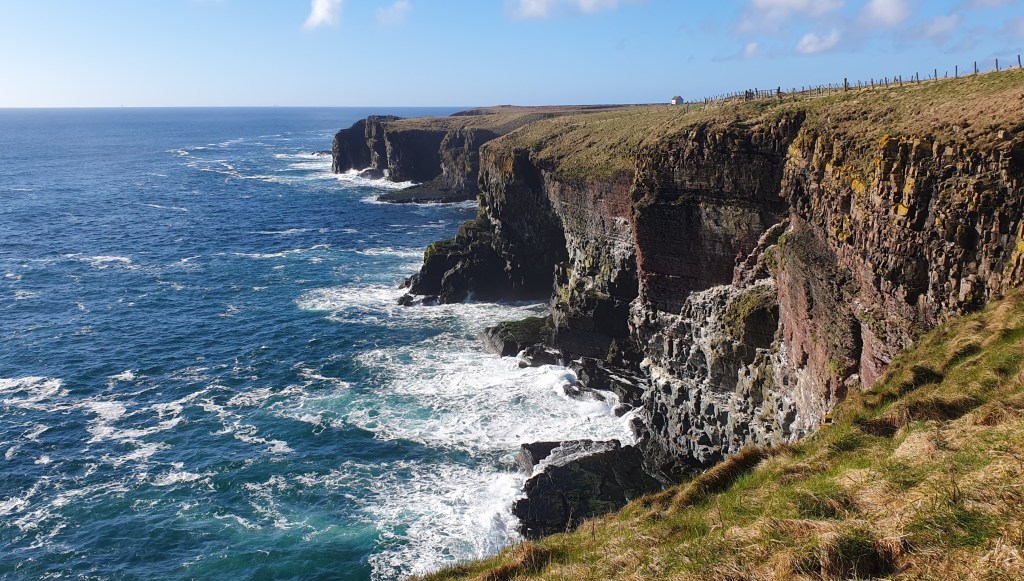
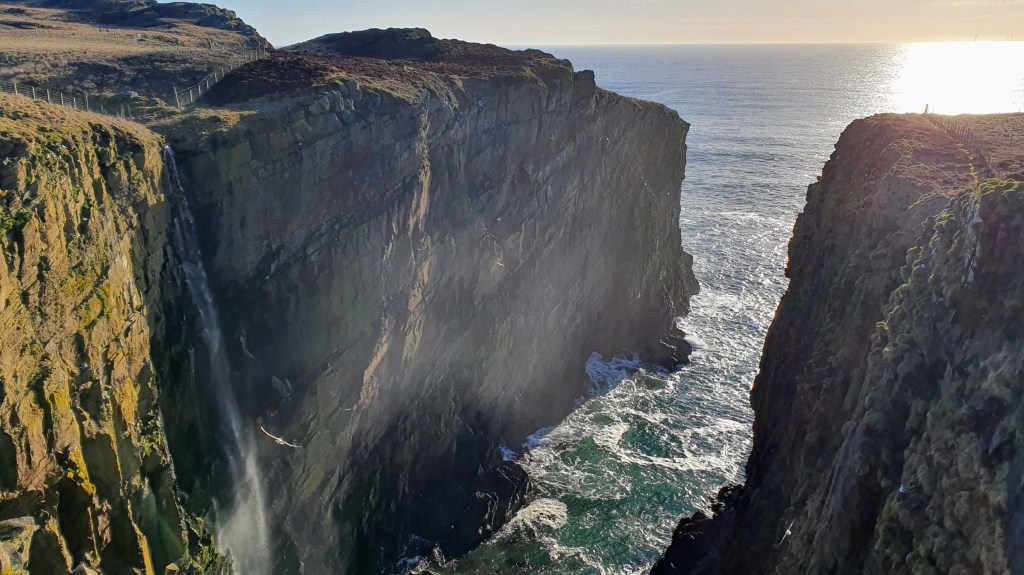
The John O’Groats trail (JoGT) is a 147 mile (236km), mostly coastal route from the city of Inverness to John O’Groats on the north east tip of Scotland. The scenery varies from pleasant inland agricultural areas, to beaches and wildly impressive sea cliffs with arches and sea stacks. The area is home to lots of seabird colonies and you have the chance to spot seals, dolphins and even whales. On top of that there is a tremendous historical interest along the way such as iron age Nybster broch to the Viking Old Wick Castle. And from more recent times there are many picturesque harbours and sights like Whaligoe Steps.

The John O’Groats trail acts as an excellent connector to the 74 mile long Great Glen Way in the south. And south of the GGW, the 94 mile West Highland Way connects to the outskirts of the city of Glasgow.

Going further south the JoGT forms the northern leg of the complete traverse of Great Britain from Lands End to John O’Groats at about 1300 miles (LeJog journey planner).

The JoGT trail is fairly new and is still being improved in places with some rougher, boggy sections and barbed wire fences particularly between Helmsdale to Wick. So it can be a pretty challenging walk overall but constant improvements are being made by the Friends of the John O’ Groats Trail on the trail and signage.

Our hikes

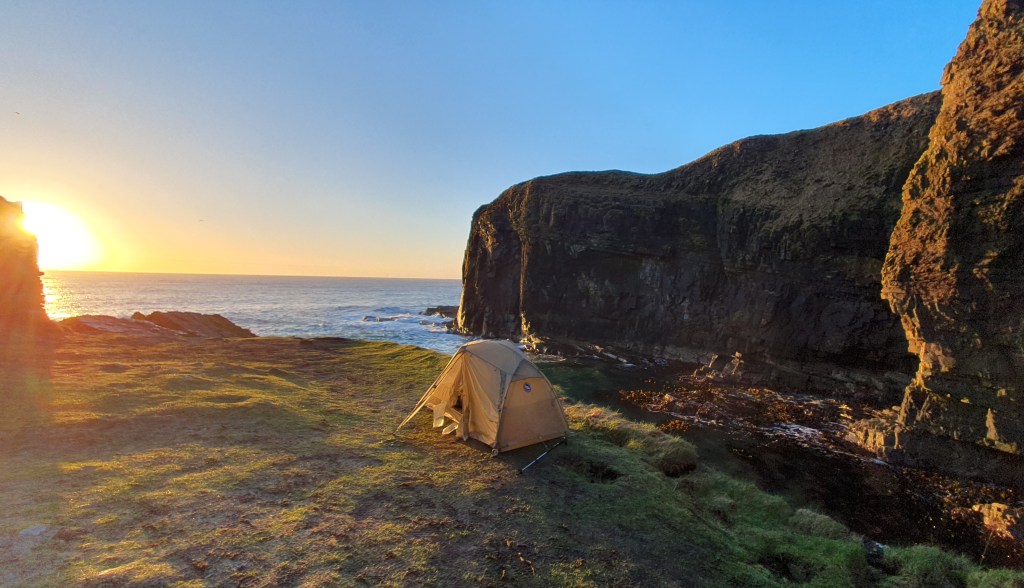
We live near to the southern area, and have walked the trail in sections, including Brian backpacking the northern part from Dunbeath to John O’Groats in 2023. Here are a few pictures from those hikes…

Resources

John O’ Groats website has lots of details including status updates, green/amber/red ratings for each stage, blog posts, plus you can join or donate to the Friends of JoGT

Walkhighlands website also has a trail description, maps, gpx and off-line app

A guide book from Cicerone is excellent

JoGT strip map from Harvey Maps, also very useful

Brian’s description of a 3.5 day possible alternate route in the south from Munlochy to Tain.

Rest of Europe

Europe outside Great Britain has it all for us, from the Alps and Dolomites to sunny winter destinations around the Mediterranean.

Italy

2024 Dolomites Alta Via 9 (and AV1 north section) backpacking (blog)

2023 Dolomites Alta Via 2 backpacking (blog)

2013 Dolomites climbs and scrambles (photos)

2007 Dolomites climbs and scrambles (photos)

2001 Dolomites climbs and scrambles (photos)

1994 Dolomites Alta Via 1 backpacking (photos)

Spain

2023 Gran Canaria backpacking GR131 (blog)

2023 Tenerife backpacking GR131 (blog)

2023 2017 Majorca backpacking GR221 (blog)

2023 Costa del Sol and Granada area walking

2020 2018 2016 2013 2011 2005 2000 1996 Costa Blanca climbing, walking (photos)

2007 1997 Majorca climbing

France

2015 Pyrenees backpacking (photos)

2012 Provence climbing and walking (photos)

2011 Pyrenees Ariege climbing and walking

2007 French Alps Chamonix and Ecrins climbing (photos)

1997 Corsica GR20 backpacking and climbing (photos)

1993 Pyrenees Pic du Midi to Perdido backpacking (photos)

1989 Vanoise and Mt Blanc climbing (photos)

1988 Pyrenees Andorra backpacking

Austrian-German Alps

2024 Karwendel and Stubai short hikes (blog)

2018 Austrian Alps hut to hut thru’ Zillertal, Stubai and Otztal (blog)

2011 Austrian and German Alps climbing (photos)

Switzerland

2008 Swiss Alps Bregaglia climbing (photos)

1991 Swiss Alps Bernese Oberland climbing (photos)

1990 Swiss Alps Zermatt area climbing (photos)

Norway

1994 Jotenheim hut to hut ski tour (photos)

1988 Hardangervida hut to hut ski tour (photos)

Greece

2017 Kalymnos climbing (photos)

2016 Crete backpacking (photos)

2015 Kalymnos climbing (photos)

Turkey

2025 Lycian Way backpacking -a one week sampler (blog)

2012 Geyikbayiri rock climbing and Istanbul (photos)

Iceland

1995 Geyser, Gullfoss, Pingveller hiking

Rest of Britain

Some of our British backpacking trips but also other hikes, climbs, sea kayaking and cycling.

Scotland

Some sample Scottish trips from a lifetime in the outdoors!

England

2023 2020 2019 South West Coast Path section hikes (blogs)

2022 Cumbria Way (blog) 70-80 miles across Lake District National Park

2016 2015 Coast to Coast Trail (blog) of 190 miles across northern England through the Lake District, Yorkshire Dales and North York Moors National Parks.

Lake District climbing and fell walking

Cornwall and the south west climbing

Wales

2021 Pembrokeshire coastal path (4 days)

1999 1996 1995 1991 1990 1989 Llanberis and Anglesey climbs and hill walking

Ireland

1999 Donegal sea cliff climbing

1999 Connemara hill walking

1999 Dublin Dalkey quarry rock climbing

Tenerife GR131 backpack

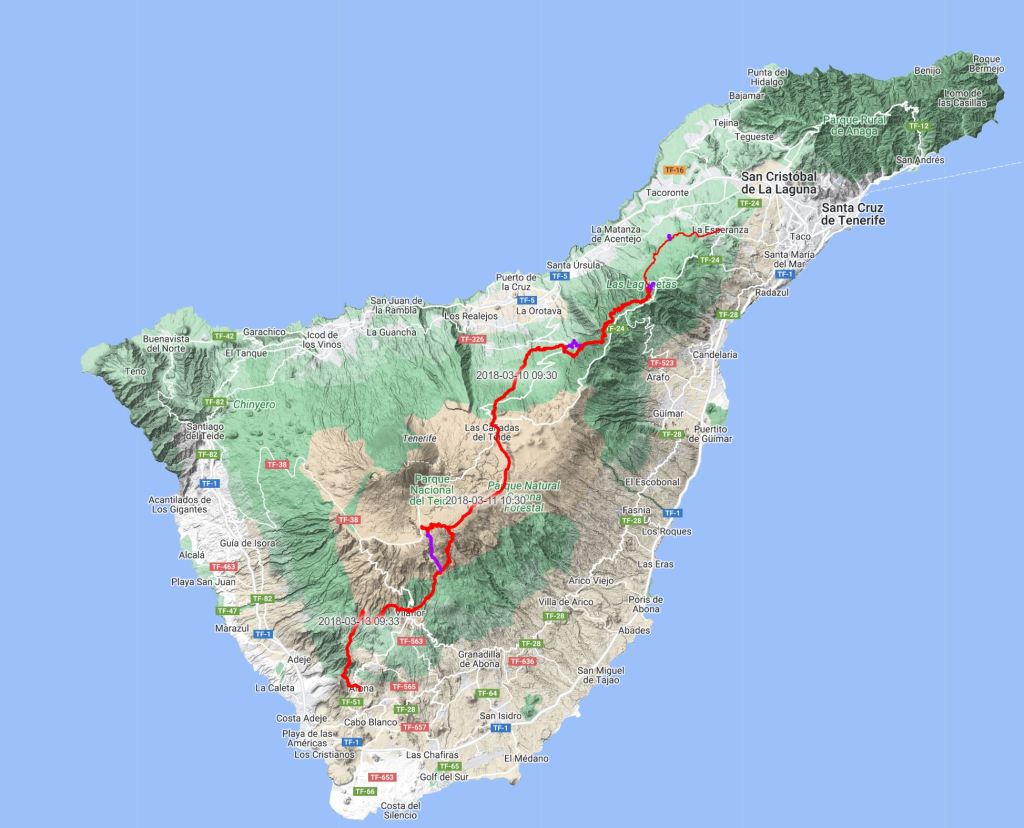
At the end of March 2023 Brian hiked the Gran Canaria GR131 then took a ferry to continue with the Tenerife section of the same trail.

Tenerife GR131 I hiked about 67 miles in 5 days (guidebook route is 58 miles). I again was armed with a guidebook, Cicerone’s Trekking in the Canary Islands as a kindle app.

The GR131 crosses from coast to coast on most of the Canary islands but in Tenerife it terminates inland at both ends. Possibly this is due to Tenerife being heavily populated around the tourist coastal fringe and creating a scenic trail in these parts is more difficult.

Anyway the boat landed at the biggest town on the island, Santa Cruz de Tenerife in the north east, and I then hopped on a bus down to the southern tip at Los Cristianos before getting a connection to the trail’s southern start at Arona.

It was pretty hot again – maybe 28 to 30C – here at 4pm in the small town of Arona 600m above sea level. But it was going to get cooler as I set out up the arid, cactus landscape to the north. After collecting water to do me til tomorrow morning I set off and crossed a couple of dry barrancas which looked like old lava flows before climbing up to an attractive craggy hillscape around Roque Imoque. The air was really hazy again as in Gran Canaria so I lost sight of the coast but the hiking was on great trails and I soon entered shady pleasant pine forest causing the temperature to dip nicely.

I found a campsite on a rocky ridge in trees overlooking Barranco del Rey pleased with today’s travel progress and well established on the hike.

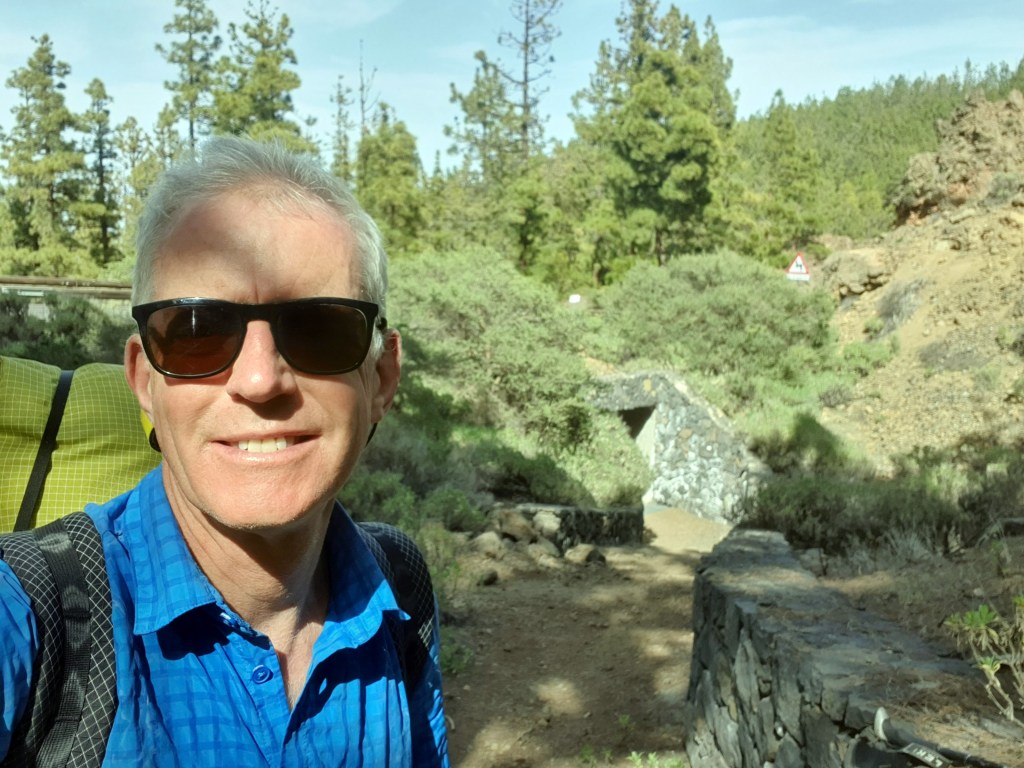
I continued the next day with pleasant undulating walking across pine clad hillsides on the southern slopes of El Teide, the island’s volcano high point at 3715m. I passed a concrete water tank where it would have been possible to collect water using buckets lying around and then remarkably some water potholes under a cool stone bridge. There was a running race about to start in the town of Vilaflor as I arrived at 10am and it was pretty vibrant and noisy as I bought some food and water for a few days then sat down for a coffee in the shade. I even managed to bathe my feet in town waterfall feature!

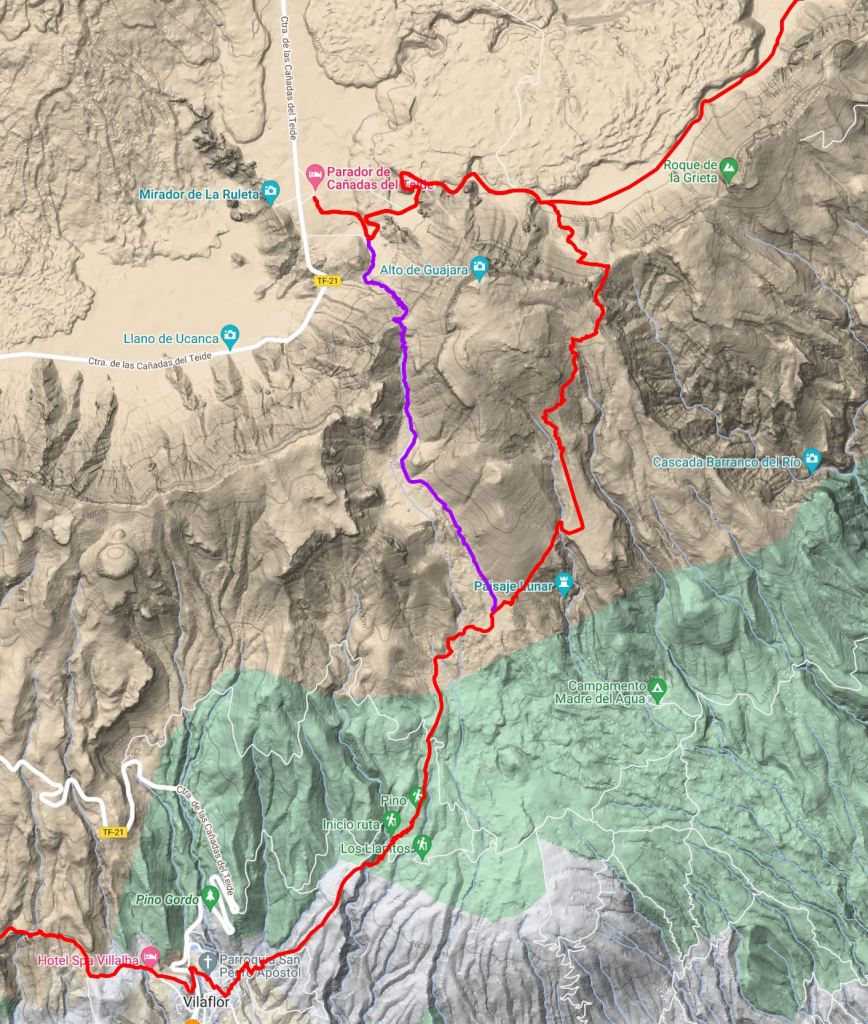
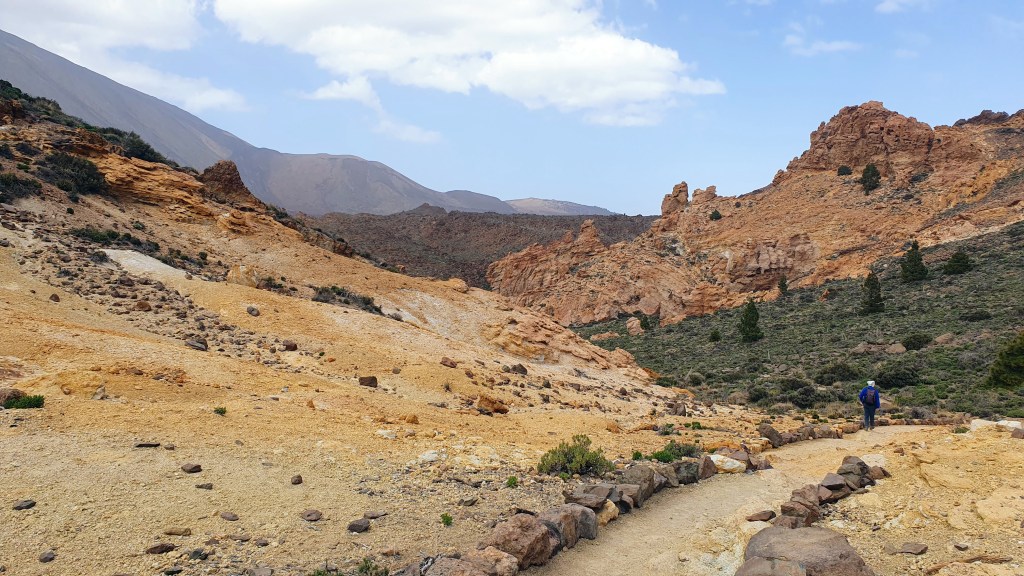
From there, the good trail climbed a bit more steadily to the edge of the treeline with views to raw lava hillsides above. I took a minor trail away from the GR131 rounding the west side of the hill of Guajara to get to the National Park centre at Parador. This looked an interesting route in itself and meant I avoided doing a part of the GR131 twice to get to Parador (purple line on map below).

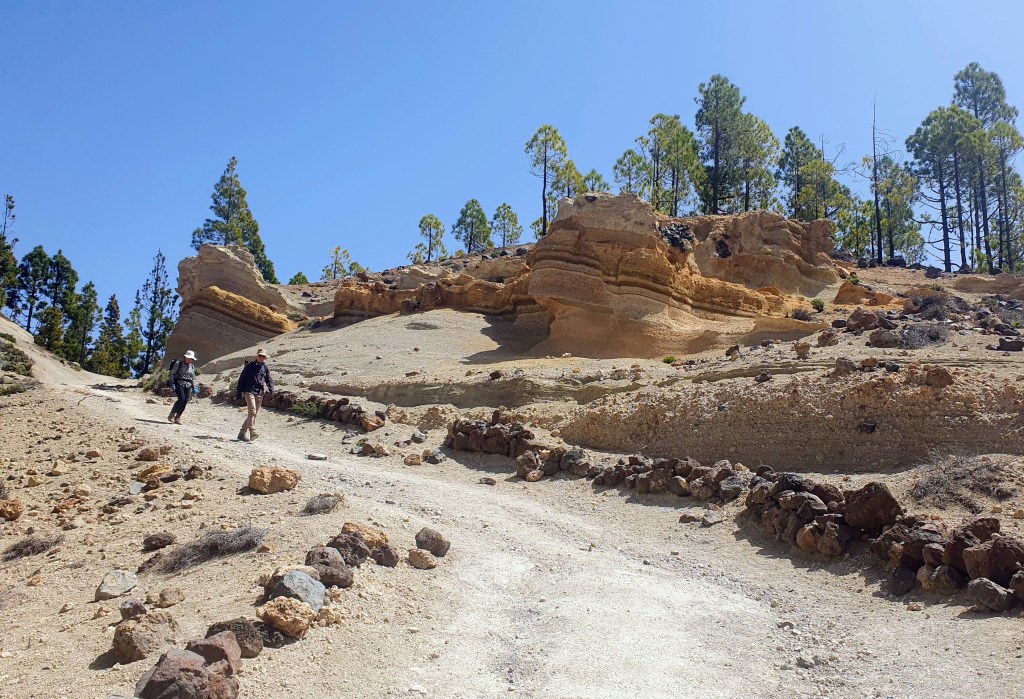
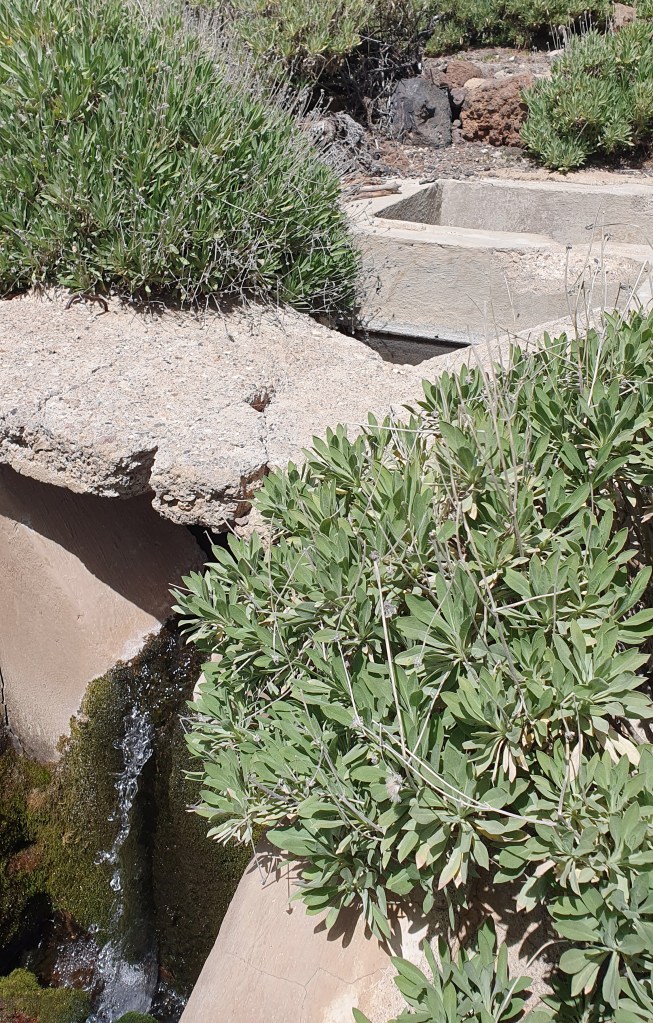
I was now climbing steeply up a valley on open lava slopes with feint trail and cairns. I followed a tiny (now broken) aqueduct line before coming upon a strong water flow emerging from a pipe into a concrete tank. Probably the best water source I saw on either of the islands!

After a lunch stop in the shade of a pine tree I pushed up to the col at 2,450m to views of El Teide at last! From the col there was a better trail zig zagging down to the valley below and Parador car park and visitor centre where I collected some more water for the night.

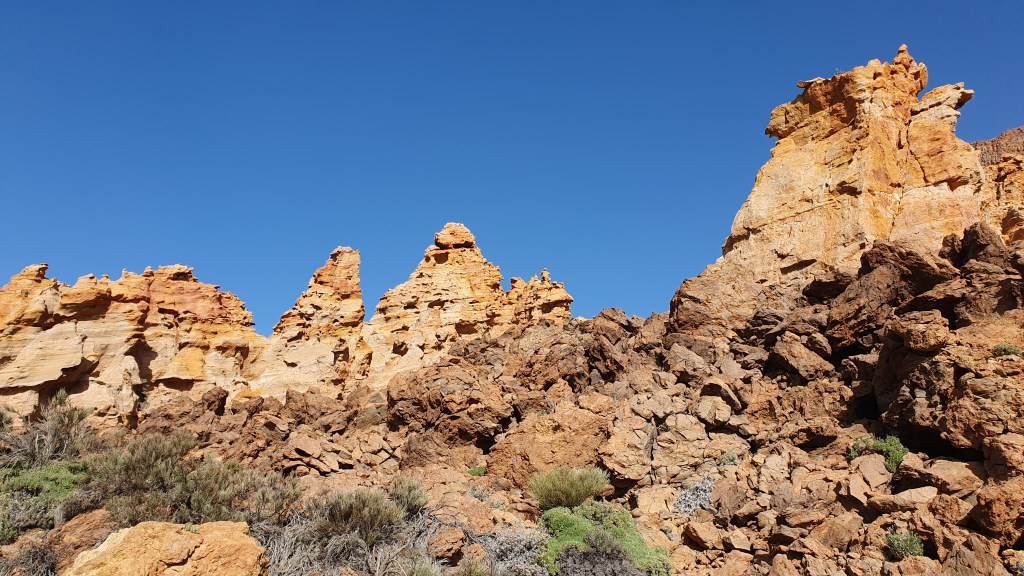
Leaving the crowds of tourists, I headed back east to the GR131 on jeep tracks past a cool looking climbing area of surreal volcanic pinnacles. The air temperature was now more pleasant higher up and the walking was scenic. I decided to climb up to another col to the south on the GR131 to camp to the east of Guajara and found some flat spots to pitch the tent. This was Degollada de Guajara, at 2,390m, the highest point on the GR131 in the Canaries I think.

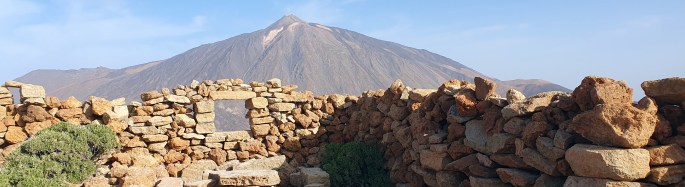
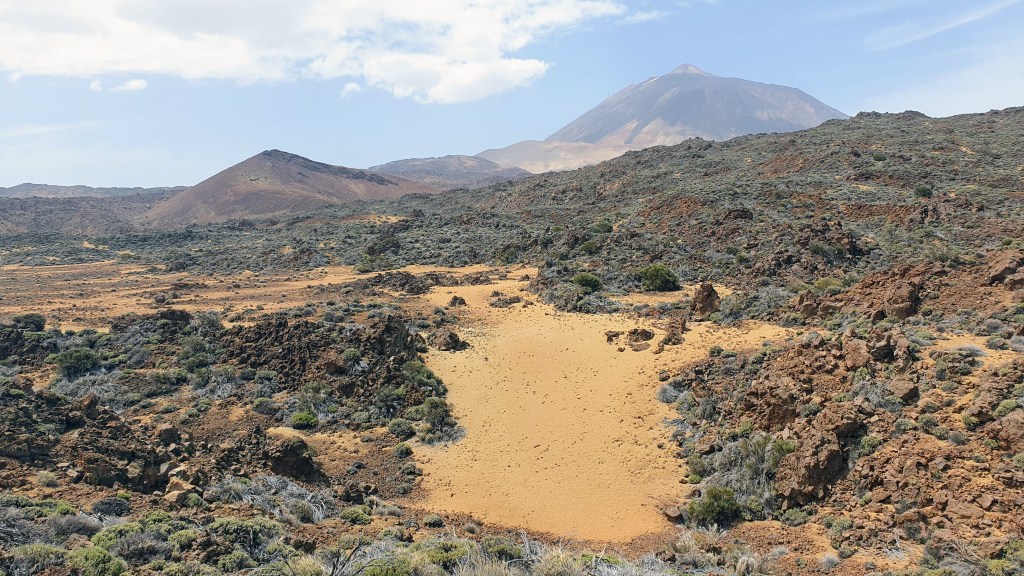
First thing in the morning I hiked up Guajara the hill beside camp with views across to El Teide and thankfully a bit less haze than on previous days. The ruins of an old observatory adorn the summit (see banner picture above), seemingly the first high altitude observatory. Returning back to the trail there was a long flat section on jeep track skirting the south of El Teide around the lava fields and I saw a few other hikers and runners here. I headed to the road at El Portillo Alto which had a couple of busy cafes so I hiked on down the road for a mile or so to El Portillo Visitor Centre. I wanted to pick up water but the taps at the toilet had ‘Non Potable’ signs up. Since this was likely my last chance for water before tonight I hiked back to the first café and sat down for a sandwich and chips and filled up on water there. Probably a 5km round trip….but worth it!

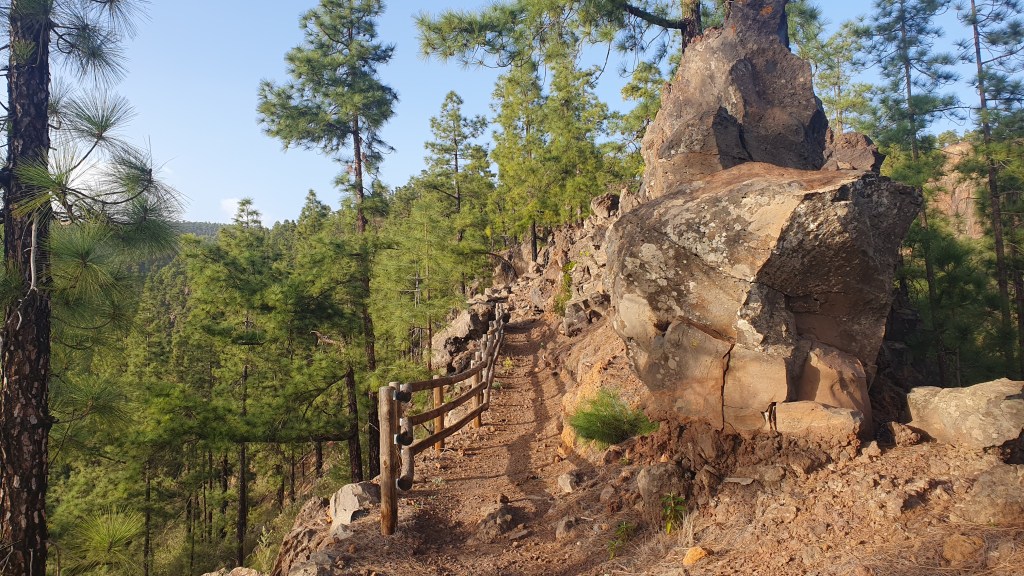
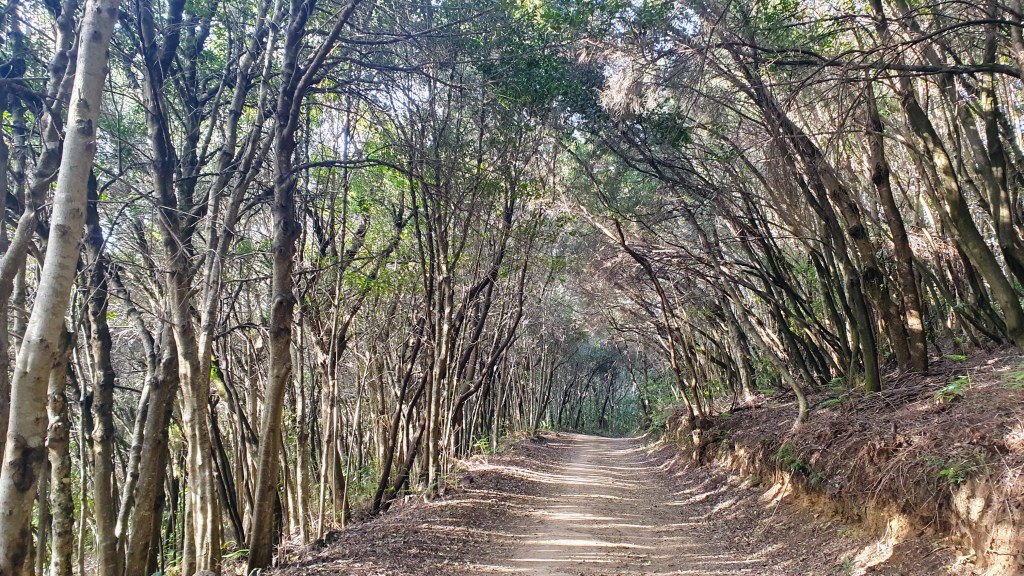
Next I descended north away from El Teide, down into pine woodlands on a track covered with ‘No Cycling’ signs but obviously ignored as there were deep rutted berms from mountain bikes all the way. At about 5.30pm I found a rocky river bed to cook up pasta and tea as a nice relaxing stop. The forest changed from pine to ‘laurisilva’ which is a mix of scrub and pine with some flowering giant heather trees. Unfortunately for me it didn’t provide camping spots but I lucked out by coming across an open wooden shelter with a table and a micro spot for the tent. Phew!

The dawn chorus in this forest was tremendous and I was away early in the cool air traversing across forested slopes to the recreational camp area of La Caldera. With high hopes of a shower, charging my phone, washing and a pleasant café I was a little disappointed. The café was closed, the power sockets were dead and about 6 buses of screaming school children arrived just before me! I did get a good wash though and treated the water ready for another dry camp that night.

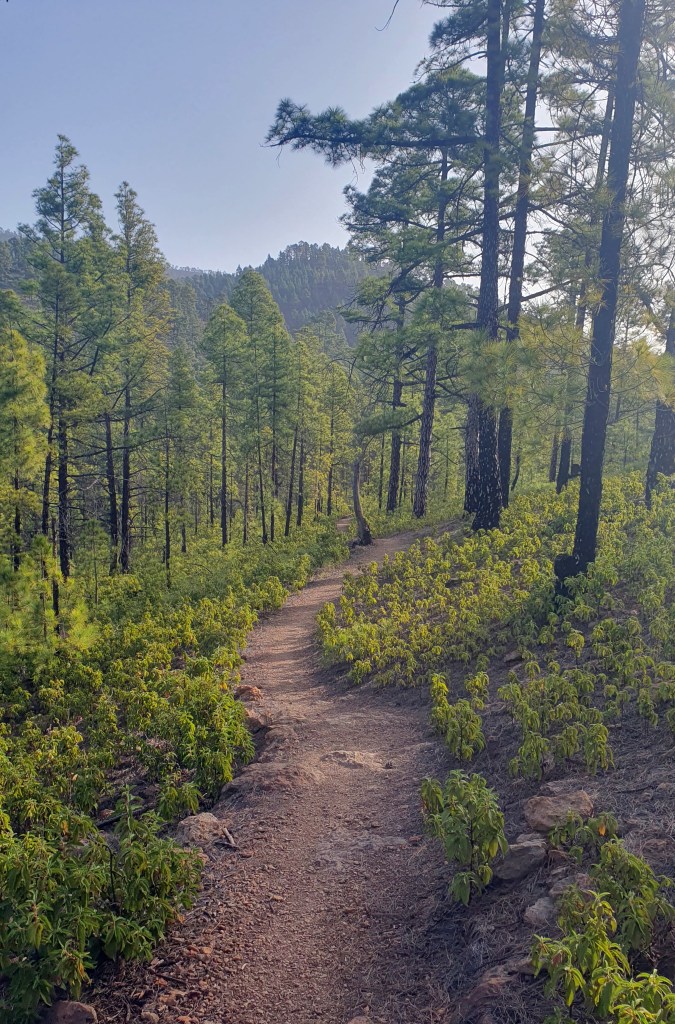
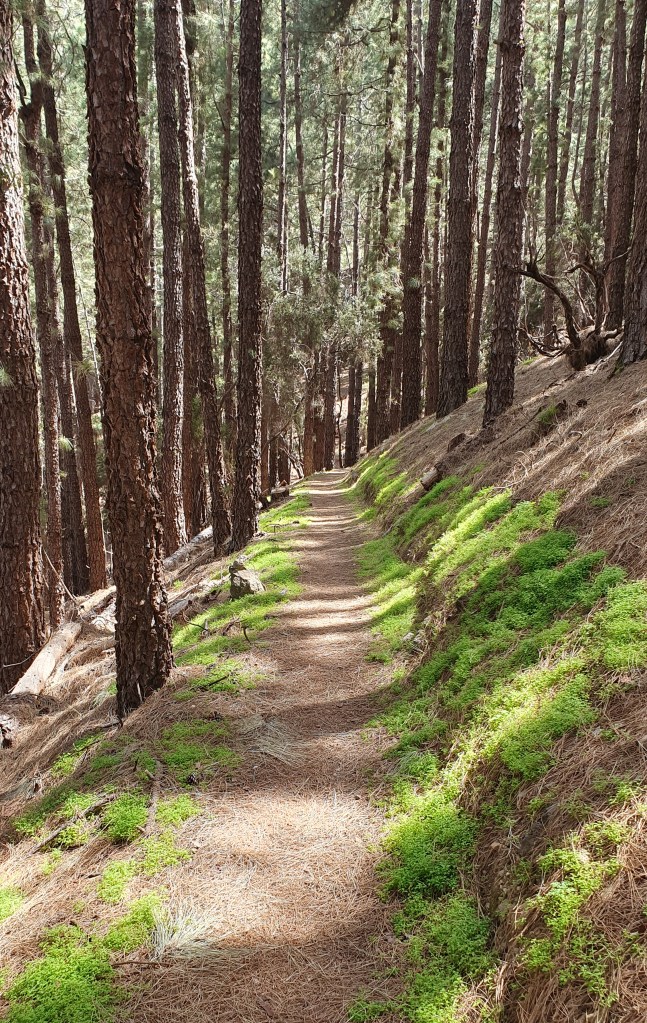
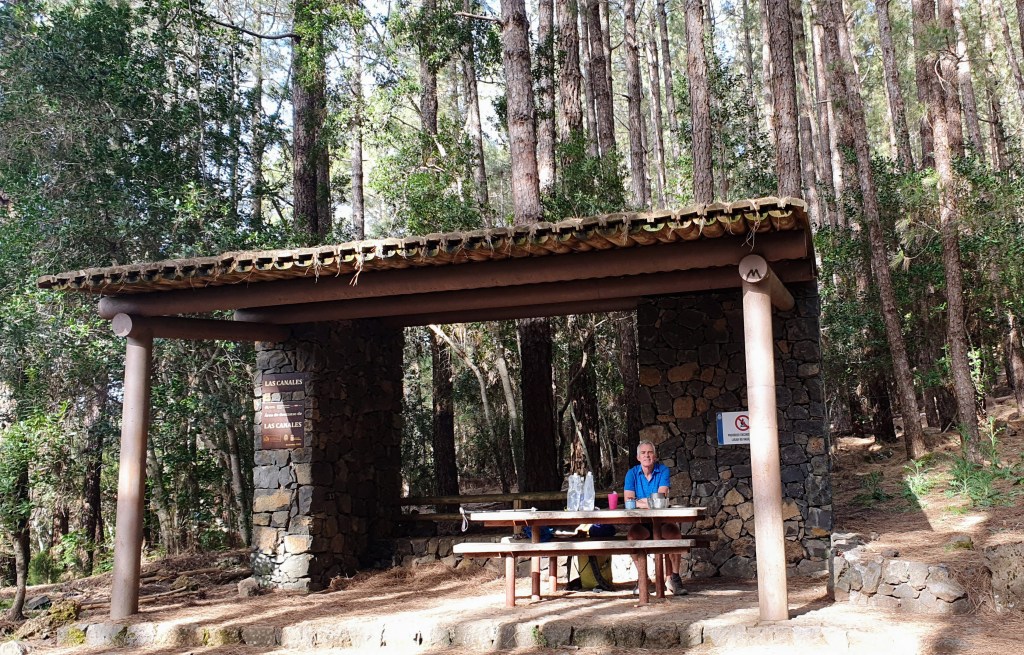
From El Caldera I climbed about 2,000 feet up in pine forest to reach a well crafted trail undulating round very steep sided hills – reminiscent of the Pacific Crest Trail in southern California. It was here that I met Toby coming the other way. He was hiking all the islands on the GR131 and had the tiniest backpack I think I have ever seen, using a poncho to double up as a tent. After an interesting chat about trails covering everything from Arizona to Sweden we departed on our ways with the temperature cooling nicely in the late afternoon. I stopped at the wooden shelter of Las Canales to cook up dinner with the luxury of a table and benches.

From here I left the pine forest and trail to hike along a less interesting managed forest on a dirt road. Camping options looked less attractive as well, but I was saved just before dusk when I saw a sign to a recreational camping area at Las Calderetas about 1/2 mile north of the GR131. It turned out to have good camping platforms at the edge of the forest and I happily plonked down in the dark after a good 20 mile day.

All that remained was a short 4 1/2 mile potter to the northern terminus of the trail at La Esperanza the next morning. I got a bus straight away down to the larger university town of La Laguna and form there a second bus to Santa Cruz de Tenerife for a much needed hotel shower and good food before flying back to Scotland!
Thoughts on Tenerife GR131

Another really nice short backpack taking 3 full days and two half days at either end. The southern part is more arid with lava flows whilst the north mainly consists of good, well crafted trail contouring round mountain sides in sparse pine woodland akin to the Pacific Crest Trail in southern California. As per Gran Canaria, there was almost no running water so I had to plan out picking up water at recreational campsites, cafes and towns.
Again, a downside was the amount of toilet paper alongside the trail- carry it out please folks!!

Useful links

Guide book for GR131 – Cicerone’s Trekking in the Canary Islands

Mapping app I used – Outdooractive