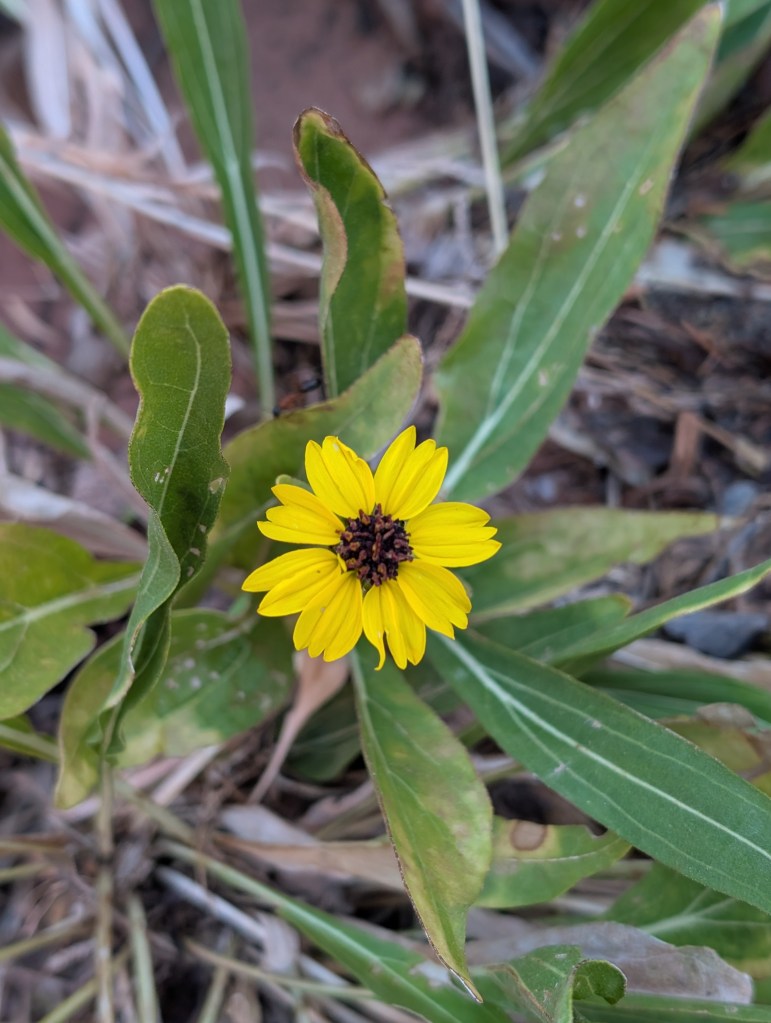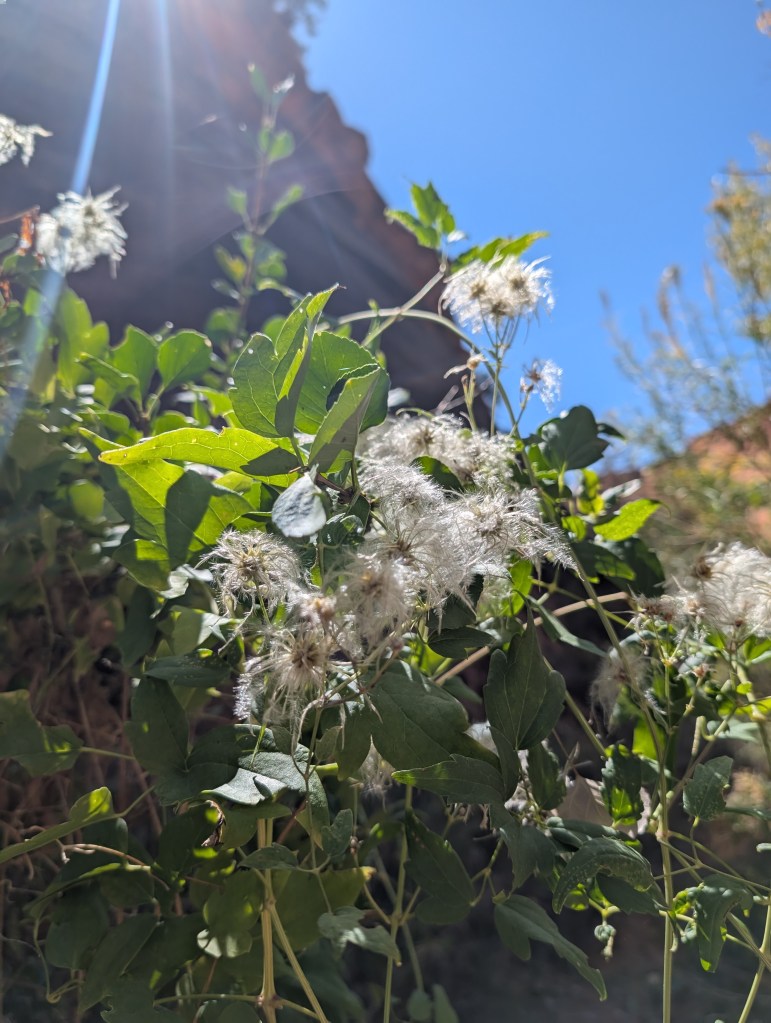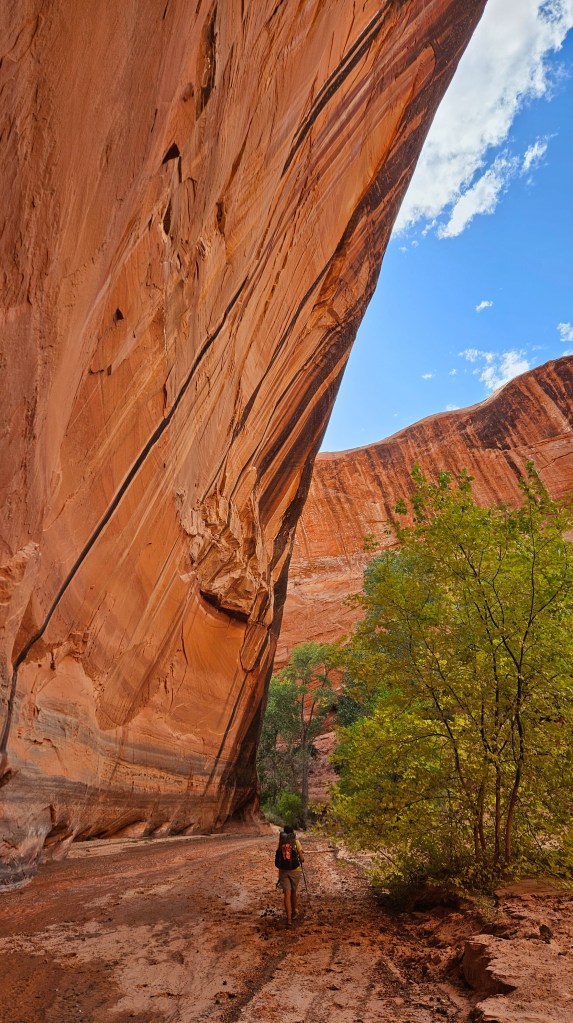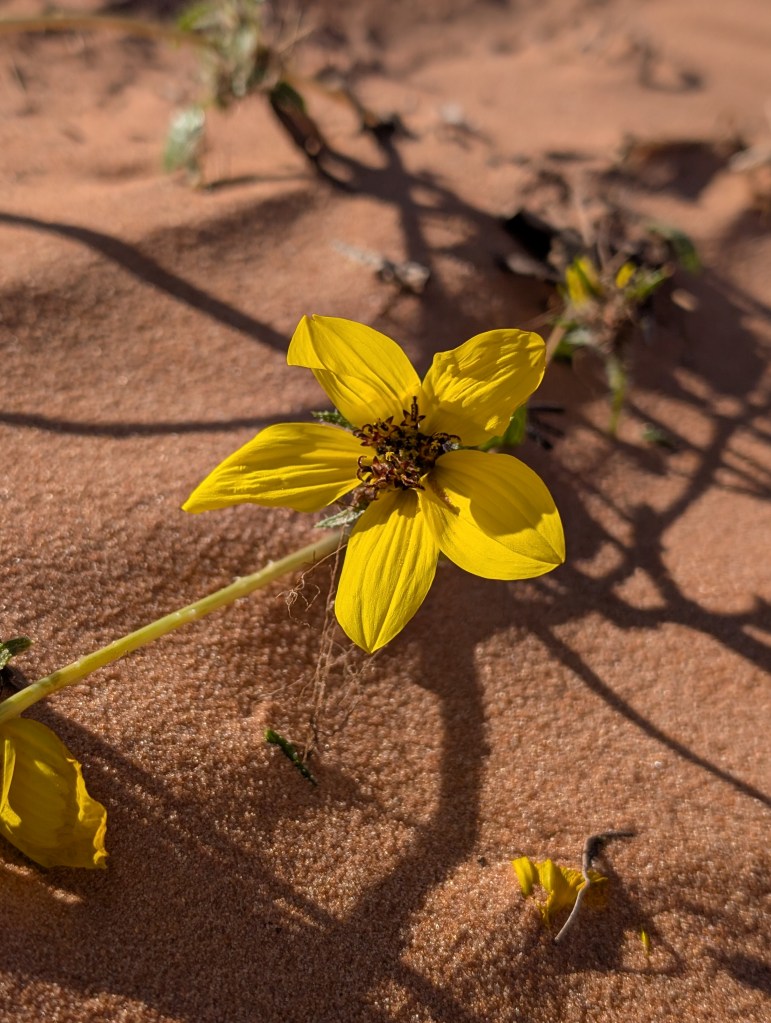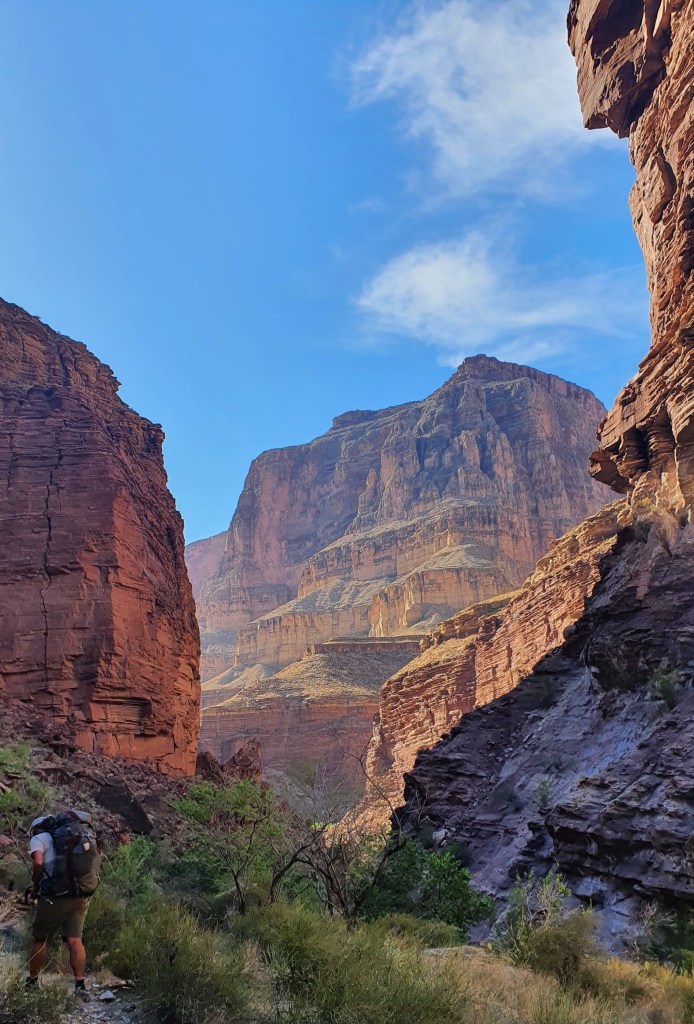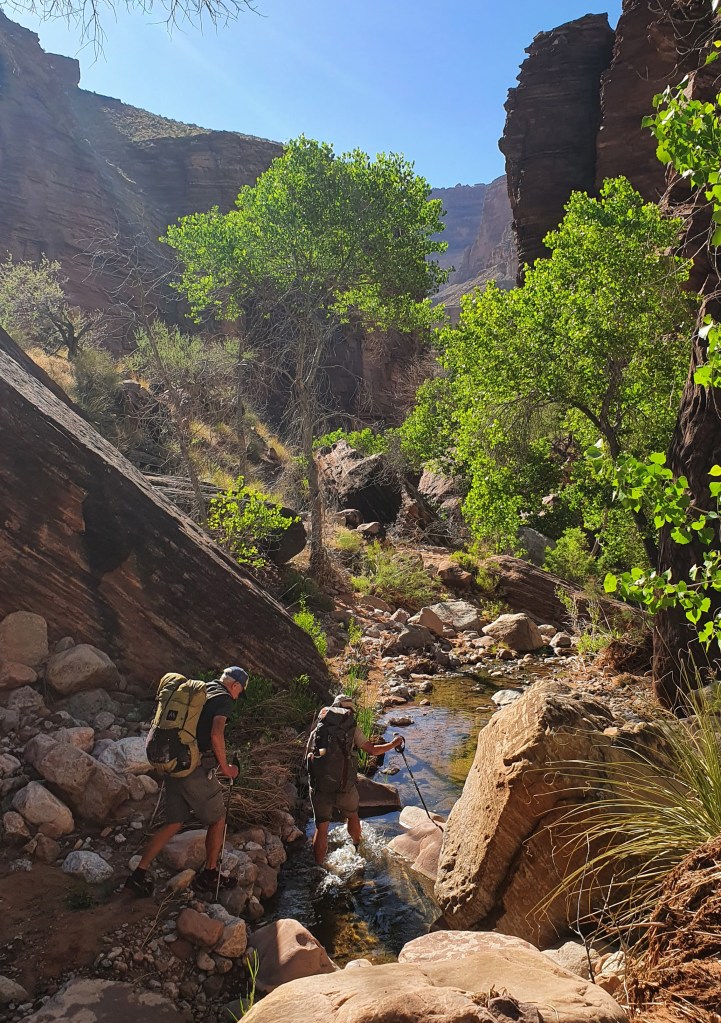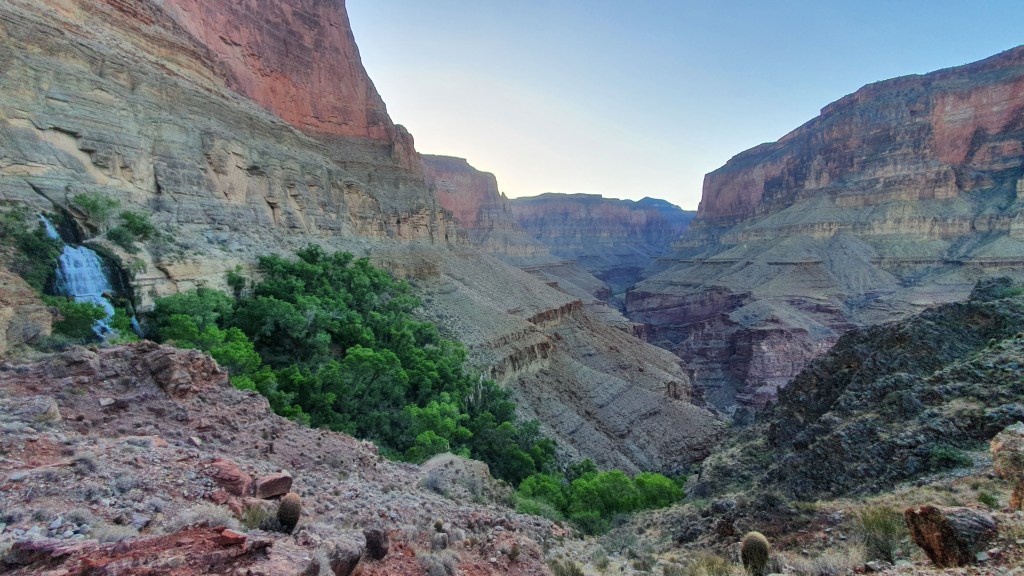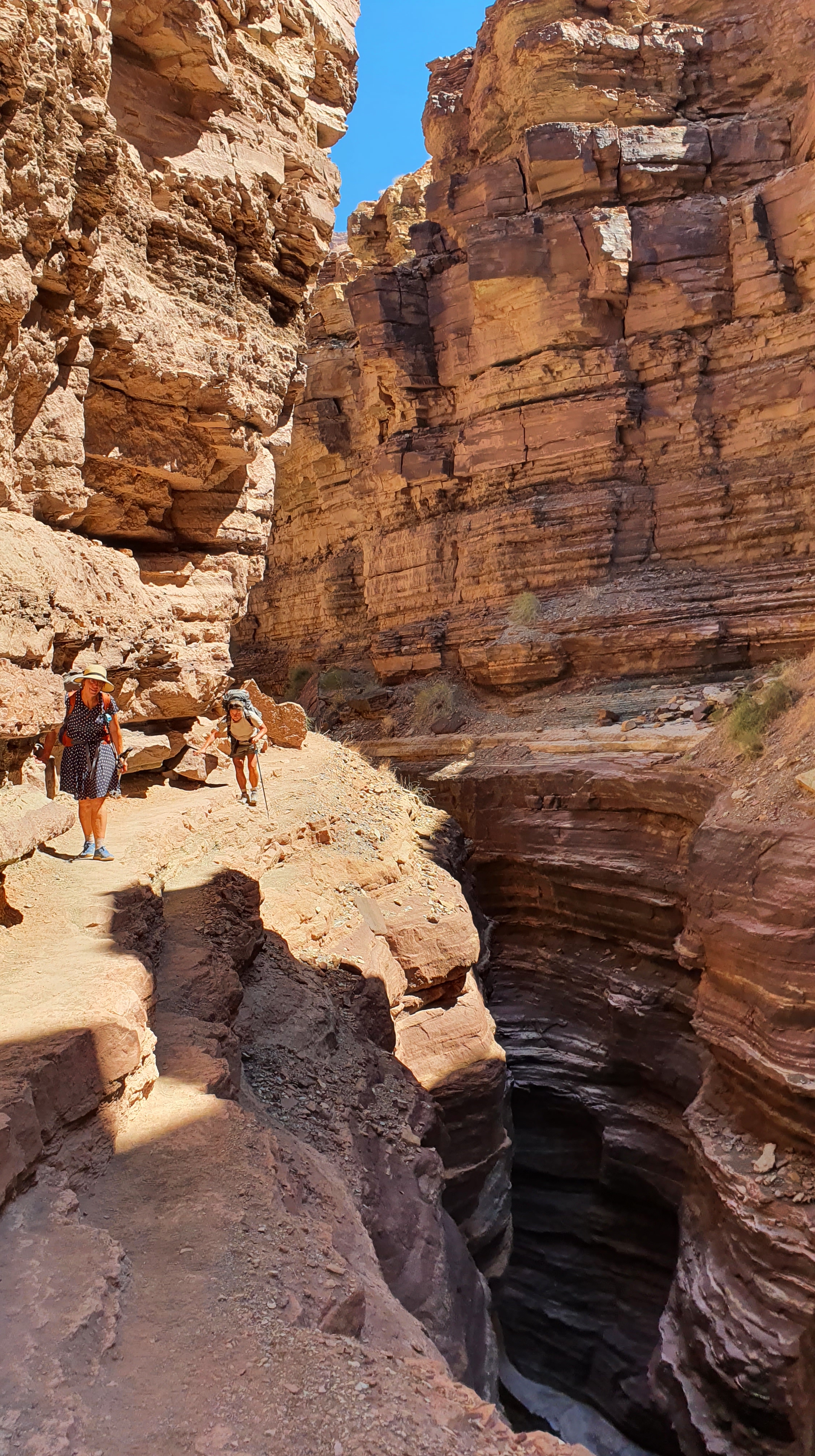
2025 Escalante north backpack

We flew over from Scotland to the US at the end of September 2025 with permits to hike for 5 days down the iconic Buckskin Gulch and Paria River on the Utah/Arizona border. We have hiked here before (such as the Paria in 2016) but never the entire length of the two canyons together despite two previous attempts.

…..But it was not be this time either unfortunately due to thunderstorms and floods when we arrived at the trailhead. We visited nearby Waheap toadstools and ended up sheltering under a recess with a waterfall forming above. Buckskin in particular, being a very long slot canyon, is particularly dangerous during floods.

Och well, we had a long list of other potential hikes and quickly diverted to doing a route new to us in our much loved Escalante river catchment of southern Utah.
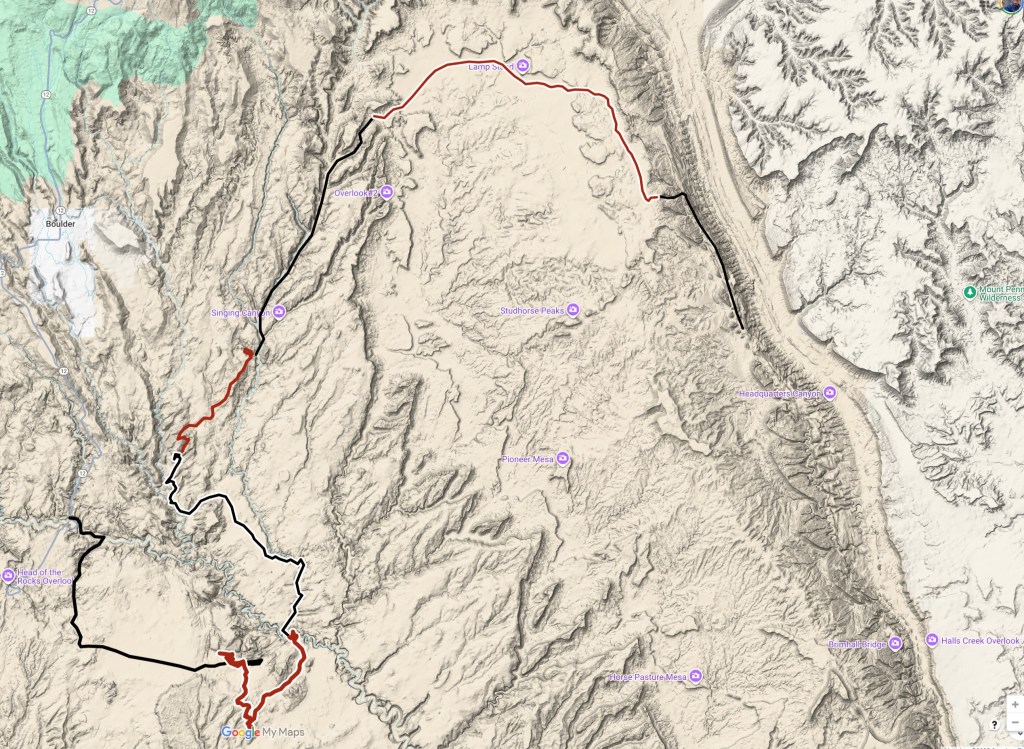
Our backpack was to take us over 7 days to Upper Muley Twist canyon, Lamp Stand , Egg Canyon, upper Gulch , unnamed slickrock area bordering Deer Creek, Brigham Tea Bench, lower Gulch , Escalante river ‘Ladder exit’, ‘Cosmic Navel’, Red Breaks-Spencer Flats and Phipps Wash to finish at the Highway 12 road bridge over the Escalante river.

To plan the hike, we relied on notes and maps from previous trips but also got inspiration and “beta” from the first part of Jamal Green’s ‘Via Escalante East’ Hayduke alternative from Muley Twist to the Gulch trailhead and (one of our favourite go-to sources for all things Escalante) Steve Allen’s books ‘Canyoneering 2 and 3‘. All are excellent resources and recommended.

29th September 2025 Day 1 Upper Muley Twist

We started late at about 3pm after a long but beautiful drive from Kanab and a 28 mile hitchhike from the Gulch trailhead to Muley Twist on the Burr Trail road. It took a while to get a ride even though plenty of cars stopped for us. Some stopped to asked us if we knew where ‘Singing Canyon’ was and some stopped to tell us they were going to ‘Singing Canyon’. We hadn’t heard of it and were starting to wonder how, after all the time we spent here over the last 20 years, we didn’t know about this famous canyon. Turns out is is a very short 30 meters slot next to a layby in Long Canyon. Nice photo stop, very busy by all accounts. Eventually we got a lift to the trailhead with a Catalonian tourist (who also stopped at Singing Canyon so we got to see it!)

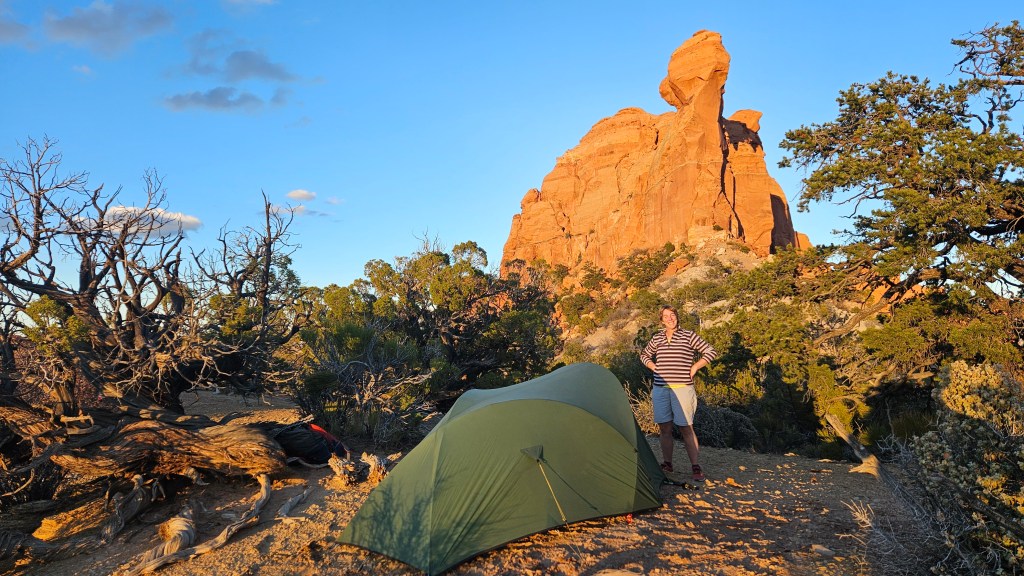
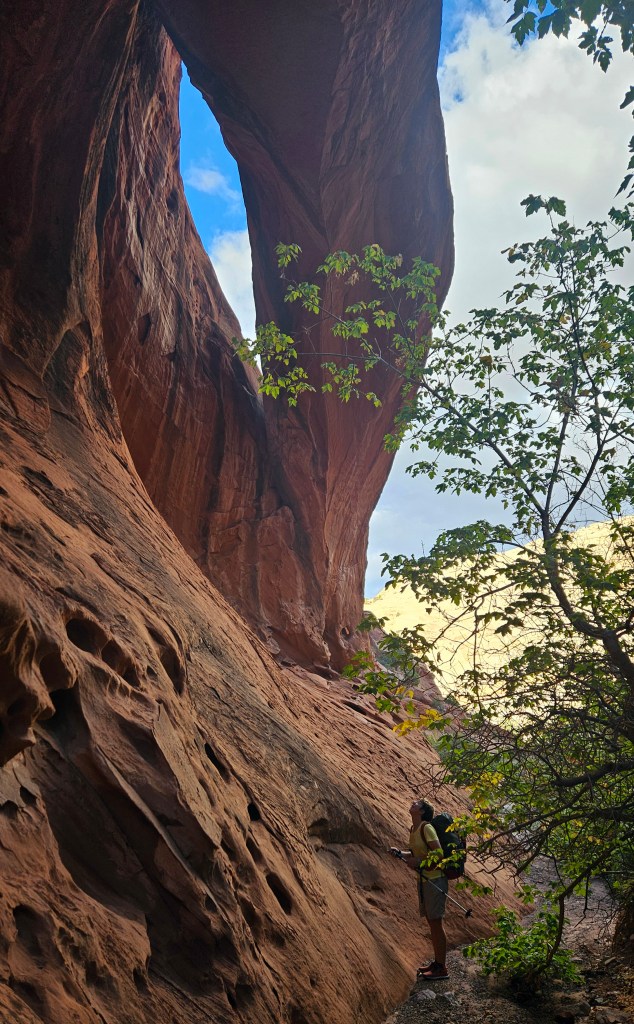
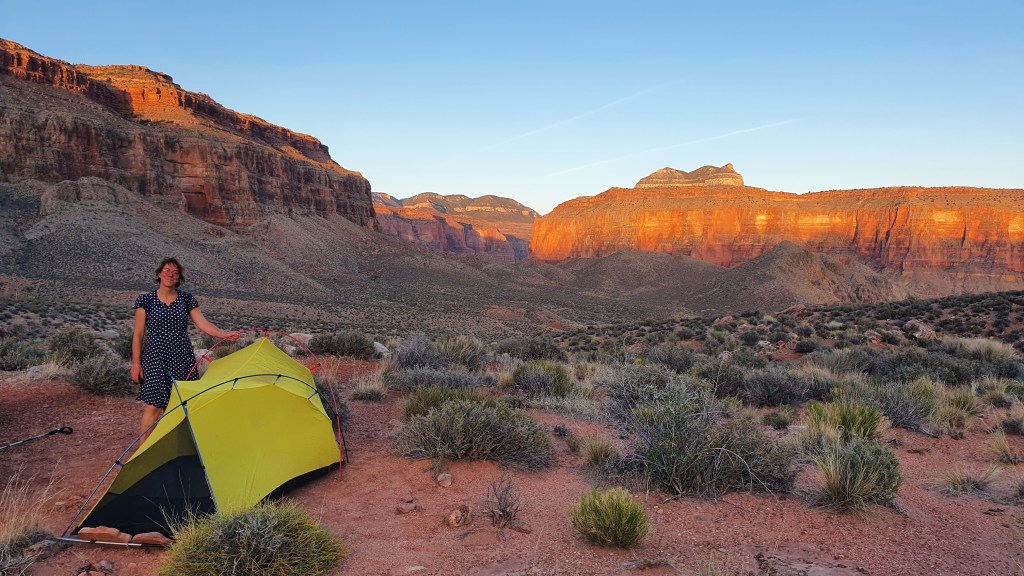
Upper Muley Twist is a valley formed in the geological wonder of the waterpocket fold within Capitol Reef National Park. Here the usually horizontal layers are tilted steeply up and it is crawling with sandstone arches. Easy walking took us to Cap Arch, where we split west to head up a side canyon with some fun short scrambly sections around boulders to find a camp at a viewful saddle. A great short first day to get rid of those jetlag blues.
Day 2 Circle Cliffs – the Lampstand (spoiler: it looks nothing like a lampstand)

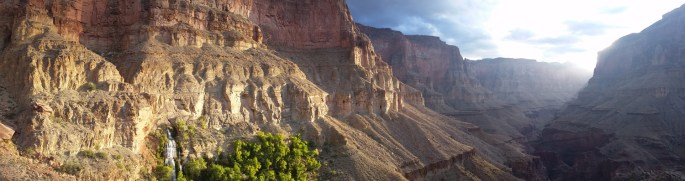
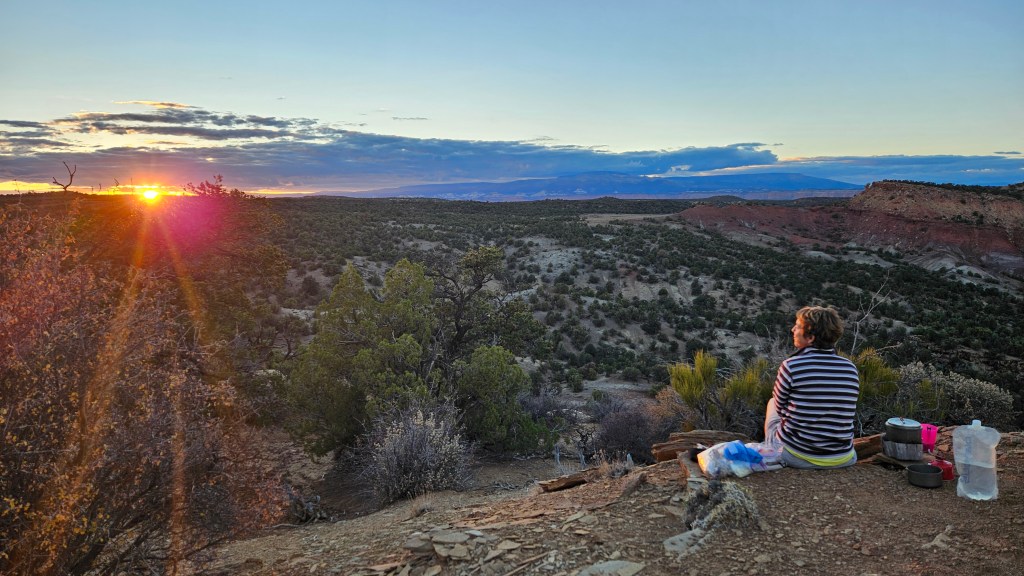
That first camp established a high standard for the rest of the hike with panoramas east to the Henry Mountains and west over the red Circle Cliffs to the golden aspen tinged plateau of Boulder Mountain.

Setting out from there, we had a bit of cross country up and down hard shale slopes onto a plateau which bore all the hallmarks of being used for cattle farming for the past 100 years. Ranching means water and we were going to rely on water from ‘The Onion Beds’, a couple of pools (enhanced by ranchers) with variable water supply. This time of year, the cows had gone on to better things so we were hopeful about the water but the recent rain had muddied the ponds to a bright orange. We took 6 liters with us anyway (never reject water in the desert) and followed jeep tracks north through pinyon juniper, sandy washes and gravelly plain towards the “Lampstand”.
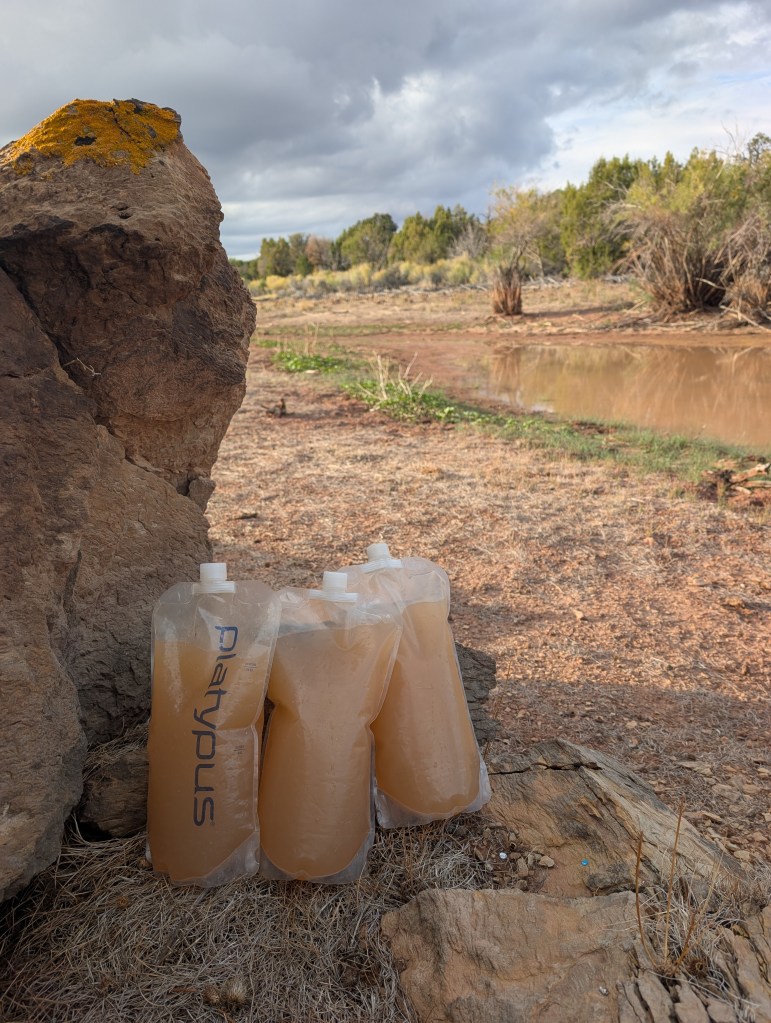
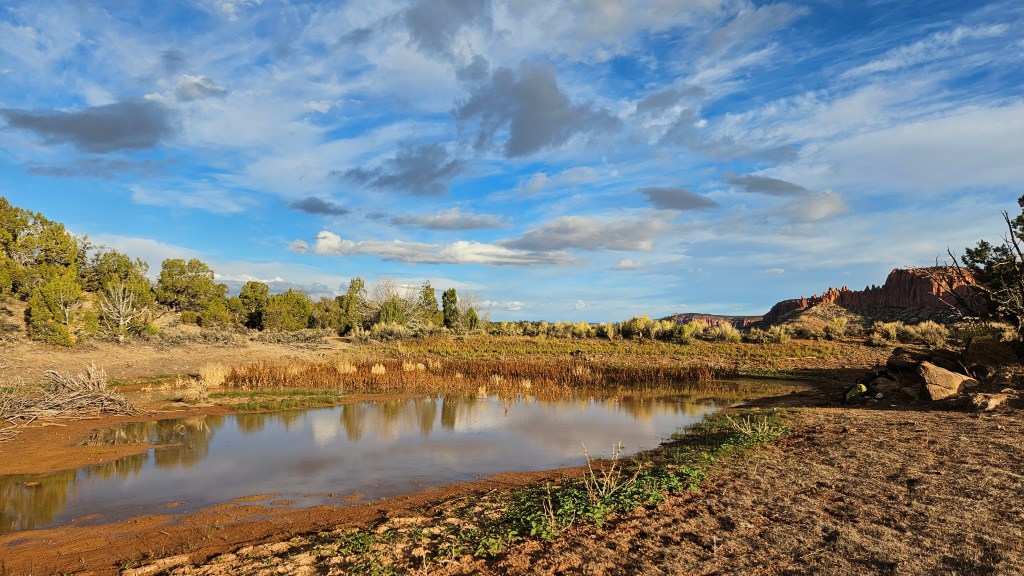
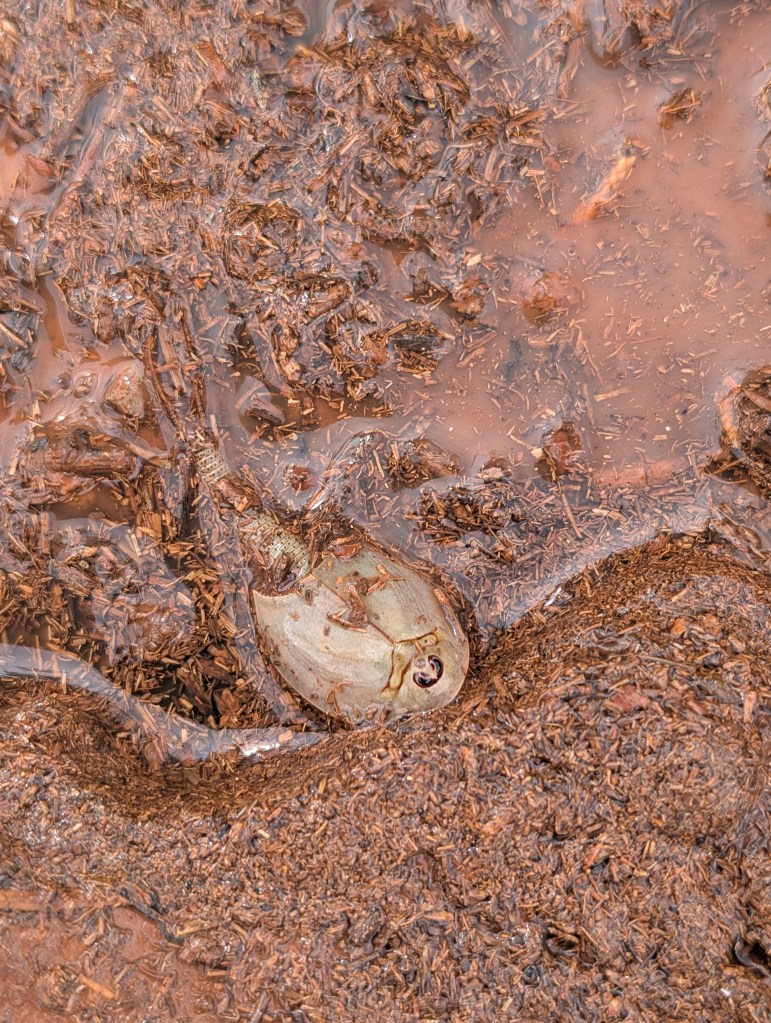
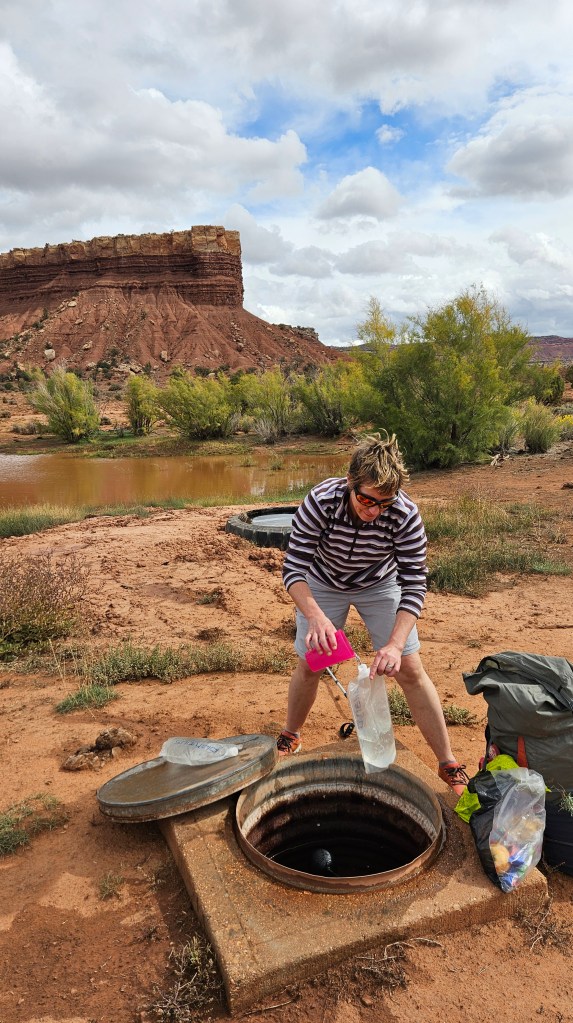
Lucky for us the ranchers had put in a new, spring fed water supply near the Lampstand and we didn’t have to drink the Onion Beds water after all. Next to the covered spring was another stock pond (cow spa). The recent rains had filled this up with plant debris as well as water and there was a writhing mass of sinister looking little animals on the edge of one of the ponds. Turns out they were tadpole shrimps, a species that has been around 220 million years or so, since the dinosaurs. They are famous for being able to survive long periods of desiccation, an evolutionary marvel …but still quite creepy.
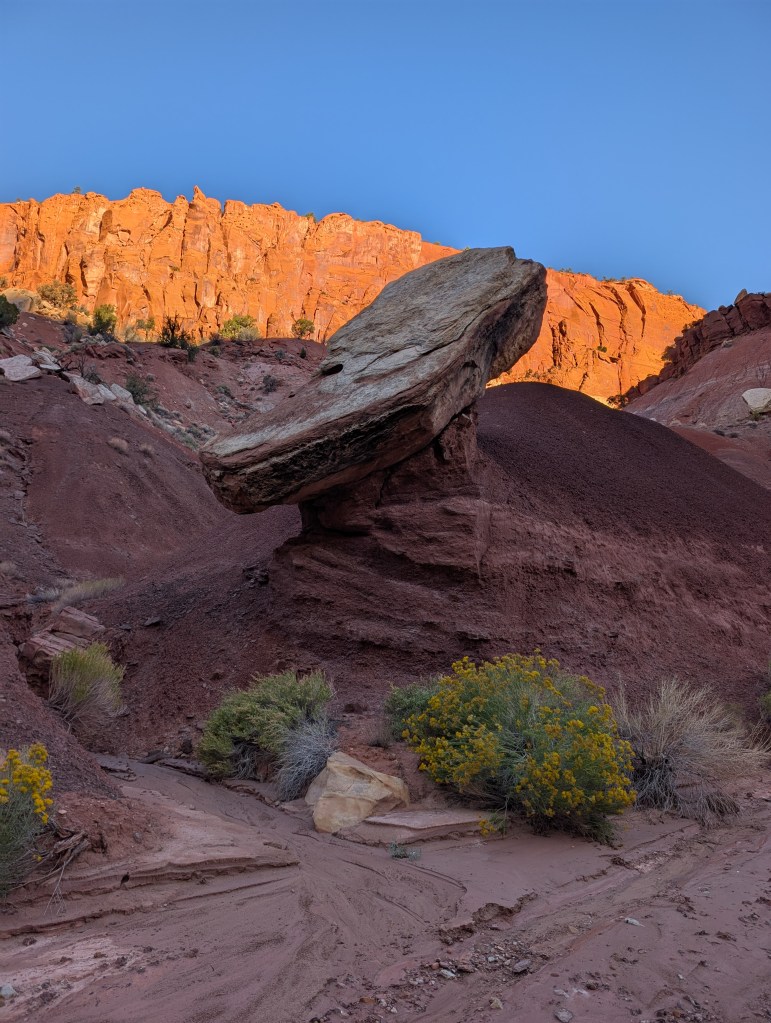
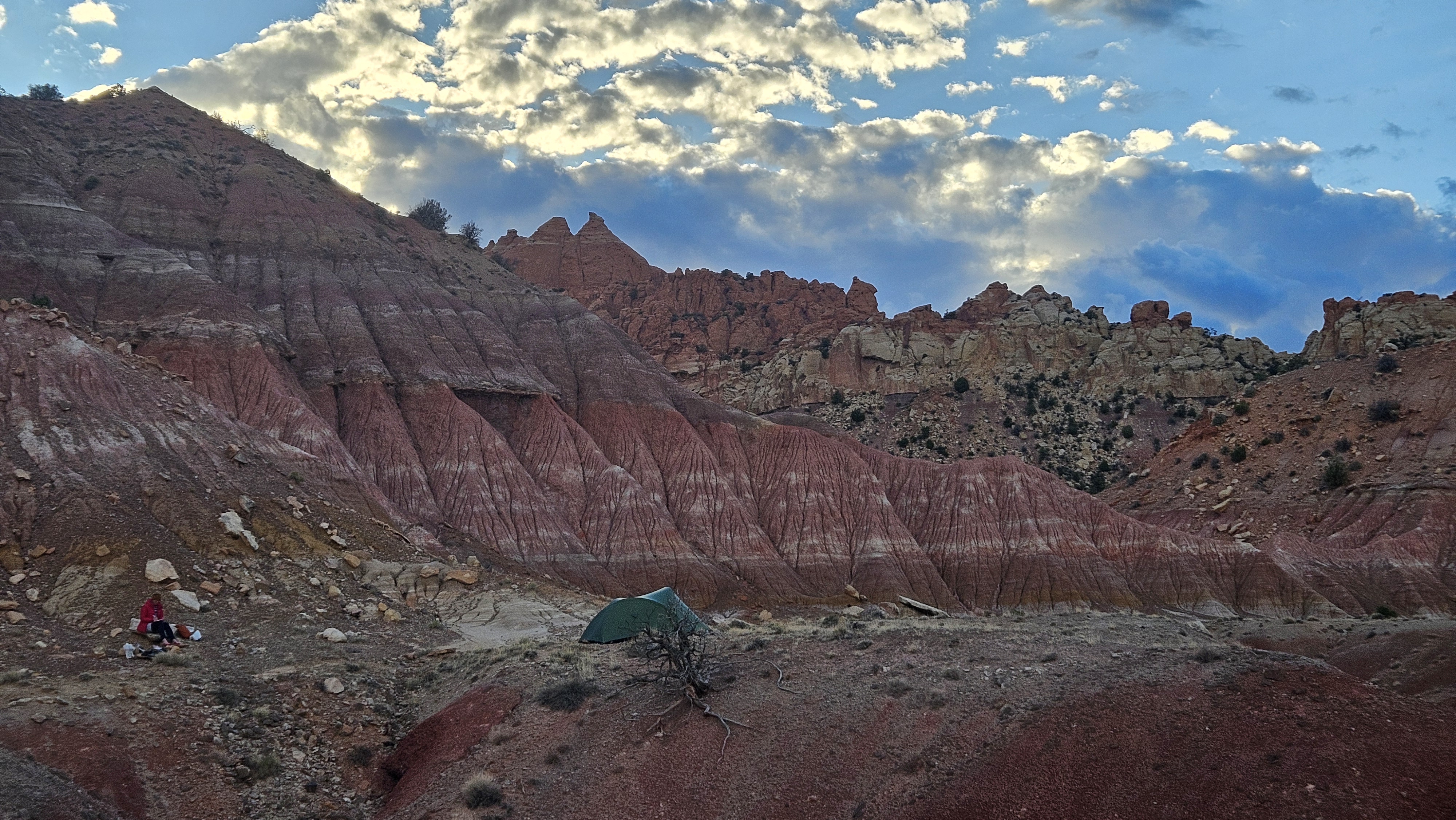
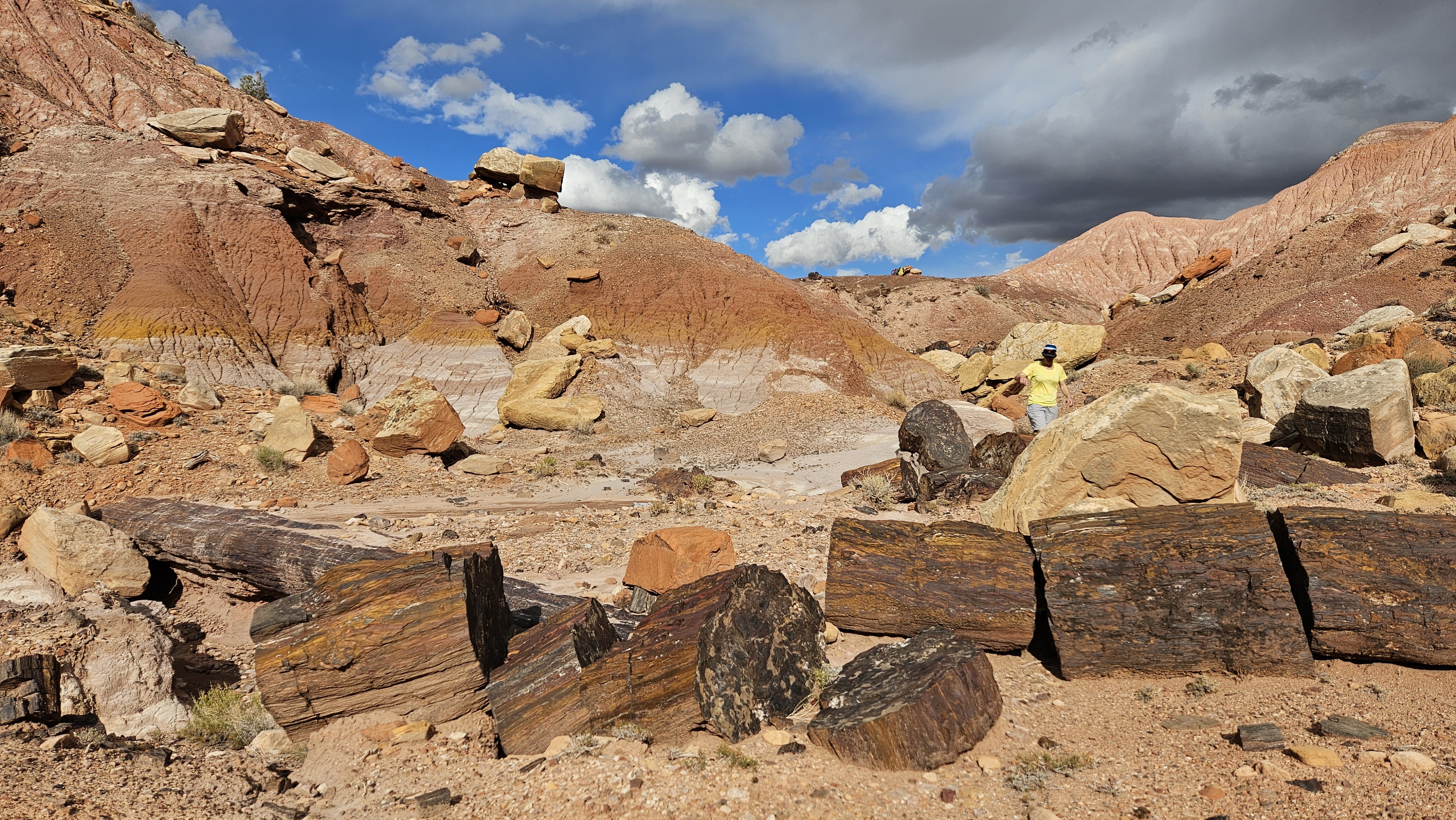
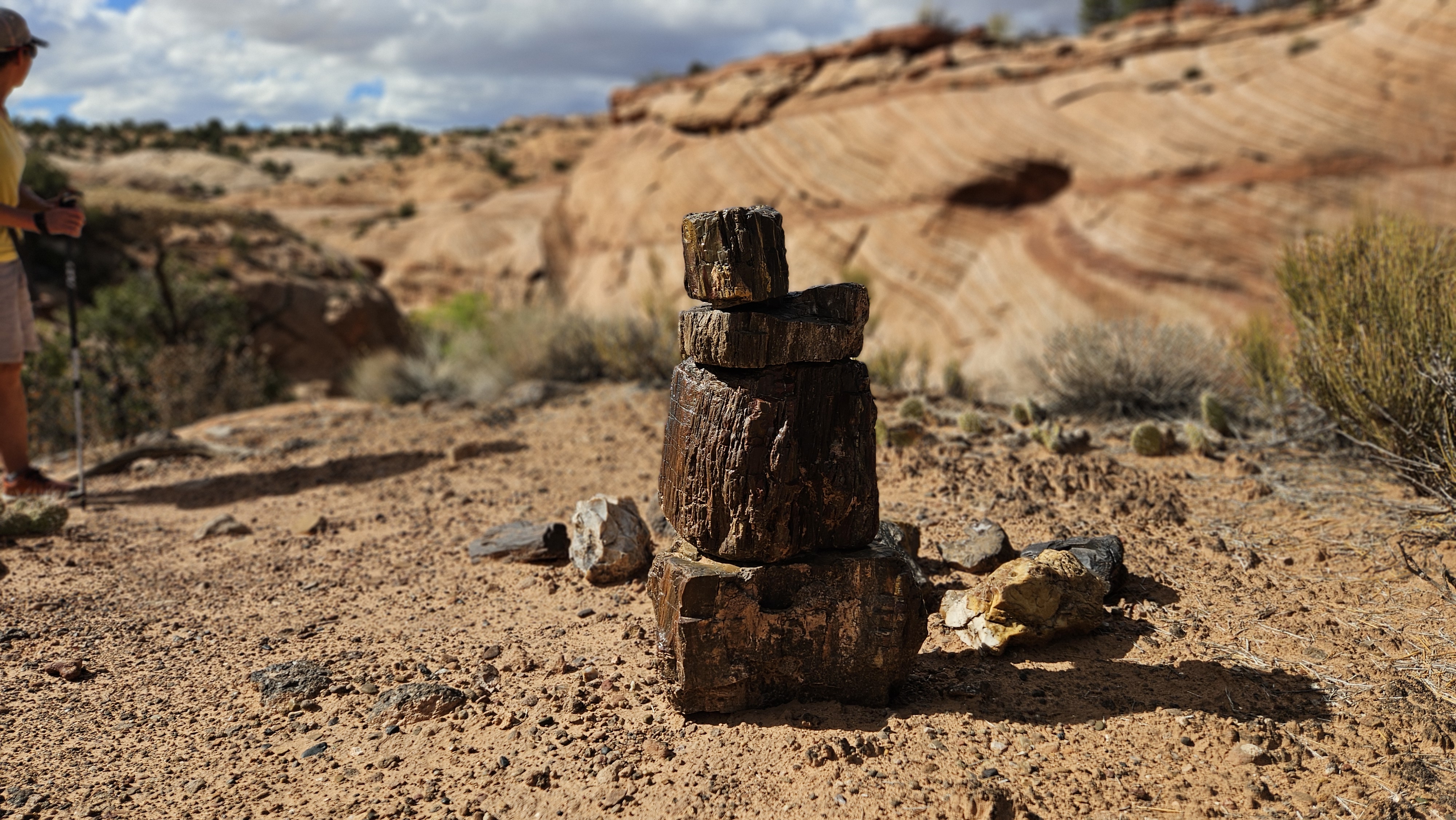
A few brief showers kept the air cool and clear as we climbed a little through colourful Chinle rock on old mine tracks to camp at ‘Pink Pass’ above Egg Canyon. There were incredible petrified (fossilised) trees nearby and the whole area was a vivid technicolour delight.
Day 3 Egg Canyon and The Upper Gulch

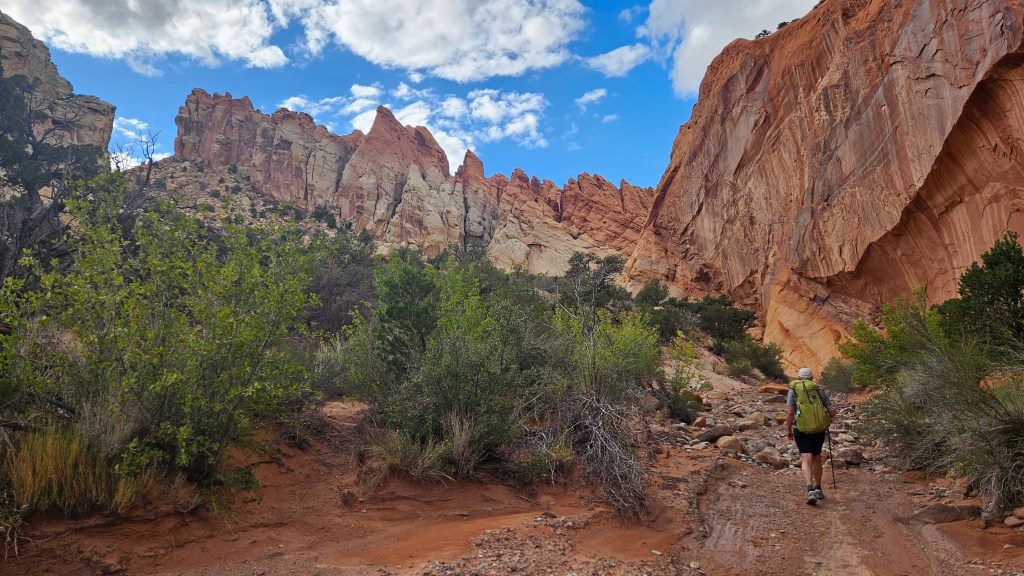
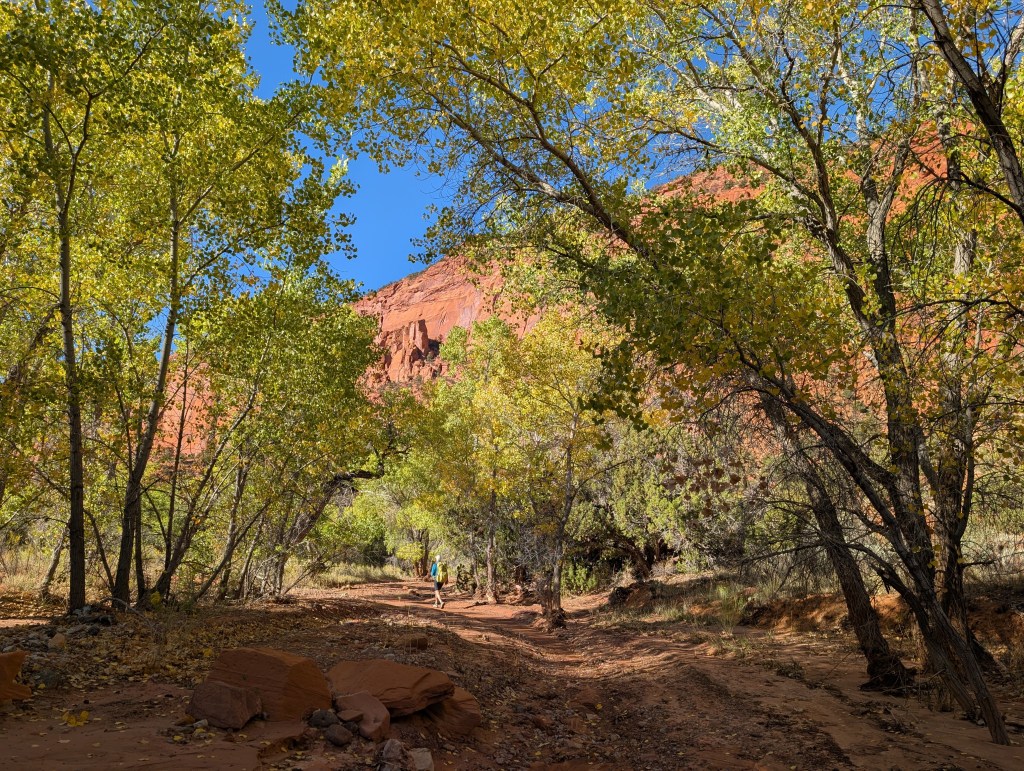
Egg Canyon in the morning provided a mellow, meandering walk down through purple and blue Chinle rock layers that looked like velvet in the glow of the light reflected into the canyon from the orange Wingate cliffs above. The canyon widens after a junction with the Gulch from the North, cottonwood trees come in and the well-named Water Canyon joining from the west was delivering a clear stream of water out of its grassy(!) mouth. From there the waters flowed down The Gulch all the way to the road bridge including a tranquil waterfall at a narrows with attendant dragon fly (there seems to be one at every pool this time of year).

Arriving at The Gulch TH and our car, we saw the first hikers we had seen since just after our start at Upper Muley Twist. Being short on food and needing to plan our next few days, we chose to drive back to Escalante town, resupply and return the next day to continue our hike southwards. Altogether this was a really enjoyable hike mixing tracks with cross country and loads of scenic variety.
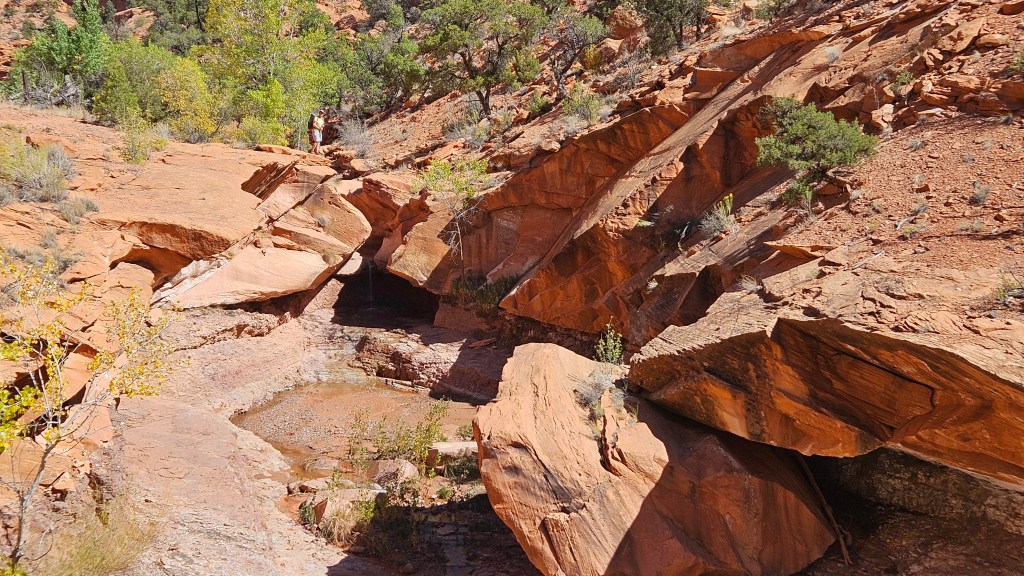
Day 4 The Gulch -Slickrock and Boulders

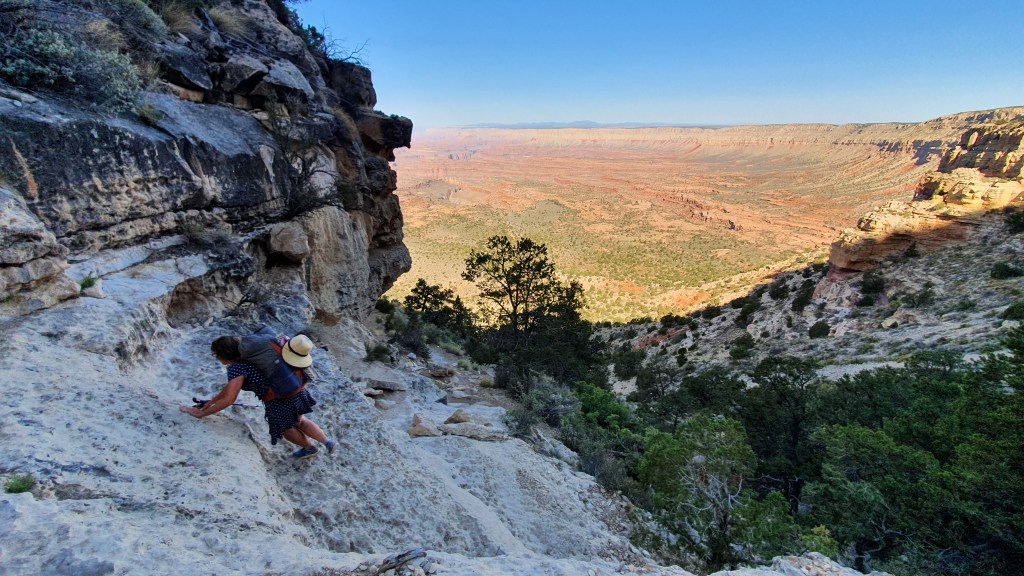
Back at the Gulch TH, we aimed to climb straight up some broken cliffs to allow us to traverse ridges and washes between the lower Gulch and Deer Creek to the west. We spent time zig-zagging around ledges to find a way up through the rock layers, splitting up to search in different directions. Eventually we found a scrambling way almost straight above the trailhead onto a small sandy dome with panoramic views over the surrounding canyons and hills (this would be trickier to do if descending down in the other direction).

We were able to continue following the high ground on lovely rocky slabs (slickrock), dotted with rounded, black, volcanic boulders (guaranteed to put a smile on your face) before descending to cross a small canyon dip called ‘Sand Holler’.
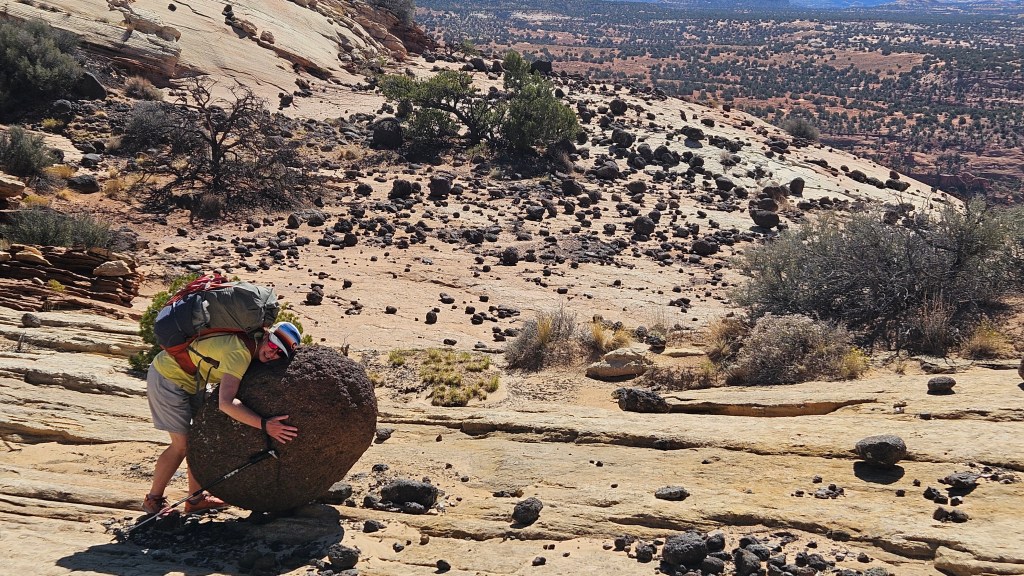
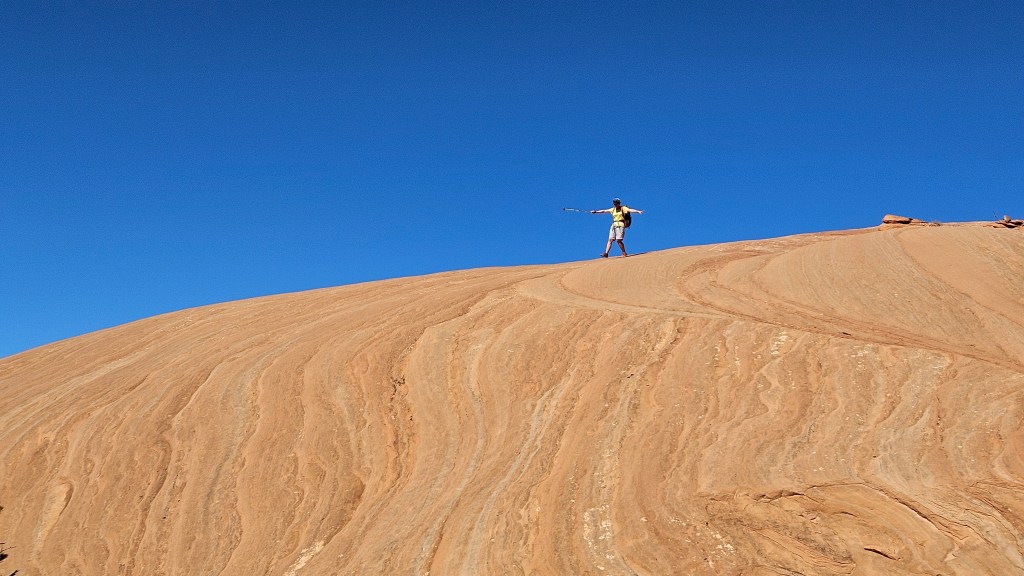
Heading south west we found a few large potholes of water along a drainage dotted with Ponderosa pine before reaching a scenic, slabby saddle (we had camped here and scrambled up the peak to the north in 2017). This time we wanted to climb a steeper set of slabs south following an alternative route described by Steve Allen in Canyoneering 2 ‘for the slickrock aficionado’.

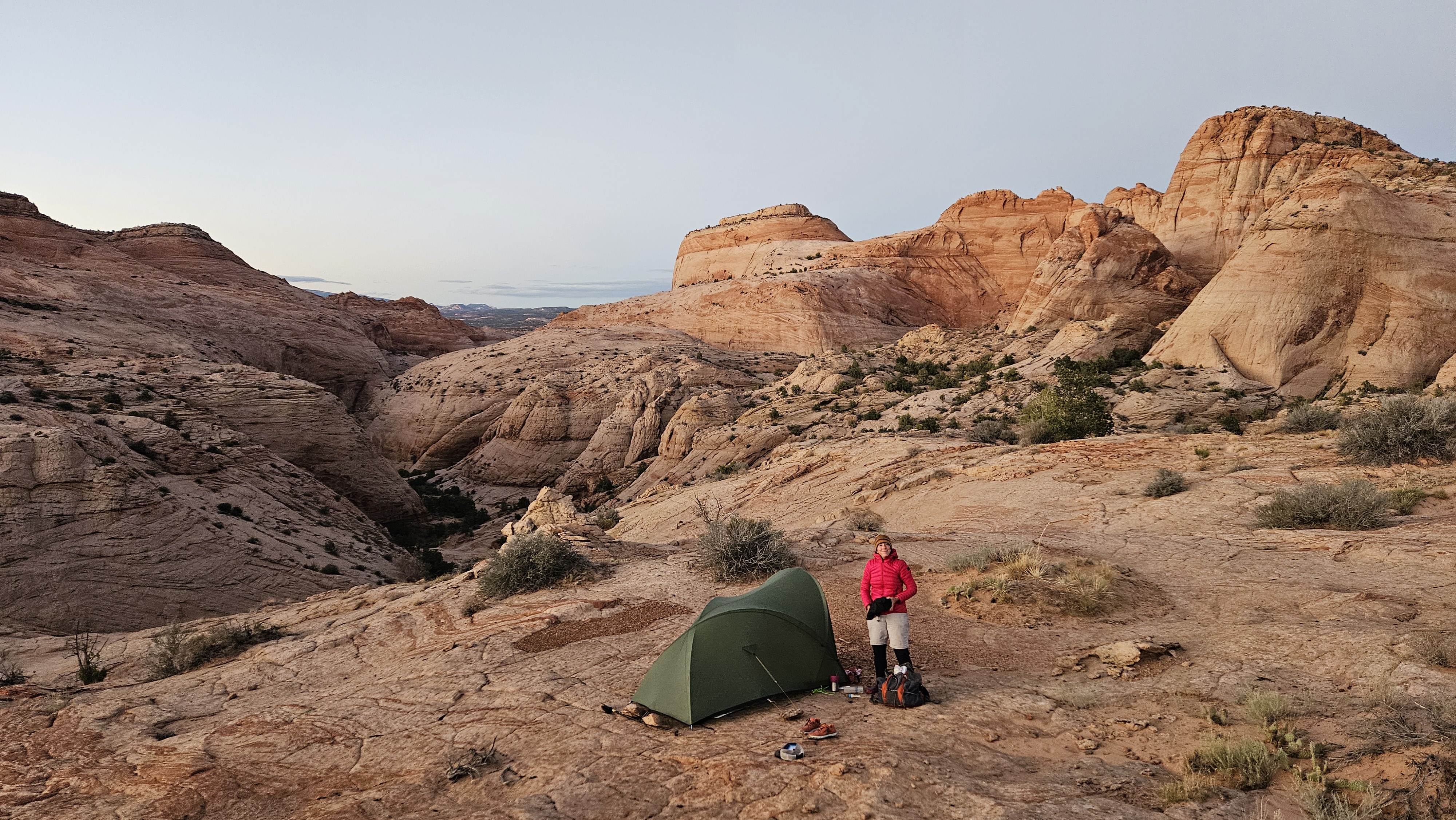
The initial climb felt a bit ‘out there’ though on a huge expanse of slabs and we had a bit of back and forth-ing to find a line of least resistance. Once up, we dropped at a lesser gradient into a unnamed valley system of rock slabs and water potholes to camp.

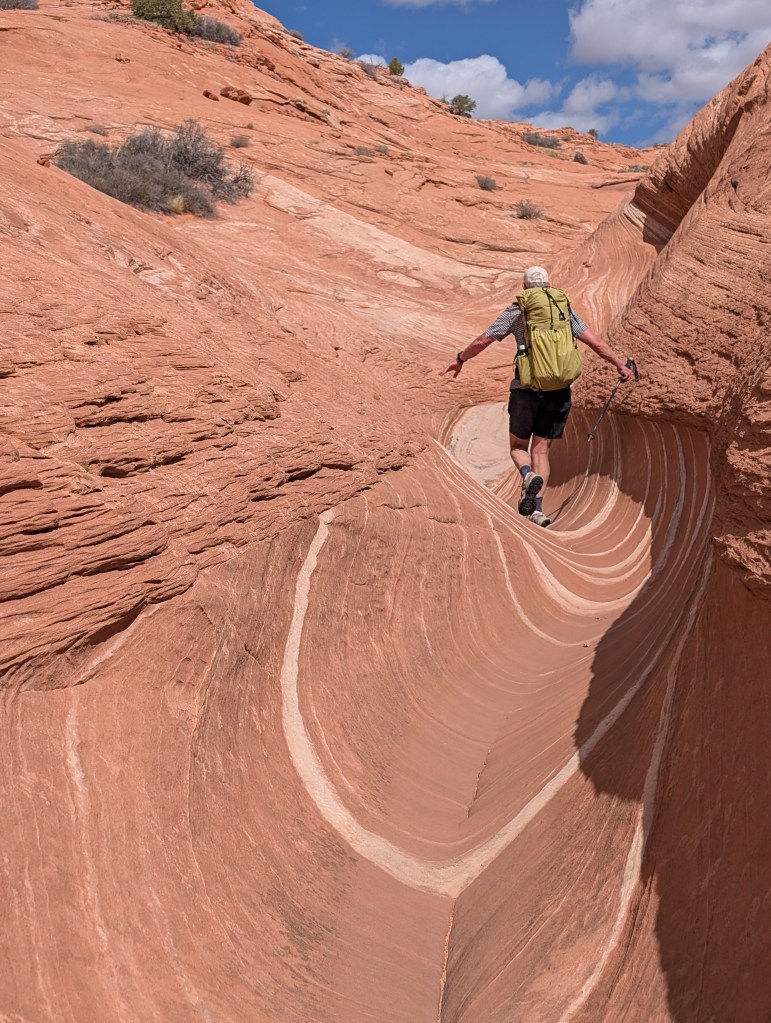
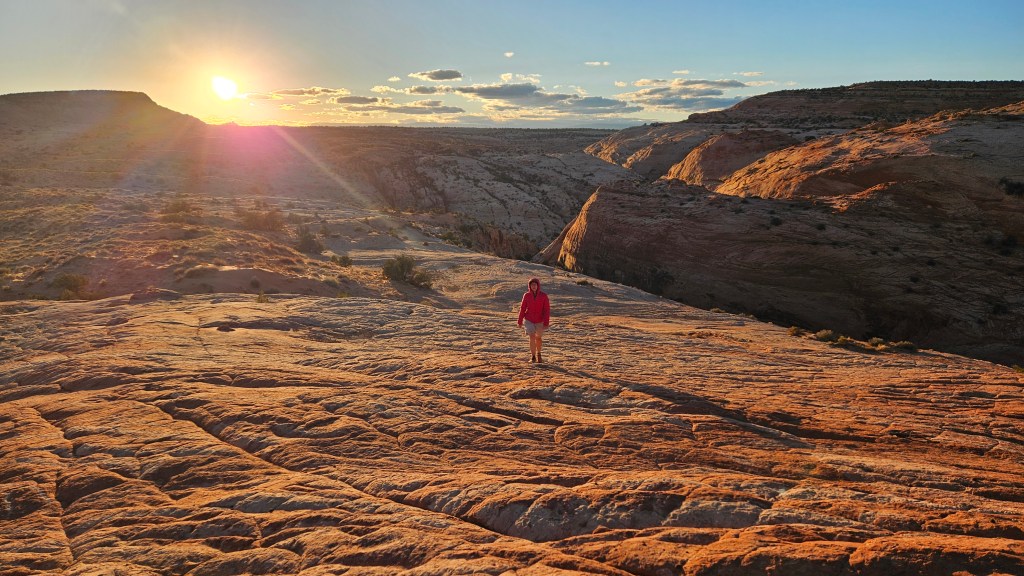
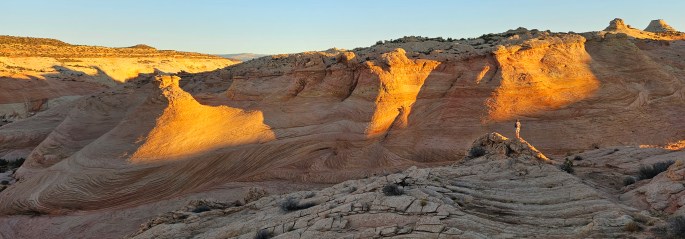
There are no adequate words in the English language to describe the beauty of the slickrock landscape that we moved through for the rest of this day and the next morning on this route: the sweep, the shapes, the colours, the ever so clearly visible imprint of deep time in the sandstone, the blue sky, the many many stars, the silence at night, the climbing of the moon, the blaze of the sunrise on the rock (you can almost feel the earth rotate under your feet!).
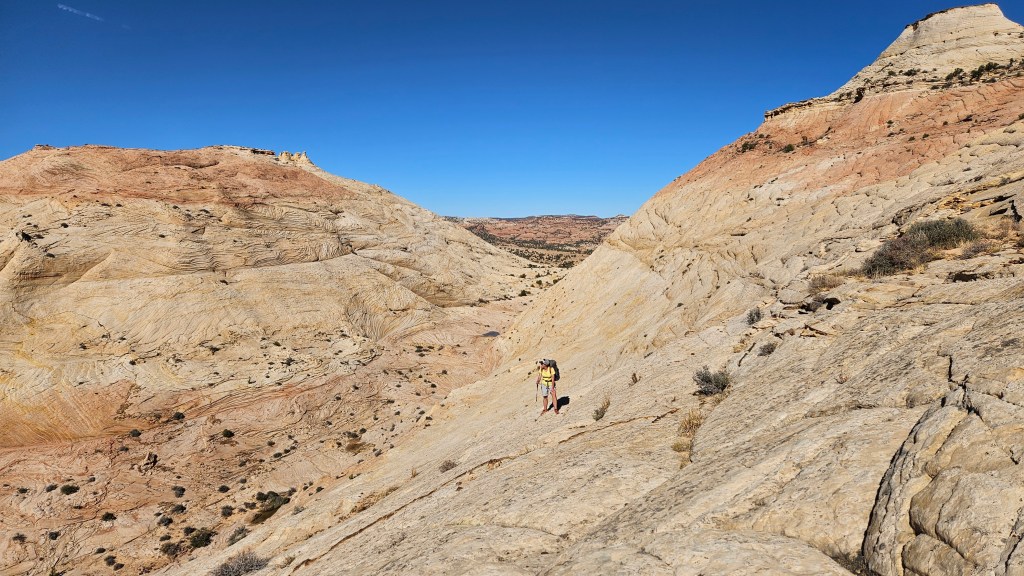
Day 5 More Slickrock to The Lower Gulch

We walked up a nearby peak for a glorious sunrise before continuing down more stunning slick rock slabs towards Deer Creek, then undulated over small slabby ridges on its east side before stopping for a rest above Boulder Creek narrows (crossing another previous hike, this time in 2019).
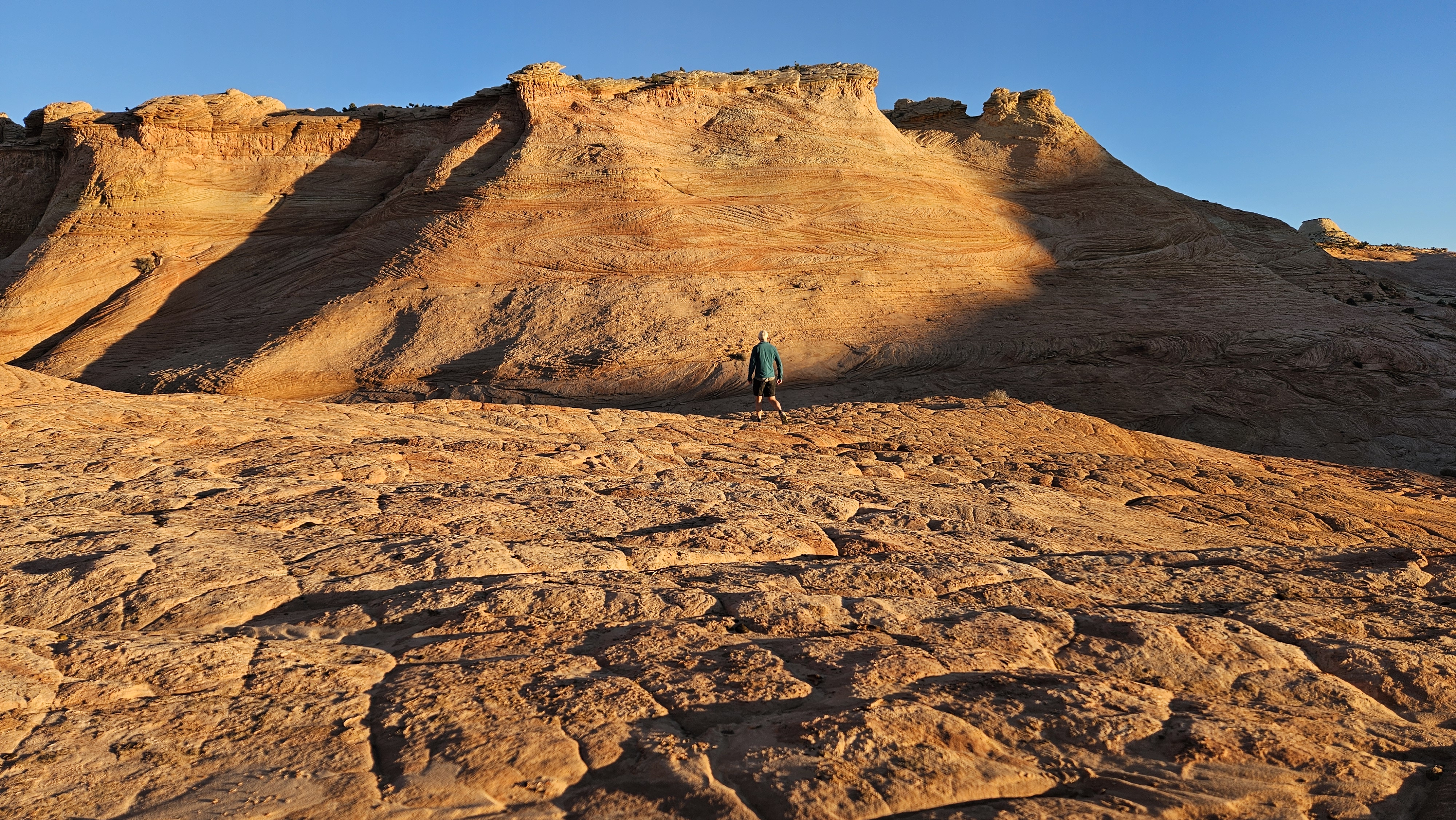
From this spot there are a few route options and we chose to cross over to the rim of lower Gulch canyon next via slabby ‘Tanks’ drainage and sandier Brigham Tea Bench, pleased to find a cairn or two marking a scrambling descent down into the narrow canyon.
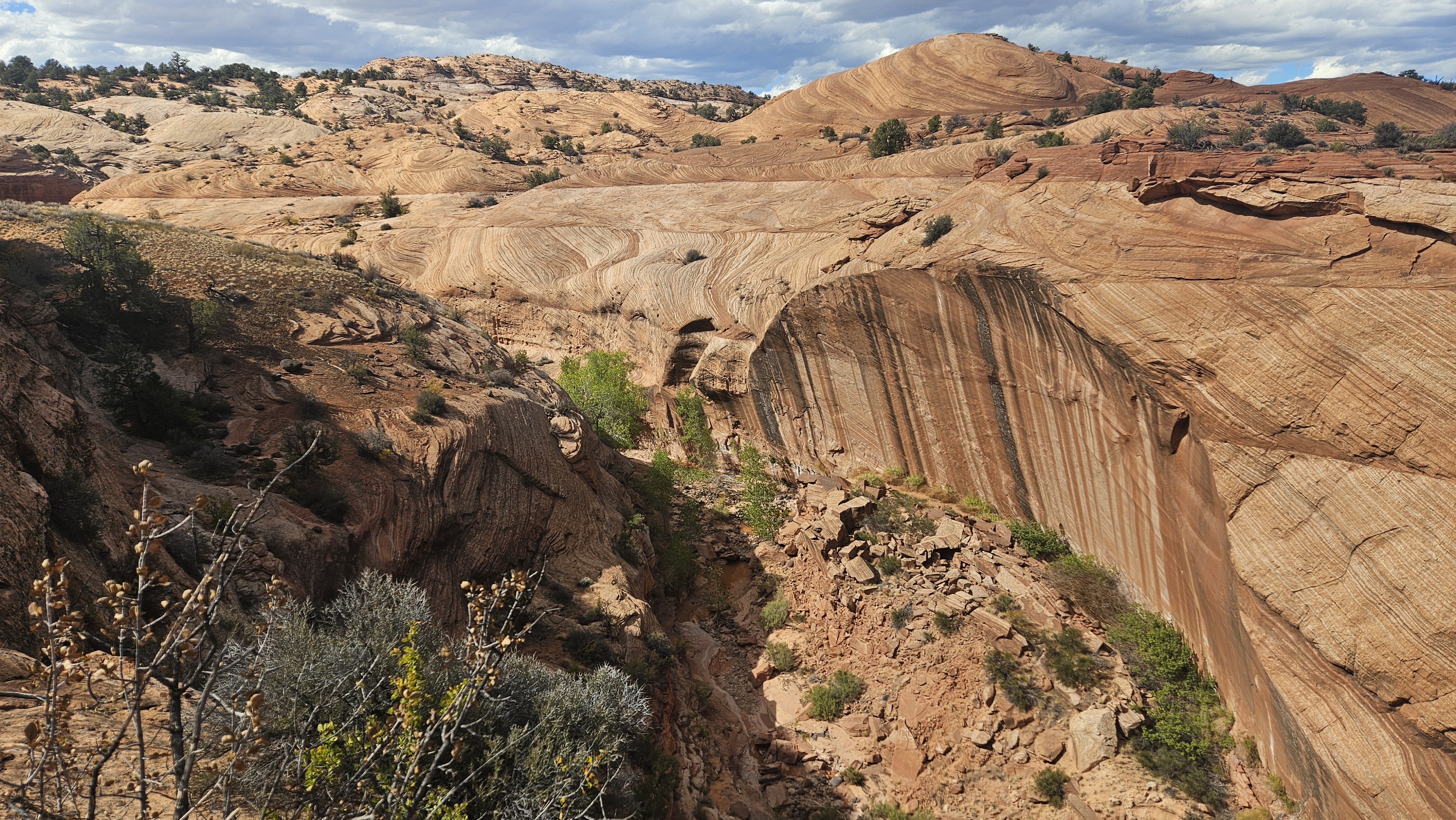
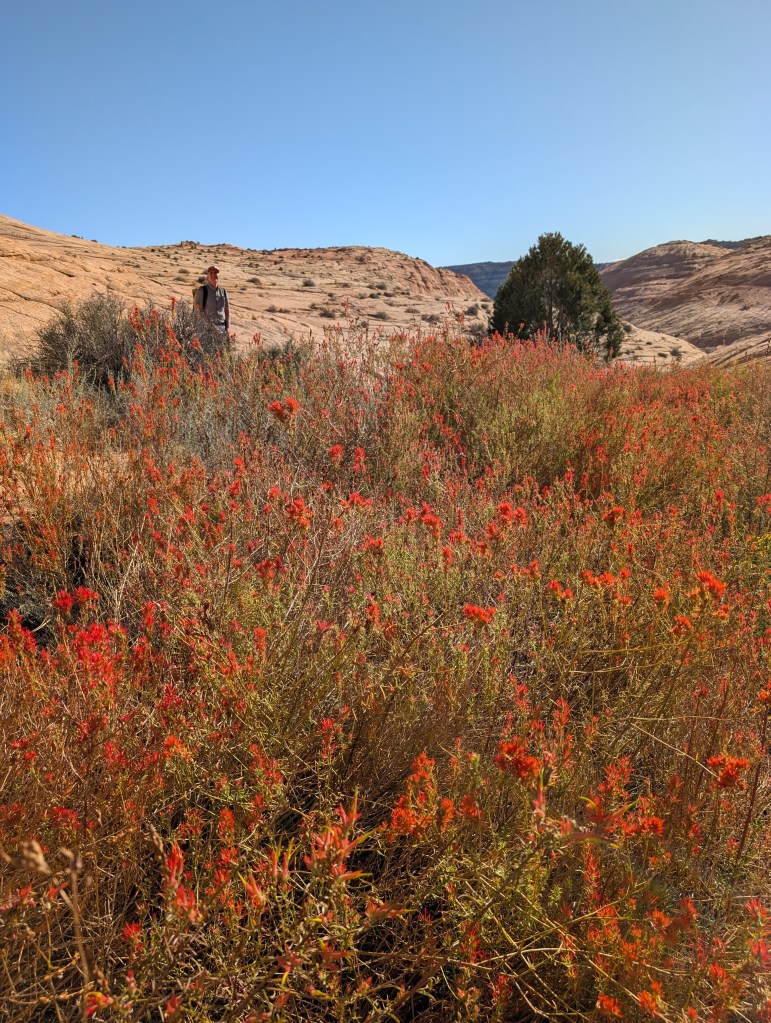
‘Varnished streaked wall’ in The Gulch

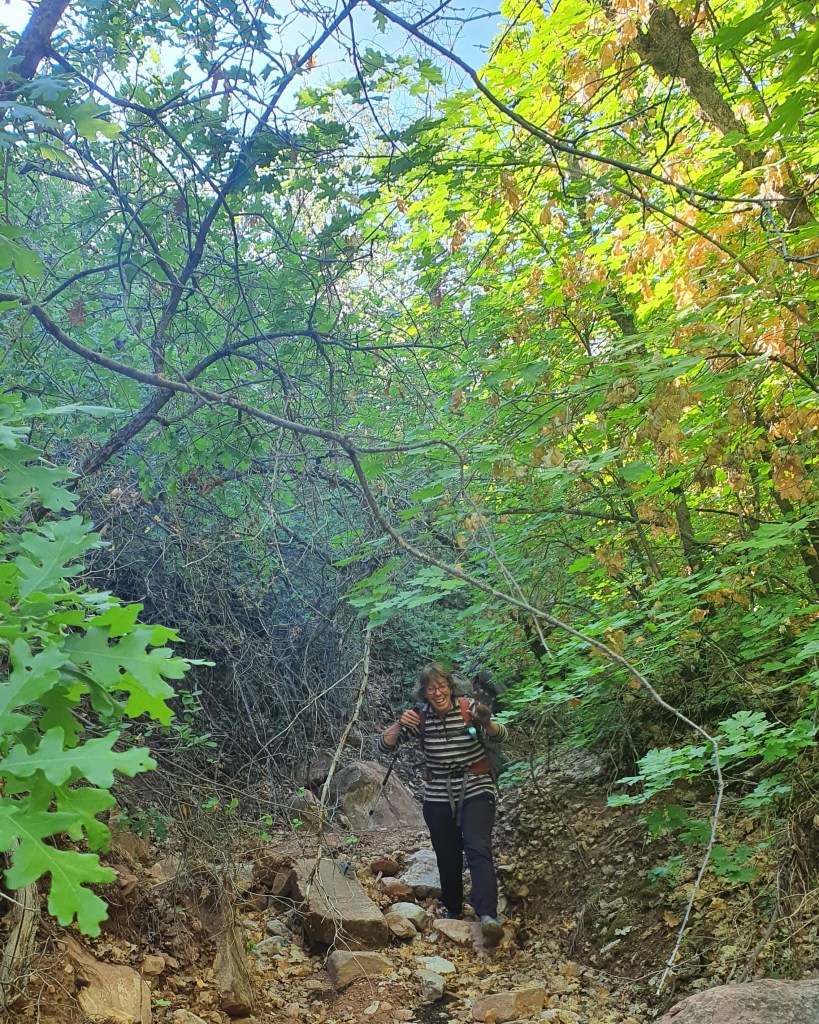
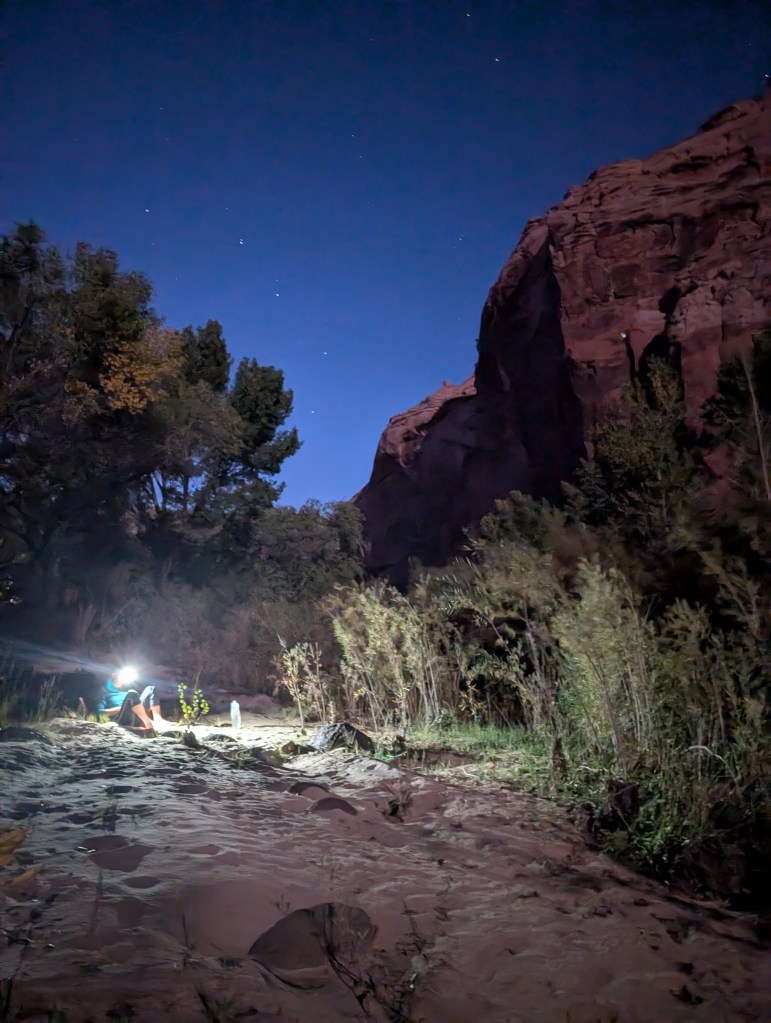
The Gulch is scenic with steep red walls but the going got a bit tougher partly because the recent rain had made the walking very muddy and slippy and because the section towards the Escalante is quite overgrown and becomes more so, the close one gets to the big river. There was also a disappointing amount of fresh cattle trails and dung in the Gulch. We were also getting tired and still acclimatising to the desert heat so we were very happy to see the Escalante (like an old friend) flowing strong and pretty clear and offering us a lovely camp with cottonwood trees above (and a wash in the moonlight).
Day 6 Cosmic Navel and Spencer Canyon

Our aim today was to explore the Red Breaks-Spencer Flats areas above the west side of the Escalante river, but first we had to find a way out of the Escalante’s canyon bed. Our route involved wading down the river for a short distance past ‘ladders canyon’ (it reputedly had at some point ladders installed to climb out – we did not check their state of repair), then a scramble through the cliff bands. First on a rough trail up a bouldery gully, then a traverse left to find the easiest line up slabby rocks to the top (we had read of this exit route in Steve Allan’s book and involved “Moki steps” and were glad to find it an easy exit for us).
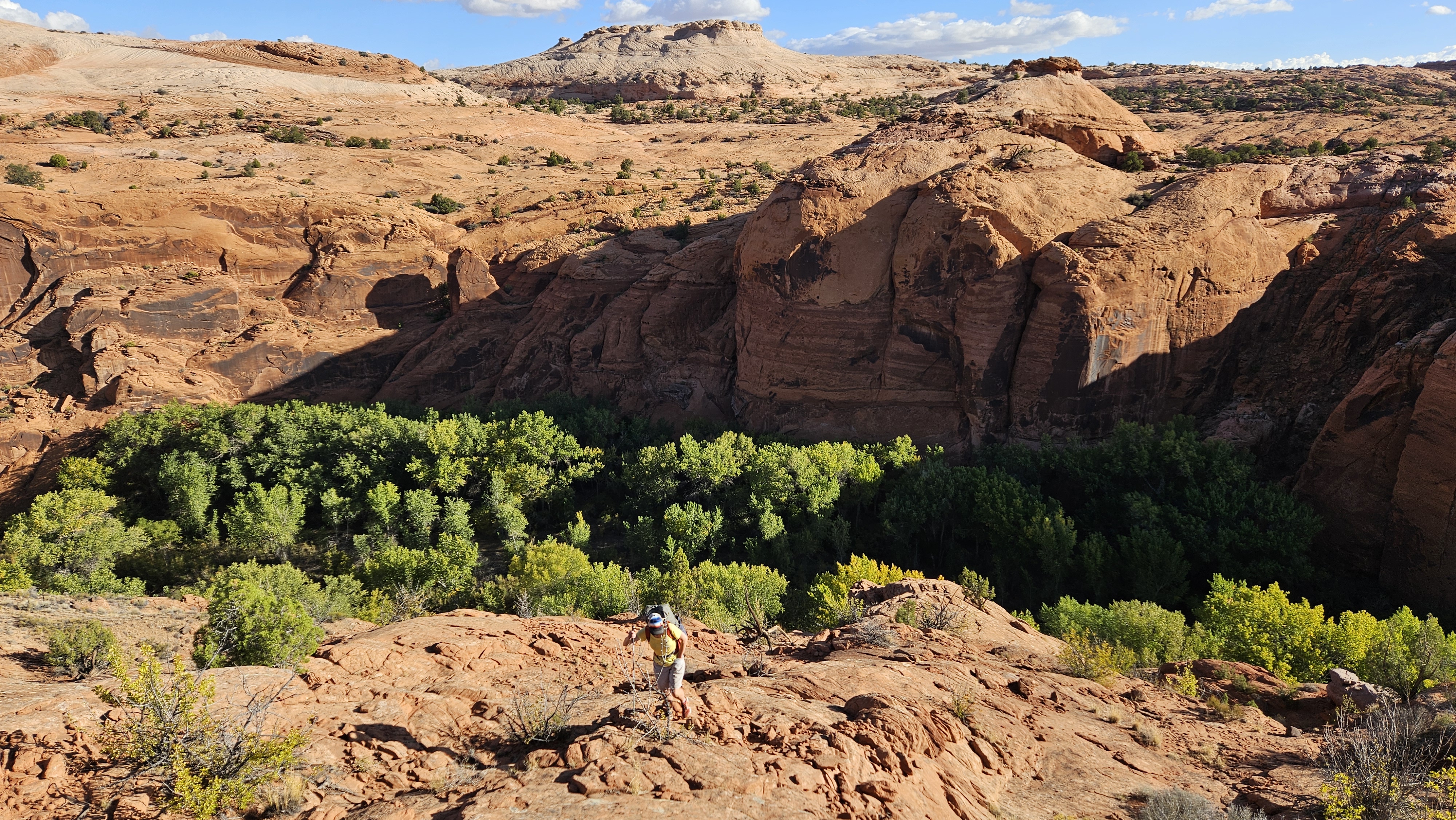
Climbing out from the Escalante river

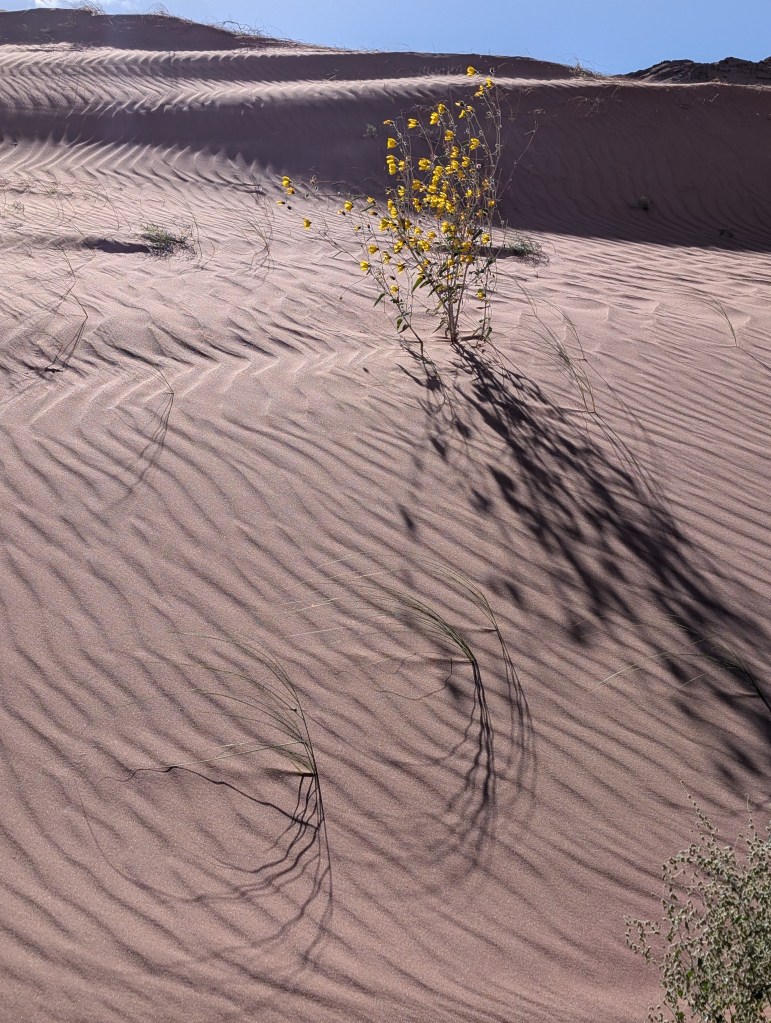
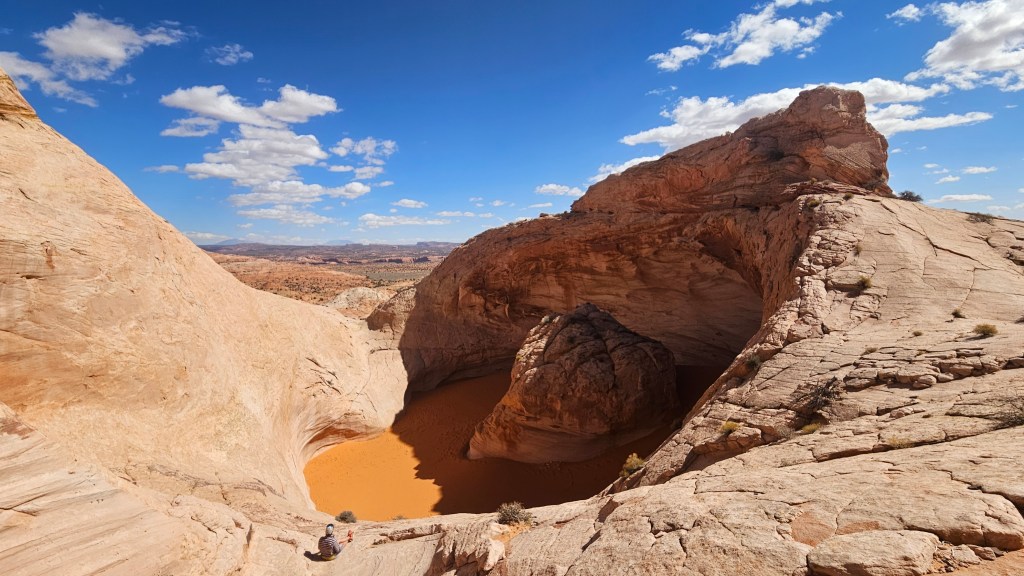
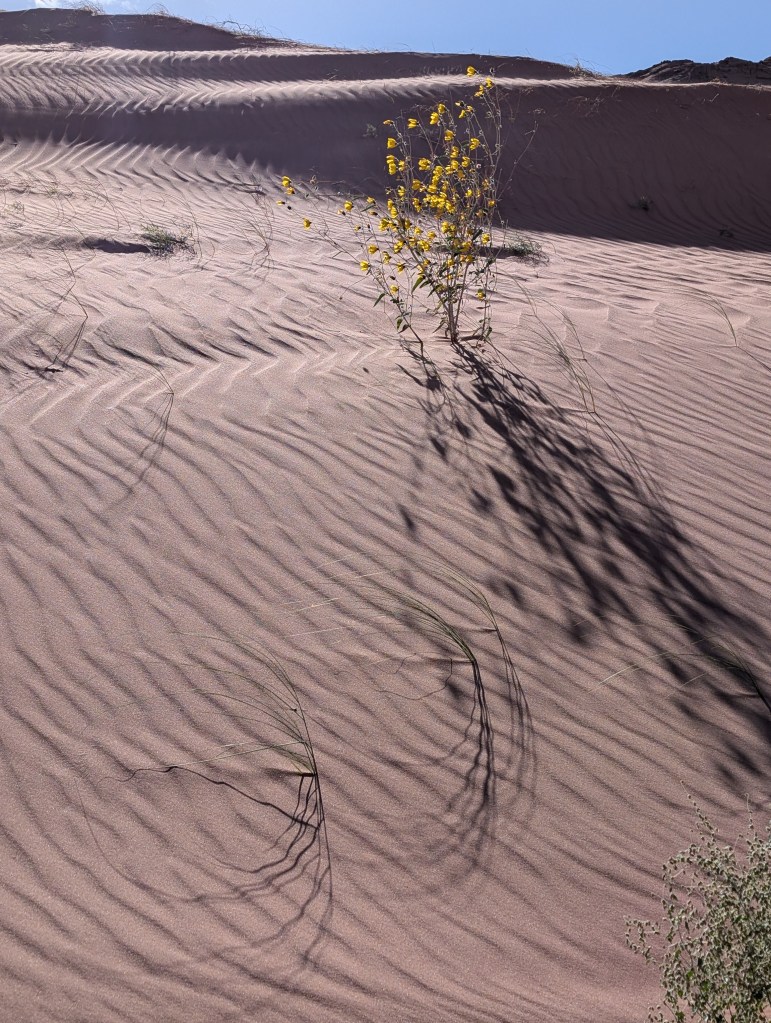
Making our way southward cross country we came across some pristine fluted sand dunes before ascending another slickrock valley dotted with big potholes full of water. Our destination for lunch was the weird rock feature known by various names including the ‘Cosmic Navel’. We saw other people here, our first since leaving the car at The Gulch TH. It’s an easy hike from a trailhead accessible by 4WD and we were here on the weekend so it was busy. It’s also very unusual and beautiful but equally impressive were the extensive red and white slick rock slabs to the north that we continued our days hike over after lunch.
Following a sandy drainage down northwards we made it to the top of the intriguing complex Spencer Canyon system, which appears mountainous from afar and has unusual criss-cross defiles as seen on the map below.
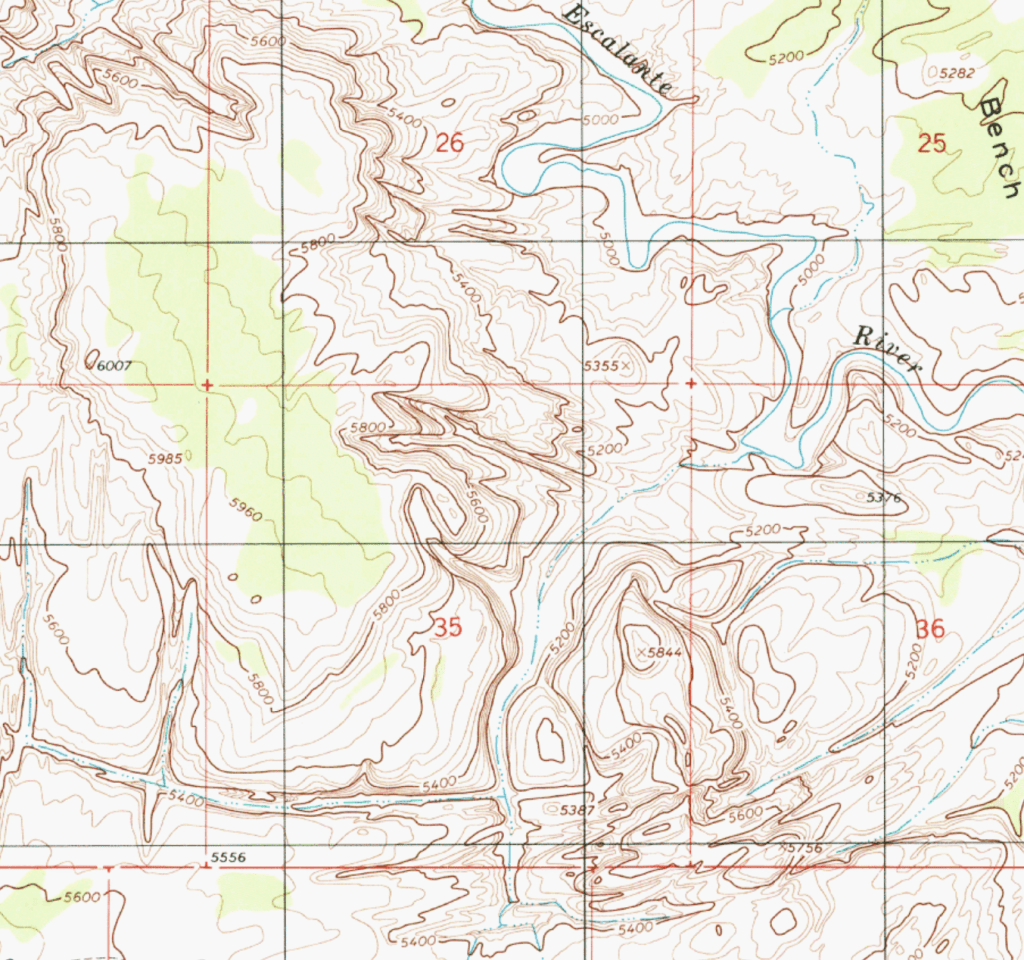
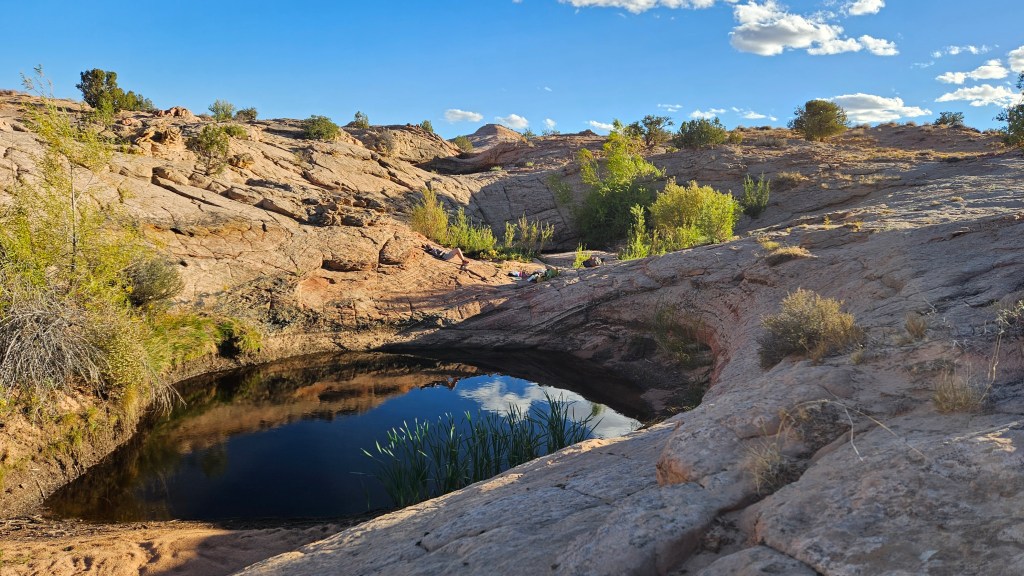
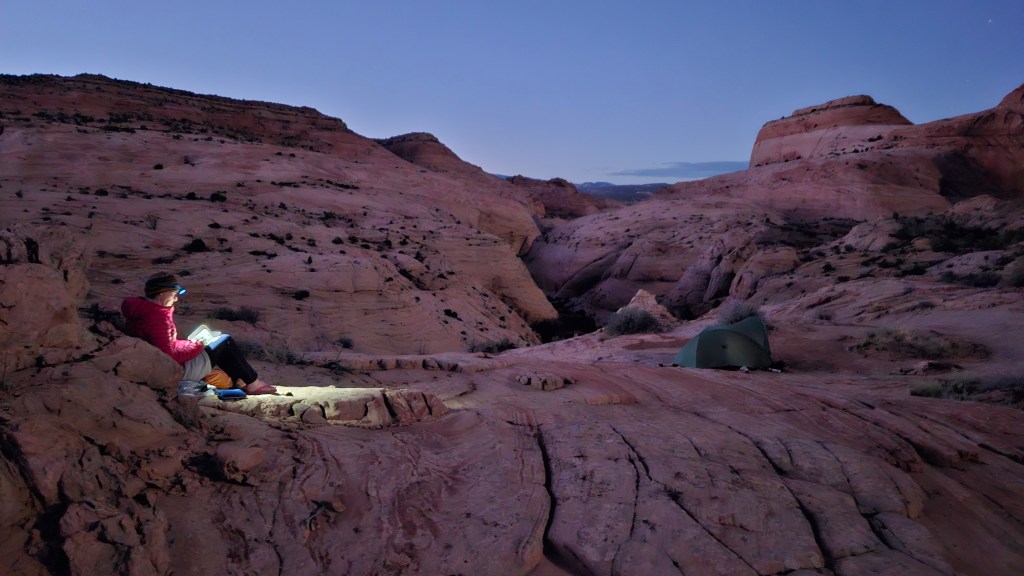
Once we had located some more very healthy looking water holes we decided to camp nearby and explore the edges of the canyons into the evening. It would be good to return and scramble down into the canyon bottoms here – one to return to!
Day 7 Big Spencer Flats and Phipps Wash

Walking west we followed a grove of Ponderosa trees formed in a line. The unusual presence of the Pondies here is highlighted by Mr Kelsey in his guidebook (which we love and honour) where he gives the precised number of trees he saw when he traveled here as 18 – we can report that some have fallen and some have sprouted and grown up since he put pen to paper so if anyone was to update the book, a recount would need to be done!) along a small valley slot before slowing down on a trail consisting of deep sand. Then a better dirt road (Old Sheffield Road) which made for easy walking across a flat plain with wide panoramas.

A car drew up (we were not hitch-hiking at this point) and the agitated driver exited the car and asked us if we had a vehicle that could help tow their friends car out of sand and mud a few miles away. It took a few repetitions of the words “we have no car, we are walking” before he was convinced that we were no use to him.

The canyon of Phipps Wash was our next target and we ended up skirting its small but steep headwall cliff to the west before dropping down into it’s upper bowl. This top section of Phipps contained yet more gorgeous colourful rock slabs as well as old horse shoes and cow bones. Once below the main pour overs, perhaps for the first time this week, the temperature got a little hot for us and we needed to rest in the shade under cottonwood trees. It got so hot that we didn’t even fancy going up to Phipps’ arch this time (we had been here in 2022 while having a break from Hayduke II).

There was almost no water in Phipps Wash (apart from a few smelly stagnant pools) which was a surprise because of the recent rain and the comparative abundance of water everywhere else. Also we had found good running water here in 2018 and 2022. This helped us make up our minds to put our heads down and hike out to the road at Escalante bridge on Highway 12 in the late afternoon to give us some time to hitch back to our car.

We totally lucked out again with a generous lift (sharing a back seat with an elderly Alsatian dog who took up half the seat while we shared the other half) and within the hour were back reunited with our hire car at The Gulch TH. These 7 days were absolutely packed with amazing sights and glorious cross-country off-trail walking over beautiful slickrock slabs. The Escalante area never lets let us down!
We also have a photo gallery here at pbase

Grand Canyon III- feeling hot, hot, hot

The attractively named “Swamp Point” high on the edge of the North Rim (no swamp, just a few mosquitoes) was our departure point back into the Grand Canyon after resting, eating and watching out for the endemic Kiabab Squirrel in the campground near North Rim Lodge.

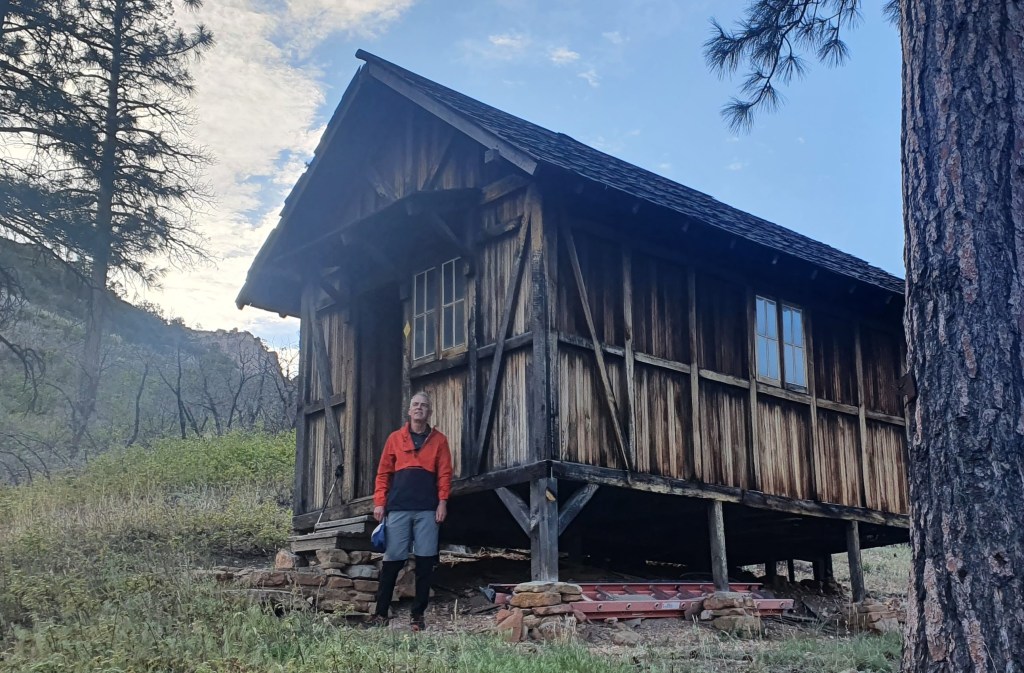
Just below the rim lies Teddy’s (Roosevelt) Cabin, a cool ‘bothy‘. Apparently the great man stayed here on a cougar hunt – the cabin was built (and named) afterwards. From this piece of civilization our route headed into the wilds, sans trail, bushwhacking and scrambling down Saddle Canyon and then Tapeats Creek.

Firstly we bushwhacked our way down through the scrub in upper Saddle Canyon. This was slow going but not too difficult until we took a route out to avoid a big dryfall. We climbed out the canyon too early and got into some nasty scrubby, loose sand scrambling before we returned back to the canyon and finding a set of cairns for a better route.

After a few hours of that, the walls of the lower part of Saddle Canyon suddenly rise up and form smooth alcoves above and slick chutes and channels under foot and we found ourselves sliding and scrambling down polished half pipes and overhangs into dark pools of water. By that time we were joined by a fourth hiker (Peter) and were able to assist each other, passing packs down the steep drops. Superb and exciting stuff, unfortunately I then stored the camera away in a waterproof bag for safety!

After the shady but steep narrows of Saddle Canyon,  we joined Tapeats Creek which was dry and hot at mid day. But after a couple of hours of sizzlingly hot hiking with a few rests in the shade we thankfully reached pools of water, then flowing water and then to a roaring clear river which we had to cross numerous times.

Travelling through this terrain without trails is hot sweaty and challenging and we took 12 hours to cover 11 miles that day, arriving at our intended camping spot near the junction of Tapeats Creek and Thunder River at dusk. We were welcomed by a large pink rattlesnake who slithered away and happily was not seen again during the night!

Next morning at 5 am we climbed up 1,400ft to Thunder Spring, a roaring cascade of spring water gushing straight out of the limestone cliff. We knew the day would be hot, so the early start maximised the comparatively milder morning temperatures (and beautiful morning light).

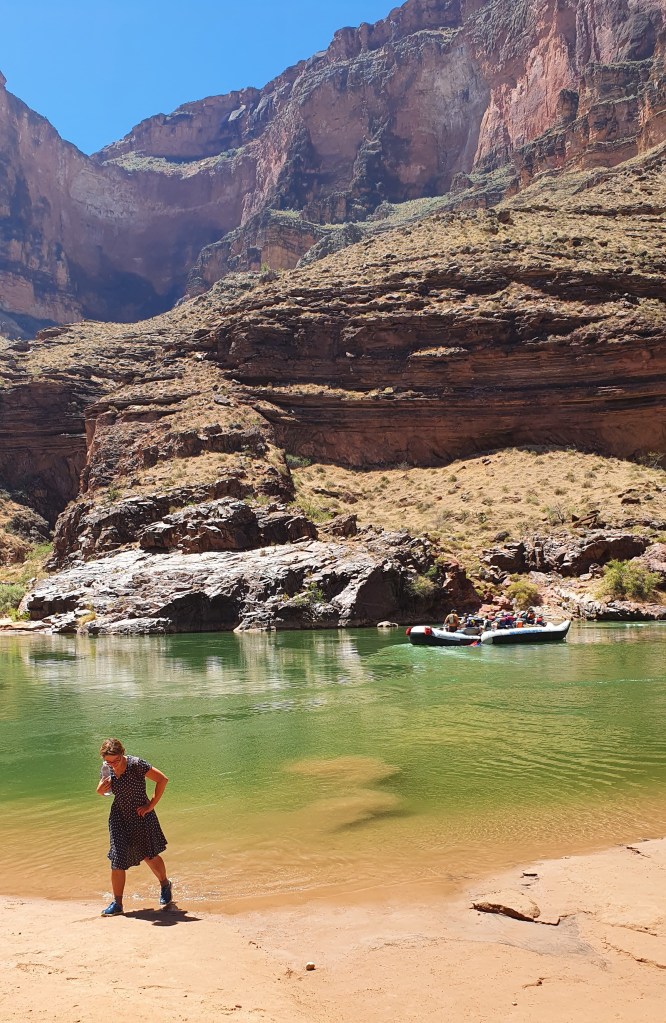
We rested for a couple of hours at the oasis-like Deer Creek in the welcome shade of cottonwood trees and descended the beautiful Deer Creek narrows before reaching the banks of the Colorado River itself around 11am. We were not alone: Deer Creek is a must-see side trip for river rafters.

Deer Creek narrows

We found ourselves a shady cave under some big boulders and tried to sit out the heat. The forecast at river level had been for 107 F (41.6 °C) that day and the next.

We passed the day reading, venturing out only occasionally to dip in the pool below Deer Creek falls and to talk the boaters arriving at the beach. In the afternoon we (Brian and Martina) decided that it was way too hot to enjoyably continue hiking down the canyon (an off trail route requiring boulder hopping on the steep riverside most of the way for 8 miles or so, we had done this in 2017 but in cooler temperatures).

So we hiked back uphill that evening and, with a 3.30am alarm the next morning and a helpful bright moon we continued upwards when it was cooler, all the way to the North Rim on the scenic Bill Hall trail. About a 4,700ft climb in all. There we got a lift with some friendly hikers from Idaho to the town of Hurricane, Utah.

Heather and Peter have hiked on (hardier than us!). We are hopping forward and with the help of a cooler weather window hope to continue our route into Zion National Park…meantime we are enjoying a decadent town stop!

Hiker Notes

Section 13 miles 27.9-37.4 I think the section down Saddle Canyon to Upper Tapeats Campground is one of the toughest sections of the Hayduke, although with some great scrambling and scenery. We were here mid May and it took us about 10 hours but that included about 1-2 hours time wasted scrabbling about at a wrong exit from Saddle Canyon.

The initial descent down Saddle Canyon (28.6-30.2) was cross country with some scrub in the dry bed of the creek but wasn’t too hard at all. Maybe with more people on the Hayduke it is gradually getting easier.

We missed the correct exit from the dry canyon bed at 30.2 to traverse around the dryfall and headed uphill too early. There are a few smaller dryfalls you get to first which have cairns on the left side but you need to go down past these to more cairns before the bigger dryfall. The route from there back into Saddle Canyon involves traversing on the left west side onto a ridge then descending its west side to a small side wash and back into Saddle Canyon. It was pretty slow going, scratchy bushwhacking but had some cairns and signs of traffic.

Once you are back into Saddle Canyon at mile 31.0 the character changes straight away to scrambling and hiking inside the slickrock canyon. There were a few drop offs where we were happy to have a team to assist each other and lower packs- it would be trickier solo. The cord to lower packs was definitely useful. We didn’t really get too wet in the slickrock potholes, maybe knee deep. A superb canyon.

The scrambling ends at 32.6 with the Stina Canyon junction. From memory there were two small potholes at 33.1, the junction with Crazy Jug Canyon. The next few miles were very hot down a rubbly dry streambed and slow going. The going gets nicer about 1/2 mile before Tapeats Spring though with cottonwoods, shade, pools and running water.

Once we met Tapeats Spring the river changed character to a raging and loud cataract! There is a trail which helps a lot starting on the south side and crossing the river at reasonable places with some scrambling along the way. We maybe had knee deep water after a dry spell, any more might have made progress difficult. The area is really dramatic and scenic and a stand out of the Hayduke if you have low enough water levels!

Grand Canyon Northern Loop

The aim for our final week was to visit new territory to us on the northern side of the Colorado River in Grand Canyon National Park. We chose to try a loop hike, starting at the Indian Hollow trailhead and dropping down to Thunder River, before heading to the relatively popular Deer Creek and then to the Colorado River. From there we would hike along the river downstream off trail on rough bouldery terrain for about 7.5 miles to Kanab Canyon. We would then exit the Colorado and hike a long way up Kanab Creek then Jump Up Canyon, Sowats Canyon to reach the Jump Up-Nail trailhead. All that would be left then would be some jeep tracks and cross country over the wooded plateau back to Indian Hollow trailhead.

Saturday 13th October 2018 Starting from the town of Kanab, we drove towards the north rim of Grand Canyon National Park, firstly on tarmac, then a long good quality dirt road due south. There were lots of hunters camped along the way in cold and frosty sites in the high altitude and shaded ponderosa pine forest. The last 5 miles of off road driving turned a bit rougher with a few deep puddles, but with some nice autumnal aspen in the roadside forest. We were delighted to see a couple of Kaibab squirrels with their distinctive long bushy white tails and pointy ears.

Indian Hollow trailhead was still in the trees, but in a brighter open spot beside some wooden corral fencing. Leaving the car at midday with 6 days food, we looked forward to potentially the longest hike of our holiday, backed up by a reasonably positive weather forecast after the previous rainy couple of weeks. A short stroll on a trail took us to the edge of the forest and the lip of the north rim of the Grand Canyon- always an impressive sight!

We followed the clear trail down the first cliff band to the ‘Esplanade’ – a wide fairly flat terrace between cliffs- and this made for easy walking as we headed east to join with the more popular Bill Hall trail. Some cool slick rock slabs with good looking water in potholes provided an excuse for a stop to admire the scenery. Once on the Bill Hall trail we saw our first other hikers of the day but most were setting up camp and we continued on to the top of the next cliff band known as the Red Wall where we collected water from another pothole for our own dry camp tonight. Here we had our first view of the muddy brown Colorado River, still a long way below us and we descended steeply down a rubbly trail through the Red Wall into Surprise Valley.

The temperatures had been cool today and we felt that we had lucked out as this area can get oppressively hot even in the autumn! Surprise Valley itself hangs above the Colorado River and is the result of huge historic landslips. Once in the valley we headed east to set up camp just before the divide above Thunder Springs. There were rain showers passing through but we stayed dry throughout the night with our tent nestled in behind some boulders.

Sunday 14th October 2018 A great day! We take a short side trip down to the unusual feature that is Thunder Springs – a huge waterfall emerging from underground and through the middle of a cliff surrounding by lush greenery supported by this perennial water source. The views beyond were cool too with Tapeats Canyon snaking its way down to merge with the Colorado.

Picking up the camping gear we headed back on trail across the dry arid ground of Surprise Valley to cross the divide on its north side above Deer Creek, followed by another steep descent down to the creek. The low light and clear air resulted in beautifully coloured walls either side of us. There were gushing springs feeding into Deer Creek and we had a stop there under some cottonwoods. The hike down Deer Creek to the Colorado River was an absolute delight- initially through lush greenery and cactus then on rocky terraces through a steep striated and sculpted canyon. We found some hand print pictographs on the rock walls.

We exited the canyon all too soon but had the grand view of the Colorado River a few hundred feet below us now. Down at the Colorado we wondered around the stunning waterfall as Deer Creek plunges over the final cliff to the Colorado and met some other people as this is a popular spot for river rafting groups to take a break.

Thankfully the temperature was only a little warmer here as we now had an exposed bouldery, trackless walk alongside the Colorado River. We left the boating groups and started picking our way through boulders right down at river level, before using rock terraces to traverse under a ‘Tapeats’ cliff band to reach a small spit of sand. Resting here under a tamarisk we enjoyed a little breeze sweeping down the river and we debated the way ahead as we knew we needed to climb up steeply at some point to avoid being cliffed out. We noticed a few cairns just above the sand spit and climbed steeply up a scoop in the rock to reach a wide sloping terrace above which made for easier headway- and birds eye views down to the river.

We crossed a little gorge and Martina took water by scrambling down to a small pothole perched above a steep drop- one of our best water sources ever! Shortly after that we came across Siesta Spring which also had good water- and it was running. Onwards, we pass a cool jumbly conglomerate wall then drop back to the river at Cranberry Canyon. We decide to stop at the confluence of Fishtail Canyon and the Colorado River. A short stroll up Fishtail revealed some cool canyon walls and more clear water in large potholes. Also near our camp we saw some ‘scraping rocks’ which must have been used in the past to sharpen tools.

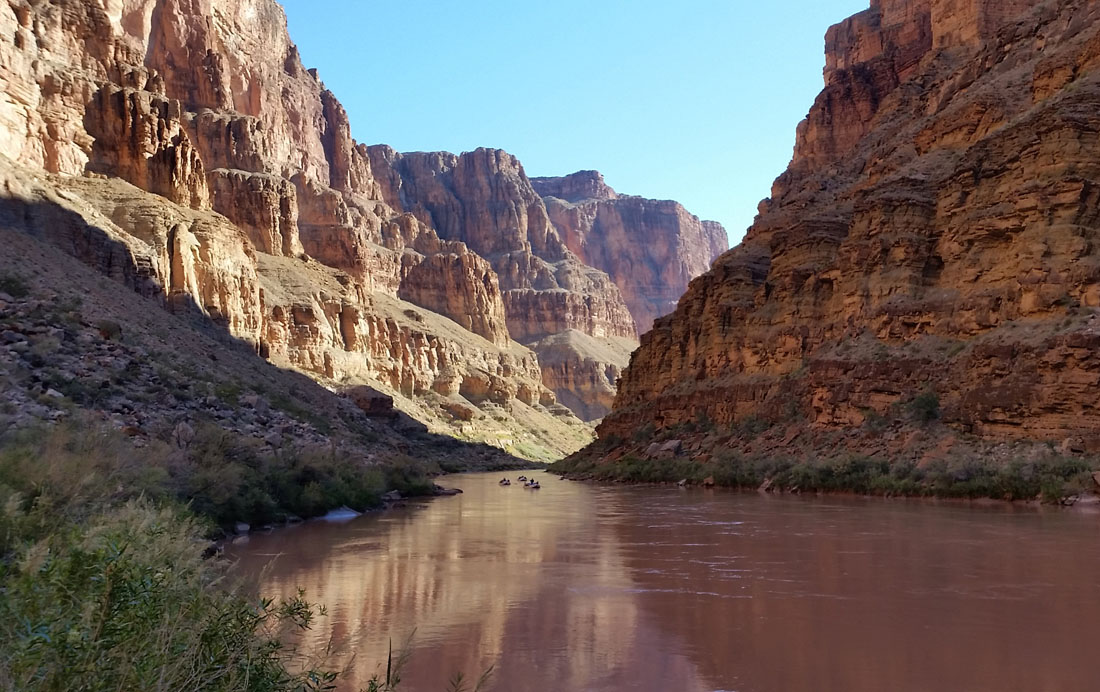
Monday 15th October 2018 The going along the river was slow, mostly through boulders with very occasional trail and some bushwhacking near the river. We make steady time though and take about 3.5 hours to cover the 4.5 miles to reach Kanab Canyon. The scenery was stunning with the shadows shifting as the sun rose through the morning and we enjoyed this cross country hike under the towering cliffs of the canyon. A few rafts pass us on the way and they helpfully ask us if we need anything or would like a lift down to Kanab Canyon. Brian was tempted but Martina resolutely wanted to keep hiking!

The water was flowing strongly out of Kanab as a brown muddy colour- a sign that the recent storms are still having an effect. I (Brian) was concerned that we may not make it up the canyon as I had read that there are tricky deep pools to negotiate even at normal water levels. We knew we could expect the extra obstacles of high water levels, soft sand and mud and some storm debris of logs and branches.

A challenge can be good for us though(!) and we set off anyway and at a fast pace up the cobbly river banks with frequent muddy river crossings. Kanab is a beautiful canyon with unbelievably high limestone walls and constant twisting and turning. We passed under a sublime huge striated alcove with water dripping over the edge in a curtain from above. After about 2.5 hours we made it to the junction with ‘Whispering Falls’ canyon and its strong clear flow of water. This was to be our turn around point if things were too difficult, but we had no thoughts to that now and kept wading up canyon heading for a possible camp near a landmark tower at ‘Scotty’s Hollow’.

The going got tougher with a series of large dank muddy pools and car sized boulders to scrabble over and round. Each presented a test for us to work out how to get round them- wade deep pools, burrow under them through gaps or scramble up the canyon side? Surprisingly, we meet a large group of student age hikers coming down canyon- if they have made it thus far then we could relax in the knowledge that we should be able to make it up river.

Eventually we arrived at Scotty’s Hollow, a large side canyon from the west with clear running water and at a tight ‘u bend’ in the canyon overlooked by the lofty ‘Scotty’s Tower’. We found a good camp above the river (in case it floods again) but under a cave with loose looking rock unfortunately which made us a wee bit nervous lying underneath protected only by tent fabric. That was a 10 hour day of wet, silt, boulders, pebbles, scrapes and cuts but we both are feeling good – if a bit tired. Interestingly for future planning, our pace up Kanab in these conditions was about the same as that boulder hopping along the Colorado River.

1015 035 20181015_102505

Tuesday 16th October 2018 Survived the night with no rock fall! We headed up river, still wading the muddy stream and scrambling over huge boulders. Reaching another landmark that is Showerbath Spring, we admired it’s cool hanging ferns streaming with clear water. The going eased a bit from there for 2.5 hours before we hit the junction with ‘Jump Up’ canyon- our exit from Kanab Canyon and a chance for dry feet as it was bone dry! Resting here we watched some ubiquitous but always fascinating ravens soar alongside the canyon walls.

Jump Up was narrower and, with smaller canyon walls, provided quite a contrast. The limestone canyon provided lots of ammonite fossils in the pebbles as well as colourful red agates. These limestone canyons have quite a different feel to the sandstone canyons further east, such as in the Escalante area, which have smoother sweeping walls of the Navajo and Wingate sandstones. Here the limestone is more broken, but equally colourful and full of variety as well as fossils.

As we climbed upcanyon it soon opened out and we split into another side canyon called Sowats- this had clear running water and was greener with cottonwoods now appearing.

The hiking was now mellower and we stopped to take water for overnight at the gushing ‘Mountain Sheep Spring’ and looked at some pictographs on a nearby wall. A cairned trail provided an easy exit out on the south side of the canyon and back onto the Esplanade terraces. We hunted around a bit for a good campsite away from the trail and on the sandstone slickrock before claiming a viewful spot perched on a rock ledge above a small overhanging rock.

Wednesday 17th October 2018 Great to see the return of the sun in the morning after a cloudy chilly day yesterday. We set out south on a clear path along the Esplanade to reach a clump of cottonwood trees marking our exit climb out of the Grand Canyon. It was cold as we climbed up the trail in the shade to the Jump Up- Nail trailhead and we grabbed the chance to take a rest when the sun first hit us. Lots of fossils beside the path and expansive views back across the Esplanade to the other side of Kanab Canyon. At the trailhead we hit a dirt road for a few miles back on the rolling plateau and pinyon -juniper vegetation. To get back to the car we mostly ‘cross countried’ southwards from here and luckily for us the going turned out to be easy and rather pleasant through open woodland crossing a few dry washes. We got hit by a couple of hail showers though which forced us to keep up a good pace to stay warm.

Back at the car, we didn’t hang around as snow started falling and we were keen to get through the initial jeep tracks on this high altitude plateau before the snow started lying. It was a sprint but we made it back to the town of Kanab and the end of a fantastic mini-adventure!

More photos here