Round Valley Draw to Hackberry Canyon

5th May Round Valley Draw to Hackberry Canyon 14 miles
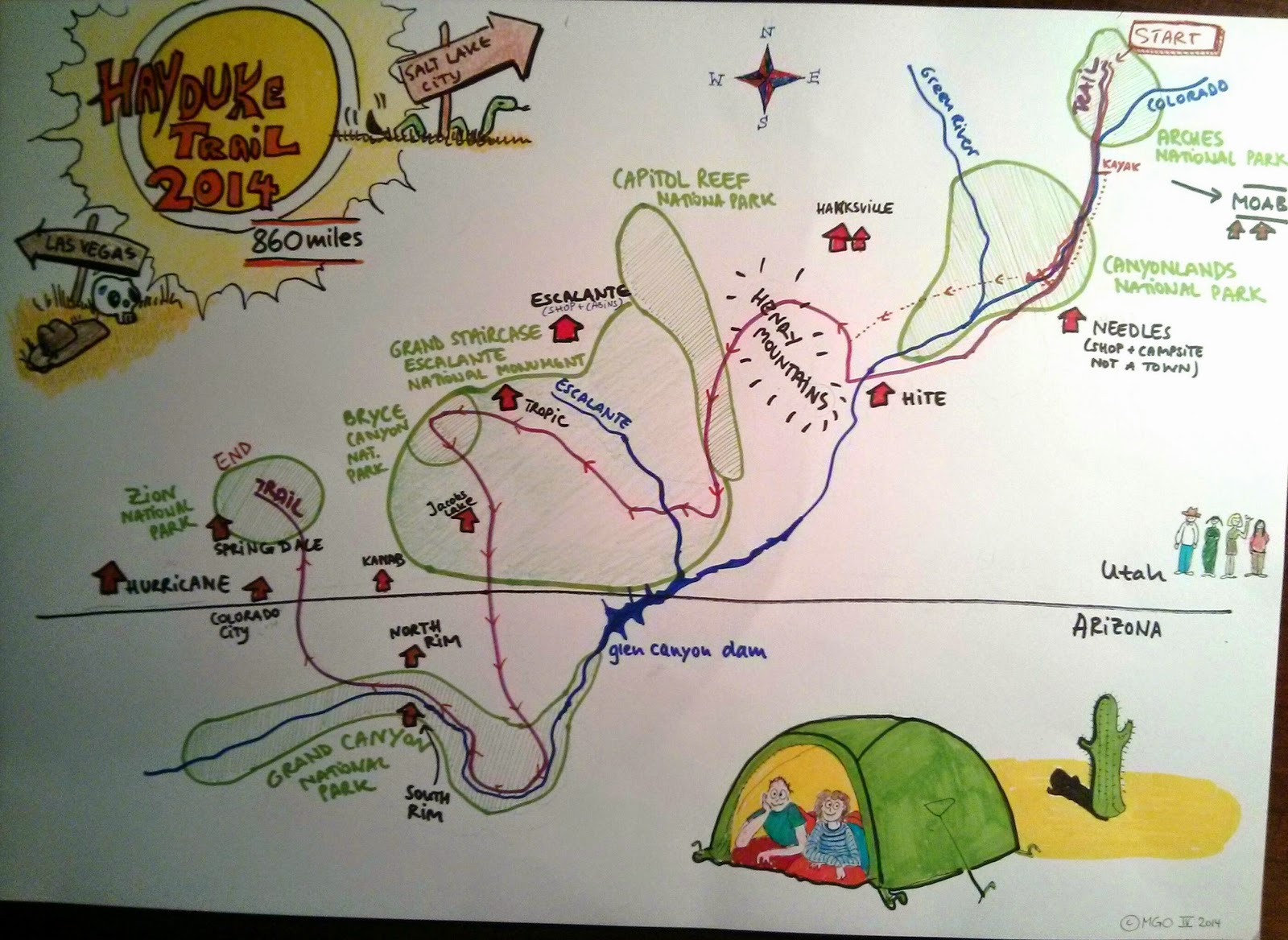
Escalante is a small town but has all the facilities we needed; post office, grocery store, thrift shop, gear shops and some nice eateries. We had a good rest up here and after much deliberation, decide to hitch forward around the next section of the Hayduke to start hiking again from near Grosvenor Arch. This allowed us to have a shorter hike next where we could carry less food (four days) whilst allowing us to add in some interesting side trips including Yellow Rock and Bull Valley Gorge.
On the 5th we headed out of town. Breakfast first, sitting outside our motel room, then we packed up and posted our ‘float box’ of extras to the town of Kanab, a couple of weeks of hiking away.

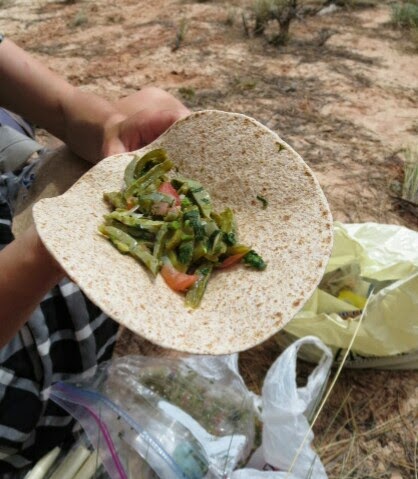
We waited for about 30 minutes at the edge of town before we got a hitch from Mario who worked in the building trade in Escalante and gave us some of his wife’s delicious cactus salad! He dropped us of in the tiny town of Cannonville. As we aimed to hike back through here, we arranged to leave a food package for the next 4 days so that we can save weight whilst hiking.

Cactus salad!


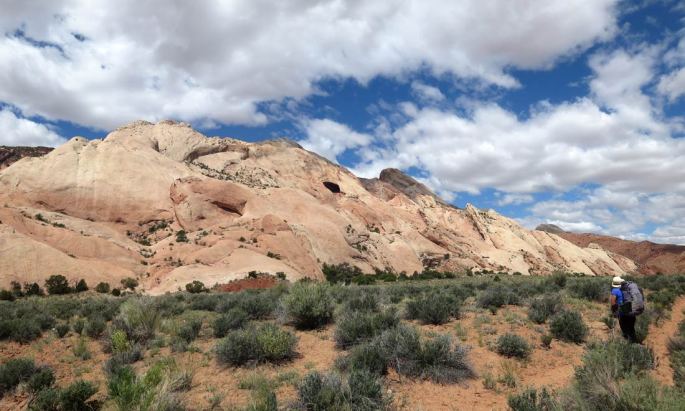
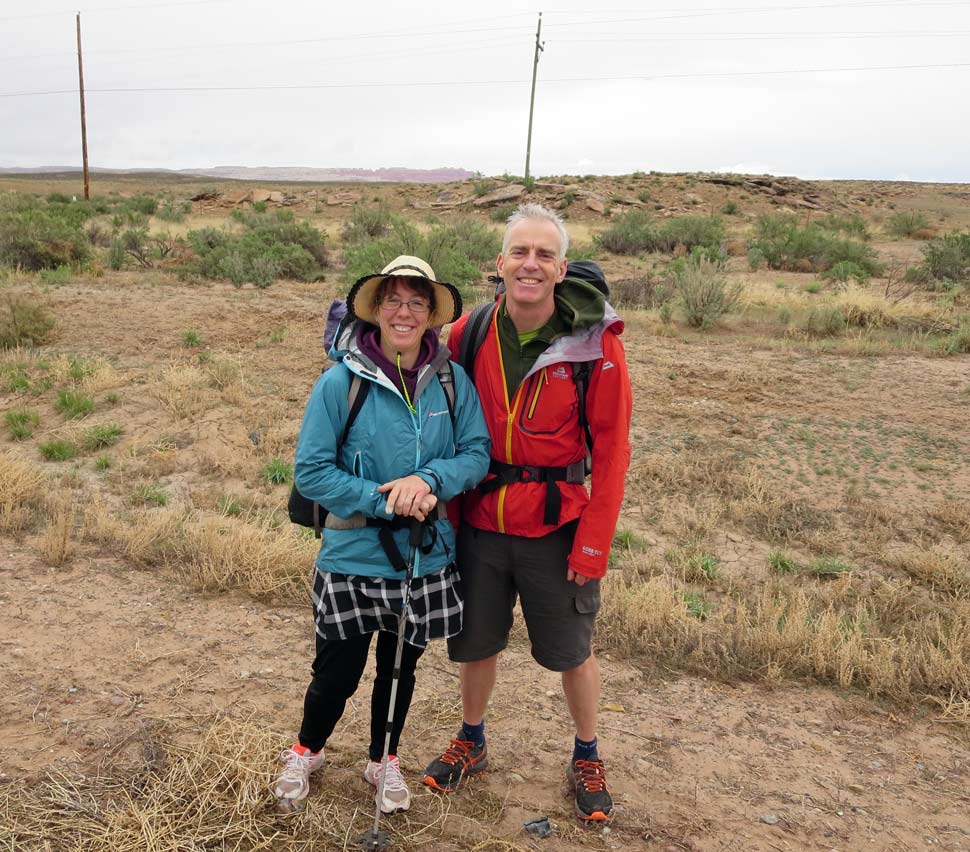
 Cannonville was still around 20 miles by dirt road from our re-connection with the Hayduke but we just headed off hiking south on ‘Cottonwood Canyon Road’. We soon got another lift from a very friendly and chatty German couple in an RV along a dirt road for a few miles (there is some traffic here heading to Kodachrome Basin State Park and the Arch). Eventually at midday we reached Round Valley Draw trailhead near Grosvenor Arch. It was pretty around here in an open sagebrush landscape but with sweeping Ponderosa pine trees and white and pink Navajo sandstone cliff faces.

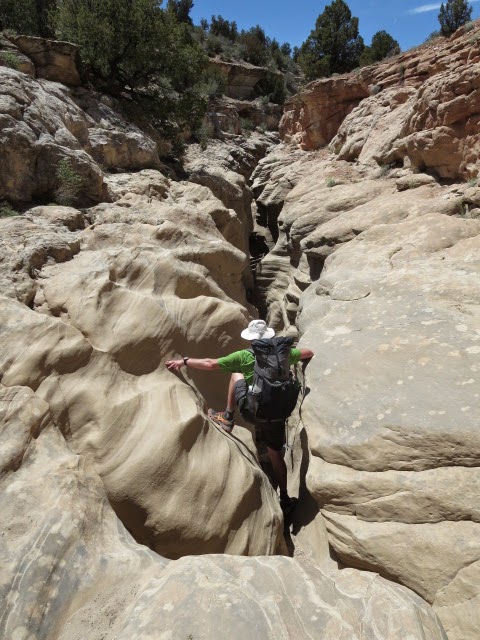
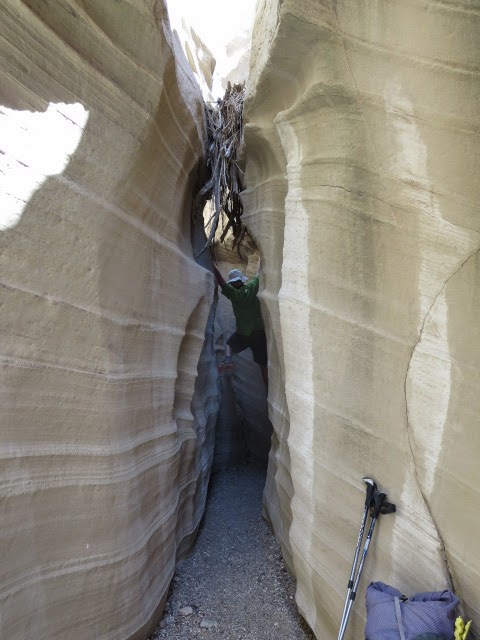
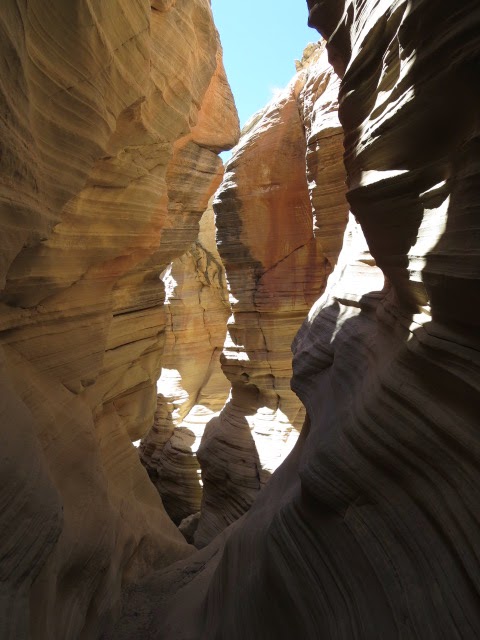
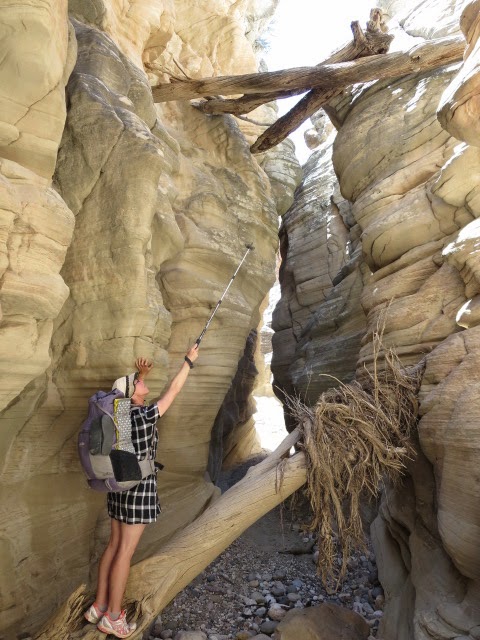
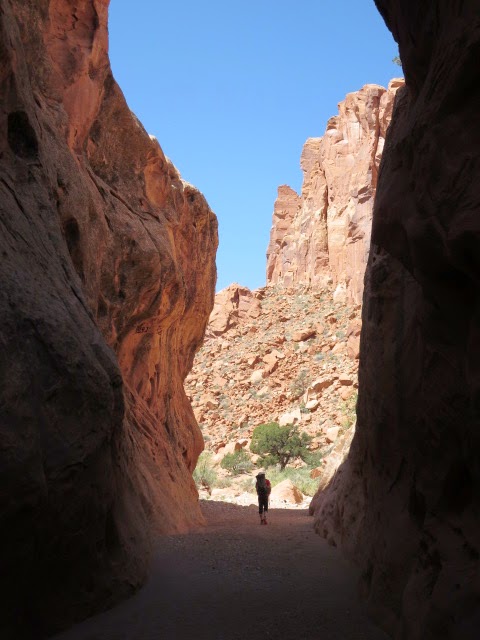
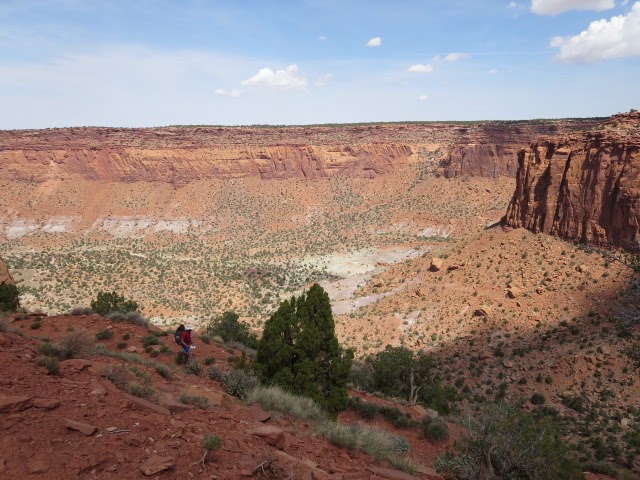
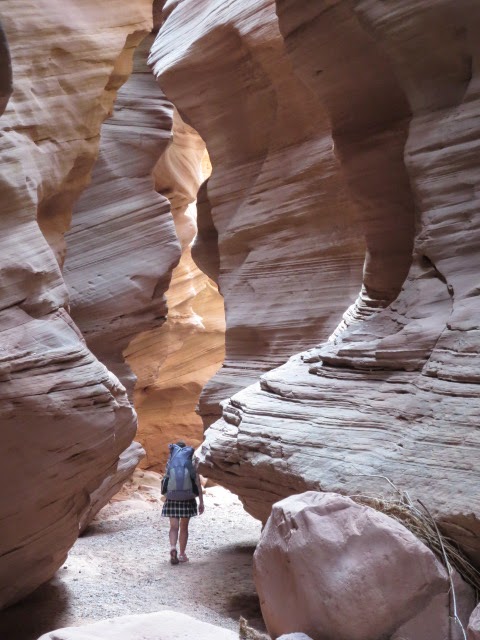
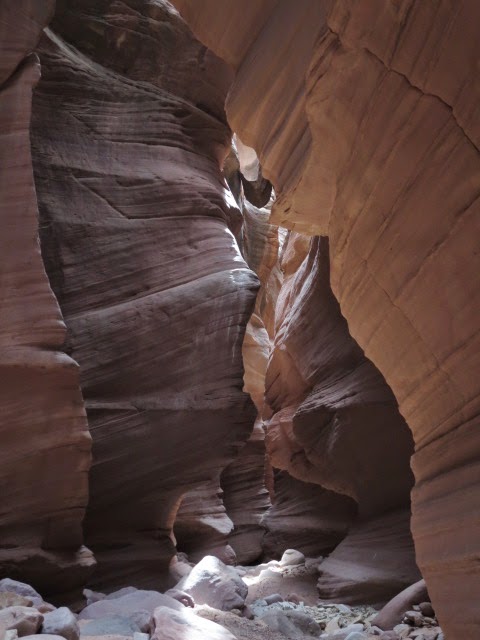
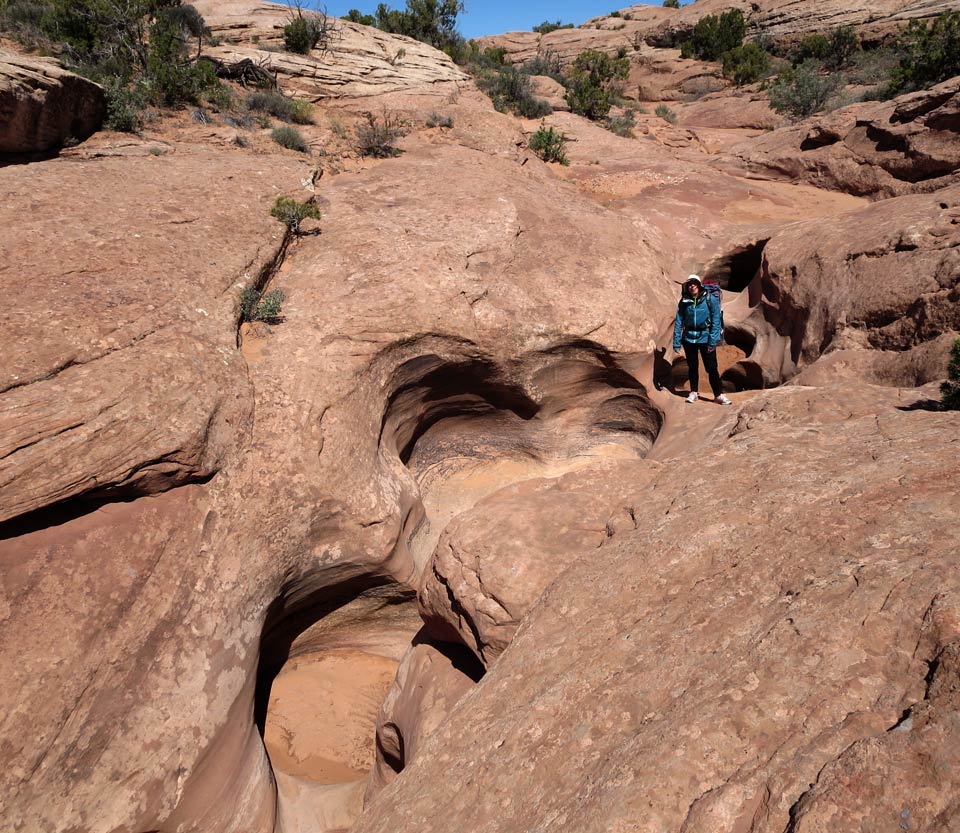
After our cactus salad lunch we headed down south towards the slot canyon of Round Valley Draw. This was an amazing place, the land just opens up into a slot which we could squeeze down for about 20 feet to the floor of the canyon. We loved it! We needed to hand down our backpacks in a few places to squeeze through and jammed logs showed the power of flash floods.

Dropping down into Round Valley Draw slot canyon


Down!


Flood debris in Round Valley Draw slot canyon


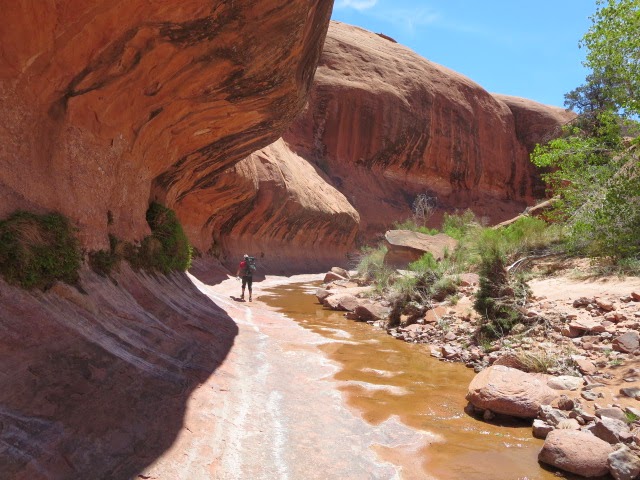
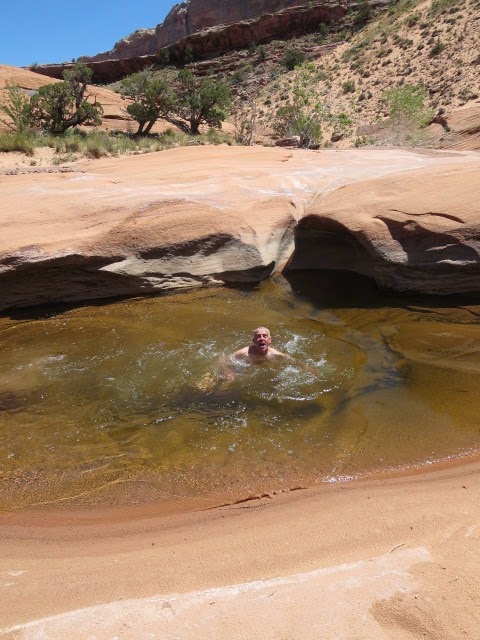
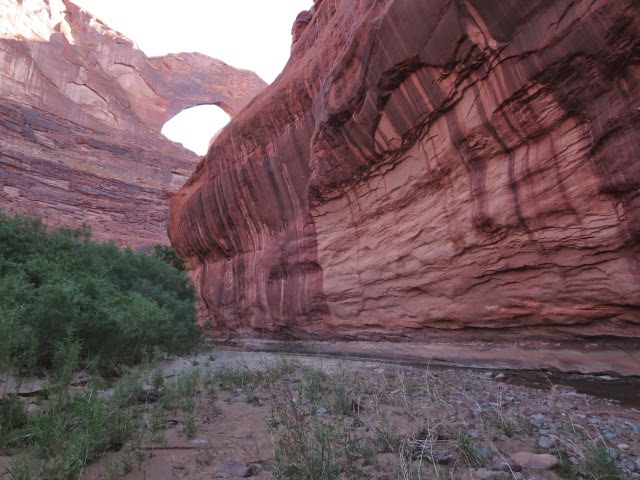
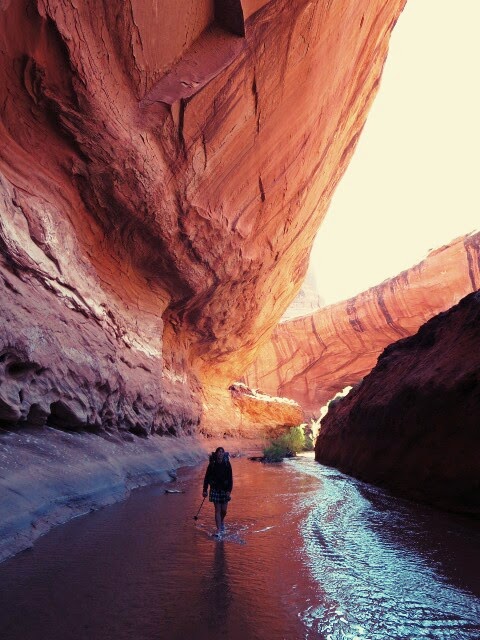
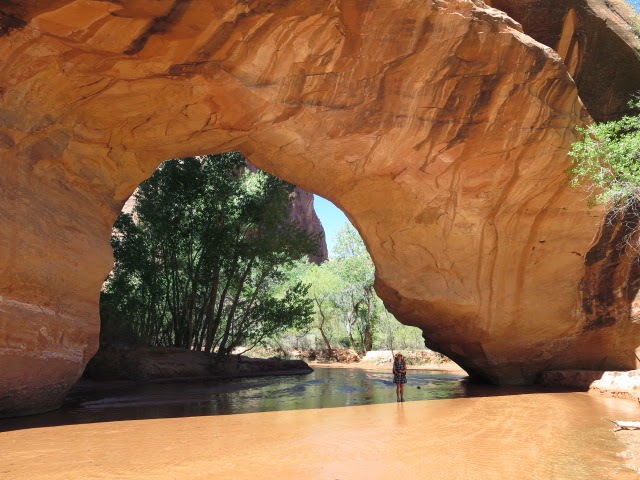
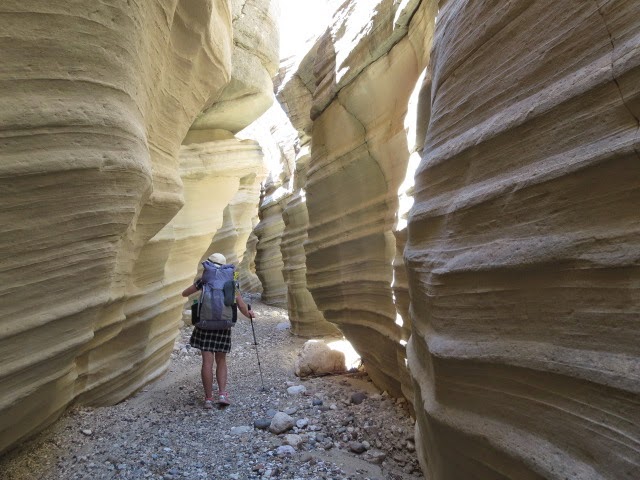
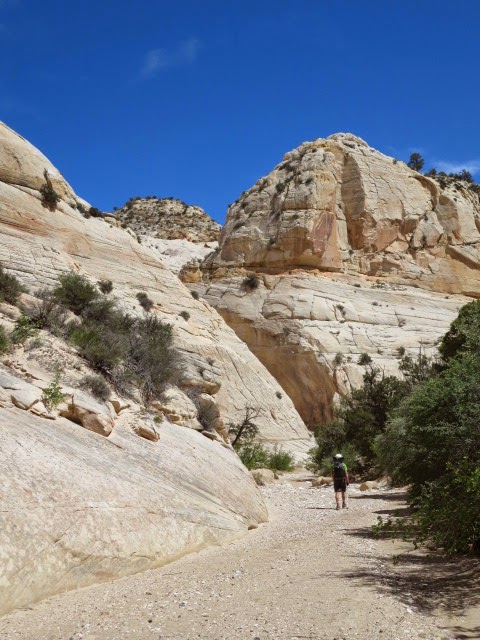
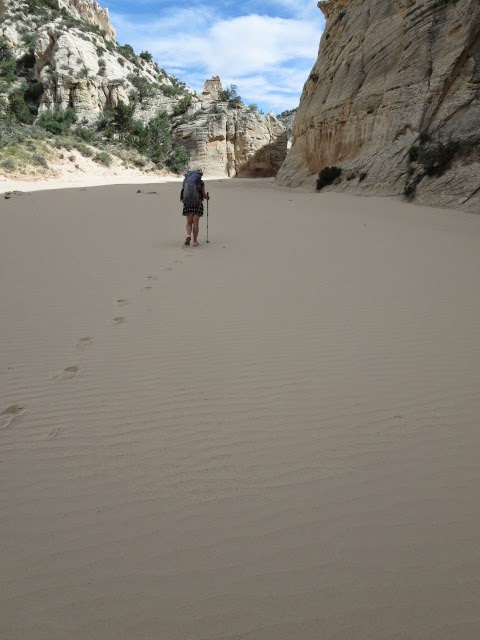
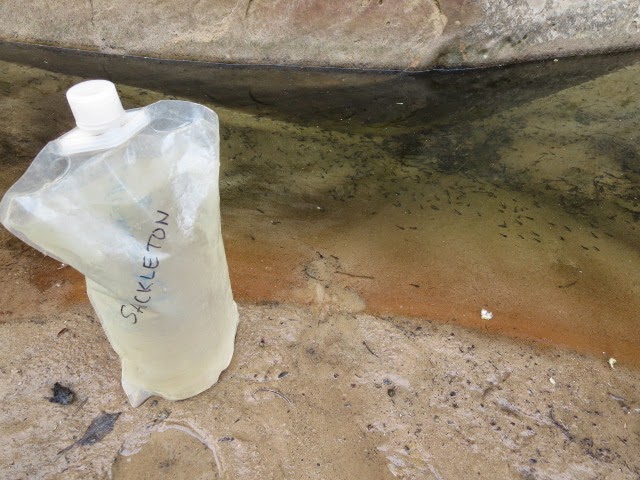
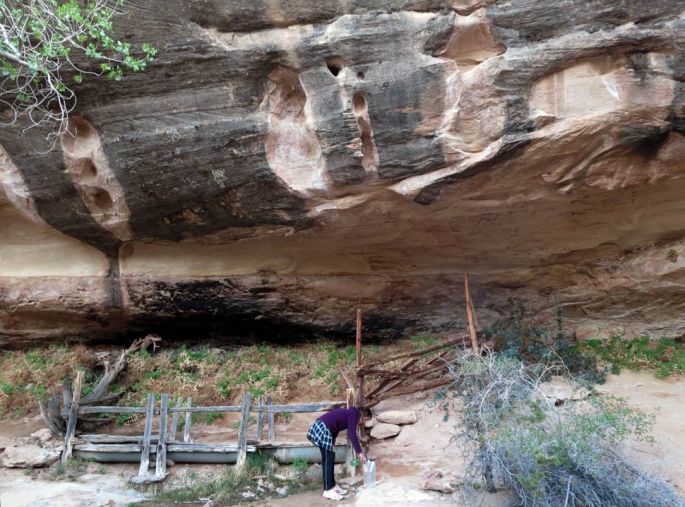
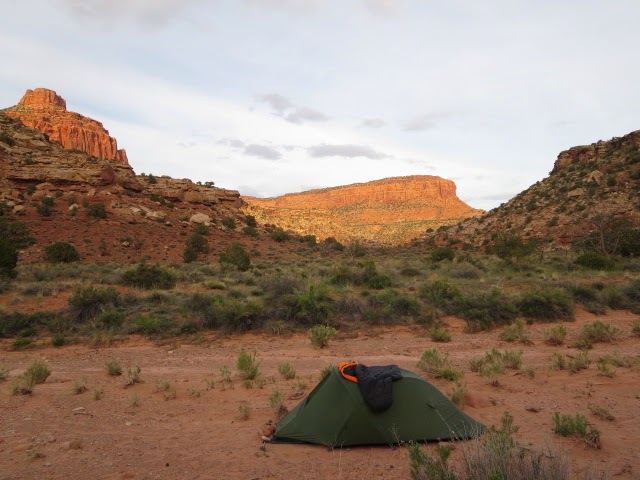
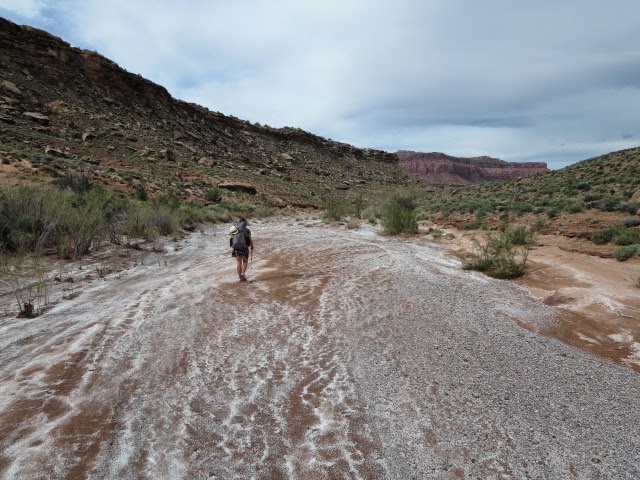
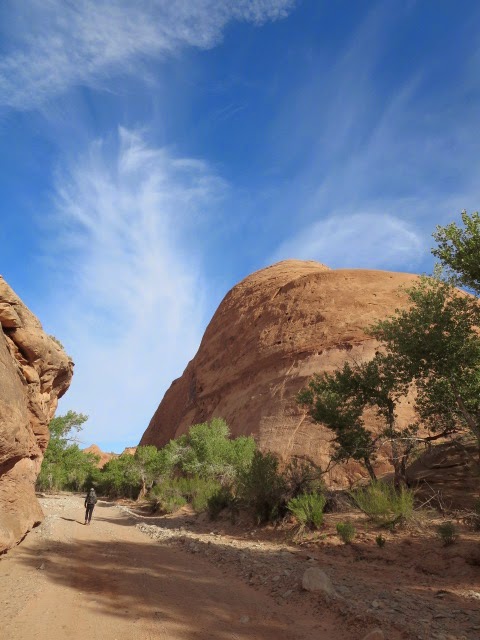
From there we traveled down the wider and sandy Hackberry Canyon where eventually we found water (shared with lots of tadpoles which you can see in the pic) and lush cottonwood trees.

(Explanation of “Shackleton”: our 4 two liter water bags are named for polar explorers so we can distinguish them when we carry treated and untreated water – we also have Nansen, Franklin and Tillman with us).

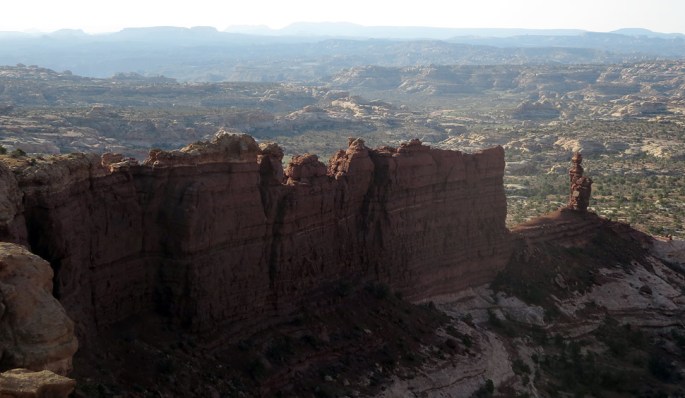
Hackberry Canyon


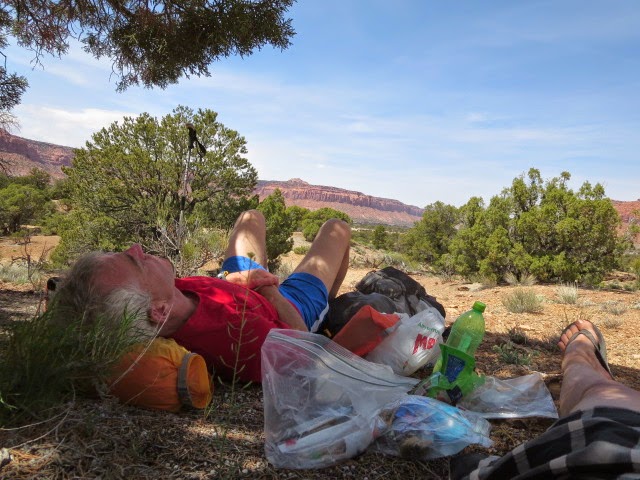
Hot sandy floor of the canyon


Our tadpole water source


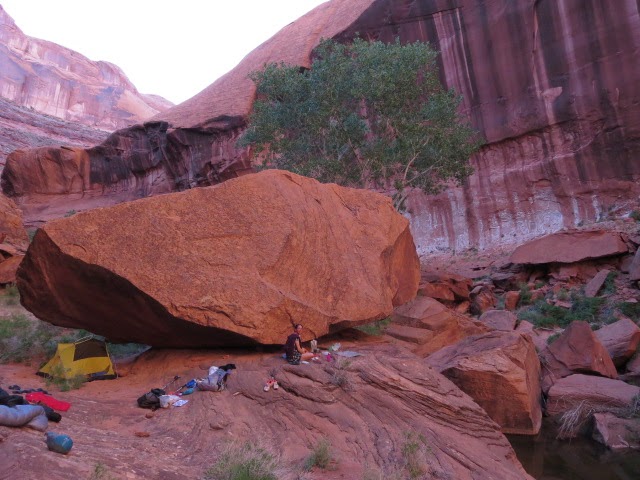
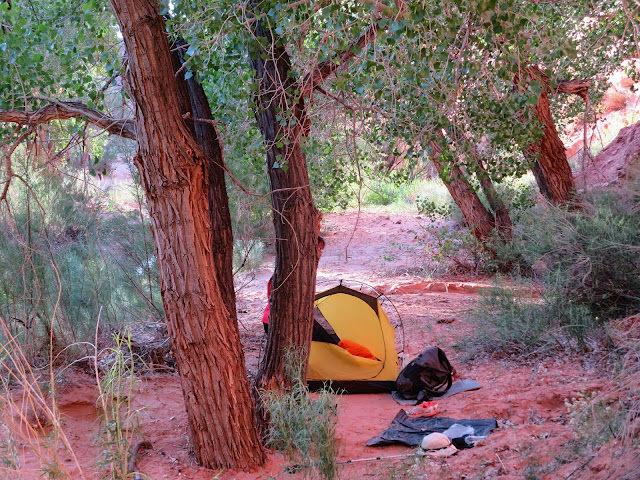
Camp in Hackberry Canyon


Escalante!

Wow that was a wild, tough but beautiful hike!
Have reached the small western town of Escalante last night after 7 days out there.
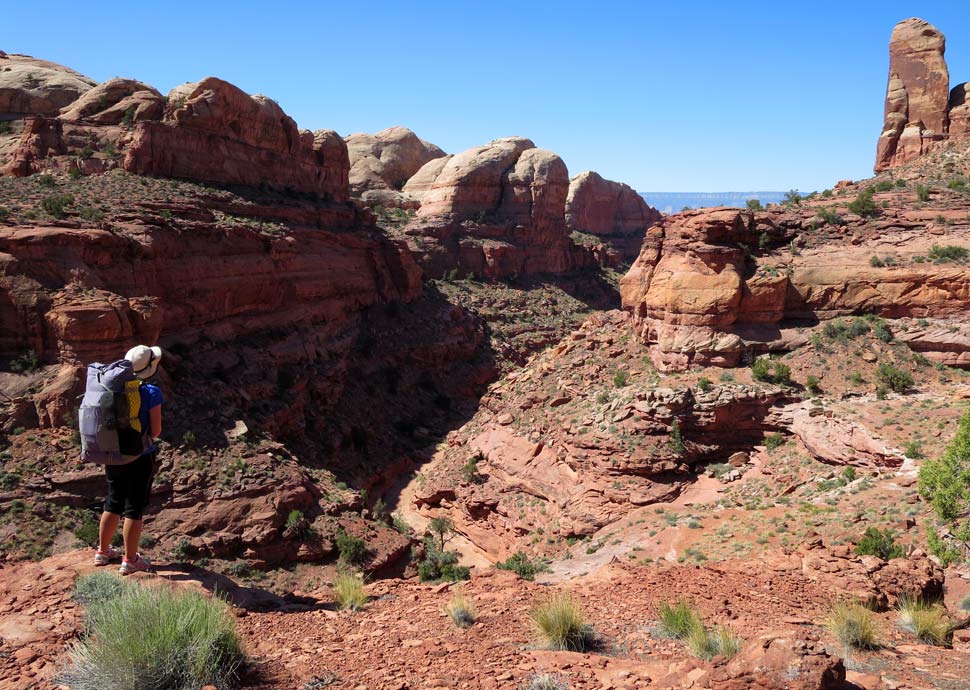
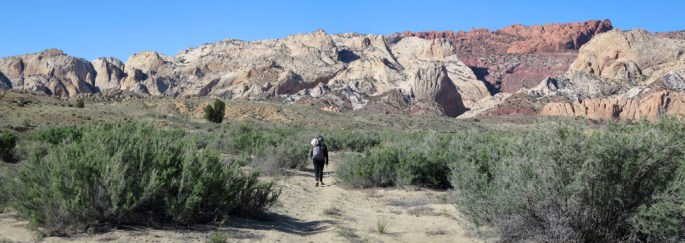
We climbed into the Henry mountains and got snowed on then descended in wonderful Capitol Reef national park before weaving through the canyons of Escalante national monument through world class scenery. Now recovering in town after demolishing a 16″ pizza and pitcher of excellent Wasatch brewery beer. Oh met one other hayduke hiker in town..  Micheal Geiss from Munich! Details to follow in the next post………

Into the Escalante canyons

 May 1st Halls Creek to lower Steven’s Canyon 15.5 miles

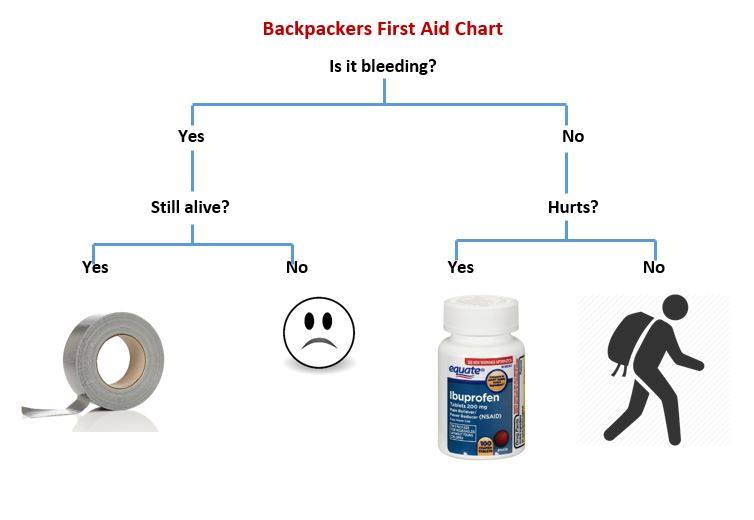
Our first aid flowchart!


From our camp we crossed the river through thick riparian vegetation to the west side and scrambled our way onto Navajo slickrock slabs. A cairn was found-excellent, we hoped this was the historic Baker Trail and would lead us upwards out of Halls Creek and into the Stevens Canyon watershed.

Hiking up the slabs was superb with views opening out back to the Henry mountains again- already showing signs of snow melt since we crossed them a few days ago. Dammed Lake Powell (or Lake Foul as Li Brannfors had named it on his maps) appeared now to the south east, its low water levels revealing expanses of unnatural scrub plains.

IMG_1091

We soon lost the cairns and headed up south west. The terrain was complex though- domes of slickrock sometimes dropping steeply requiring some backtracking to weave a reasonable line up to the top. Occasionally we found another cairn but couldn’t see any continuation of the route so we just navigated our own way.

At the summit we had a short rest then descended south west looking for a way into Stevens Canyon. The top of Stevens has many steep ‘fingers’ and there was no sign of a route so we just picked a ‘finger’ and scrabbled down slabs using junipers for holds until we popped out into what looked like the main canyon.

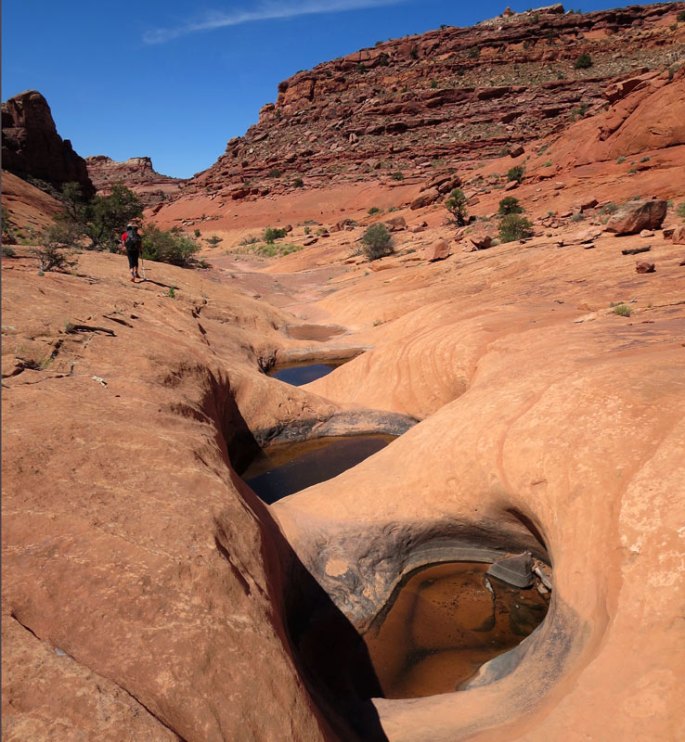
Eventually we made it onto an easier beautiful wash bottom with lots of pink towers and steep canyon walls. Awwhhh, this was brilliant hiking down slabs with sensually sculpted potholes of water like a ‘string of pearls’.
IMG_1108

The upper canyon had a real wild feel so we were surprised to meet 3 hikers coming up canyon. We exchanged navigation and water notes and this gave us encouragement that there was a way through down Stevens to the Escalante river (we did have doubts!).

Looking west down upper Stevens Canyon
 Sometimes we would be hiking the canyon bottom but we alternated to following the canyon sides on amazing slick rock shelves. On one of these we had to scramble over a boulder field sitting on the slab. Brian hopped off a freezer sized boulder onto the ground below between other rocks. The boulder rolled towards him just about pinning him against another rock but luckily jammed itself in. He was left with various gashes to thighs and arm. Martina emptied our somewhat frugal first aid kit and, along with duct tape and some spare clothing managed to patch Brian up. Even more luckily for him his injuries were just scrapes and bleeding rather than muscular or any bones and he could still hike, albeit a bit wobbly for the first hour or so!

Lower down in Stevens the hiking was through more densely vegetated canyon bottom with some wading through deep water pockets. Poison ivy made an appearance as well and was quite hard to avoid. About a mile short of the junction with the main Escalante river we found a marvelous camp next to a garage sized boulder serenaded by croaking frogs through the evening!

Despite the boulder incident it was a fantastic day through the best of scenery with varied challenging hiking. Some more images below…..
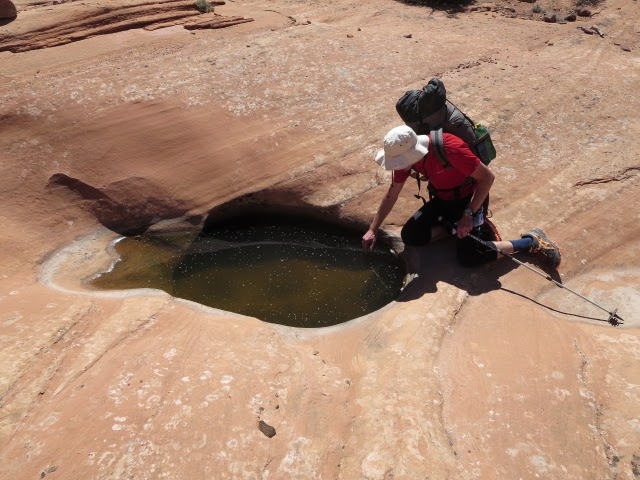
Lots of potholes with water in Stevens Canyon
Stevens Canyon
Cold water dip in Stevens!
Our wonderful camp in lower Stevens Canyon

2nd May Stevens to Hurricane Wash 16 miles (plus hitch into Escalante)

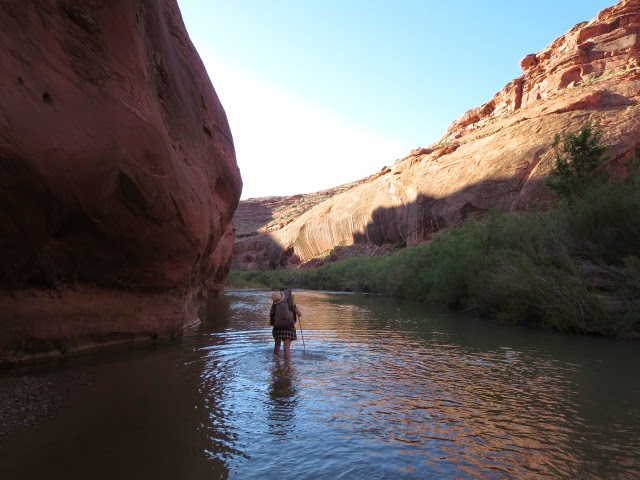
We aimed to make it to town today and were off at 7 am (early for us) in lovely early morning canyon light. Our canyon emptied into the larger Escalante and we follow this downstream for 1.5 miles or so. The water seemed to be running quite high with much thigh deep wading and the water temperature was COLD! Stunning hiking though in this world class area. The reflected light on the striped uniform sandstone cliffs was a sight to behold.

 We passed 3 hikers sleeping in bivvy bags under Stevens Arch indicating to us that we were entering the popular Coyote Gulch area. Turning into Coyote Gulch itself we found it had quite a strong water flow and we had a rest to warm our feet up and change into dry socks.
Coyote is popular for a reason, as it has splendid scenery- mixing flowing water, lush green vegetation, awesome canyon walls and many natural rock arches. We kept to a fairly fast pace though, winding our way up the canyon hoping to make it to the Hurricane Wash trailhead dirt road by early afternoon to give us a chance to find a lift back the 30 miles or so to the town of Escalante.
The day heated up but the mix of shade and sun was ideal for us. Passing by campers at Jacob Hamblin Arch we looked up to see the scrambling route up the arches rib we had taken when last here in 2004.
Stopped to watch a raven returning to feed chattering chicks on a high rock ledge. Swirling fluff from the cottonwoods added a surreal edge to the day.
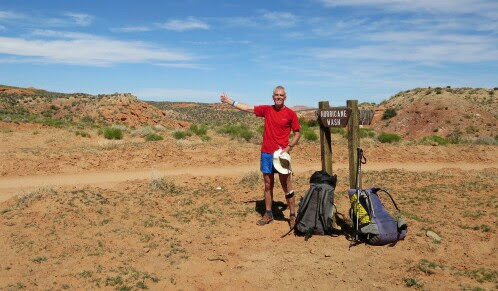
We exited out into Hurricane Wash which was smaller and pleasant but soon opened out into a dry, sandy, exposed hike to the trailhead.  Reaching the dirt road where we hoped to hitch, it was hot and windy and most disappointingly there were very few cars there! We hung around for an hour or so but lucked out as a hiker returned to his car and agreed to give us a ride to Escalante- hoorah!
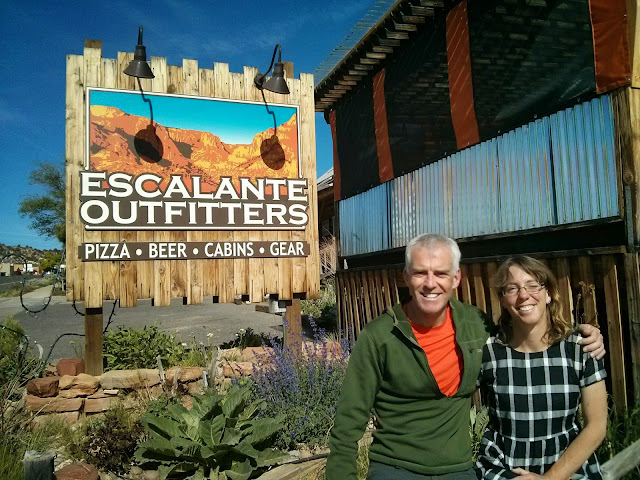
In town, all the motel rooms were booked out for the night, so we camped at Escalante Outfitters and booked a motel room for the next night. Both of us were a bit tired, dirty and sore, so a rest was in order. After a shower we had a huge pizza and beer at the outfitters and met Micheal Geiss, the other Hayduke hiker we had heard of- the first we have met. It was nice to relax and exchange tales of our hikes from the last few weeks!
Wading the Escalante
Looking up to Stevens Arch
Starting up Coyote Gulch
Coyote Arch
Hot, dry and dusty hitching next to the dirt track

Capitol Reef National Park

April 29th Swap Canyon to Muley Tanks 20 miles

An epic and great day…
We had a pleasant start down Swap Canyon on a meandering gravel wash surface. It was cold and windy but warm when the sun hit us. After an hour or so we emerged out of the canyon into colourful views of the waterpocket fold and its multiple pinnacles of rock.

What happens here is that all the colourful layers of sandstone that are usually horizontally stacked on top of one another have tilted upwards. The plateau we were moving over is sloping up. Erosion creates deep canyons full of colour and reflected light- like ‘sleeping rainbows’. After the snow and rain from the past days the desert was blooming. Temperatures were still mild and a fresh wind blew us gently along.

IMG_0945-6-pano
Approaching the waterpocket fold

Our route took us onto the dirt road of the Burr trail which zig zagged upwards under huge sandstone walls. Expansive views opened up eastwards back the way we had come to the Henry Mountains.

At the top we hit Capital Reef National Park, the Lower Muley Twist Trailhead and signed the trail register. Surprisingly we saw that another Hayduke hiker had been here two days ago- Micheal Geiss.
Since we hadn’t met any other long distance hikers yet (and hardly any other hikers at all) we looked forward to seeing if we could meet him – perhaps in our next intended town stop of Escalante.
IMG_0968
We did meet an English couple staying in Calgary a few minutes into the canyon though and enjoyed a chat with them, before we headed between the amazing sculpted sheer rock walls of Lower Muley Twist.
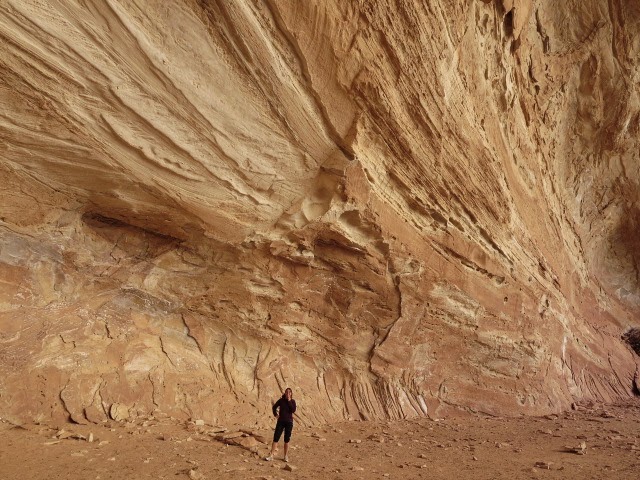
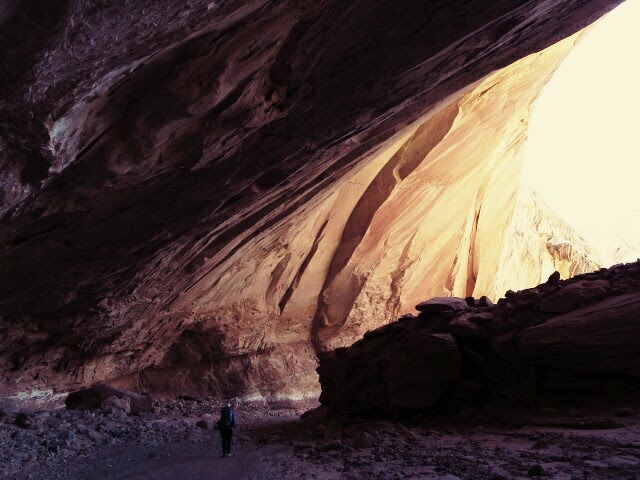
Further on the twisting canyon had some fantastic deep alcoves (or alcaves as we called them) -bigger than we had ever seen. The 8 miles down the canyon were tremendous with lots of variety overall.
We stopped at ‘Cowboy Alcove’ – complete with some old food tins and graffiti- for a break before the canyon dropped east through lovely narrows and exited out into the wide expanse of Halls Creek.
Cowboy Alcove
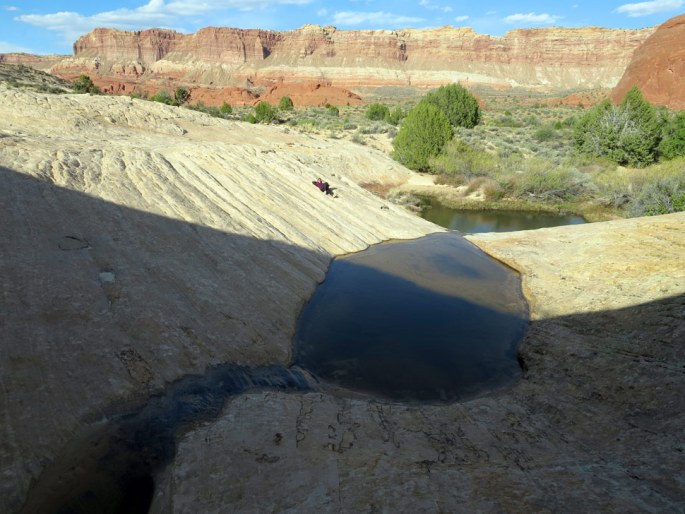
Here the canyon was less dramatic but still scenic with maroon wingate sandstone domes. Our destination was some huge pools of water called Muley Tanks lying a few hundred meters west of the canyon bottom. We struggled to find them though, and had to double back and search around for them. It was worth it though as the pools sit in an idyllic spot on sandstone slickrock. Our feet were sore but it was a great end to the day and we set up camp a few hundred meters away under a juniper tree.
IMG_1022
Muley tanks
Deep alcoves in Lower Muley Twist
April 30th Muley Tanks to south end of Halls Creek 20 miles

After studying our maps we decided to divert from the Hayduke route again and take an alternate down Halls Creek and Stevens Canyon over the next 2-3 days. It looked scenically fantastic in Stevens (we had visited the lower part of the canyon in 2004) and the alternate would avoid the normal Hayduke route’s.long 25 mile wade down the Escalante river.

Halls Creek was initially dry and sandy and was wide open in complete contrast to yesterday’s narrow canyon. The going was fairly good – a gravelly sandy base- and the views were ever changing. We found a single track trail on the east side of the wash that took a more direct line than the meandering river for much of the way.

IMG_1045-6-pano-halls-creek
Halls Creek

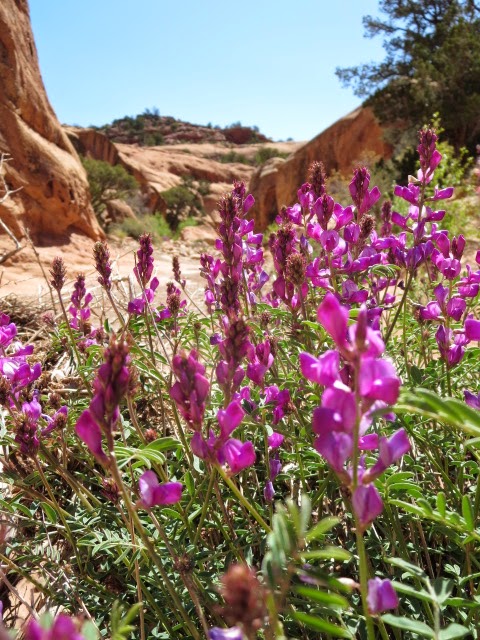
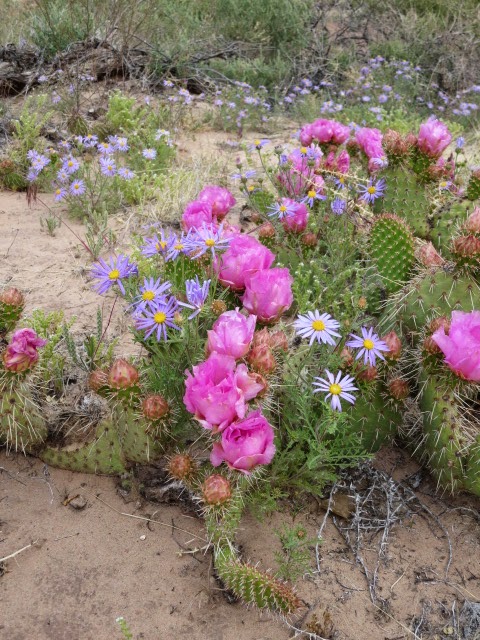
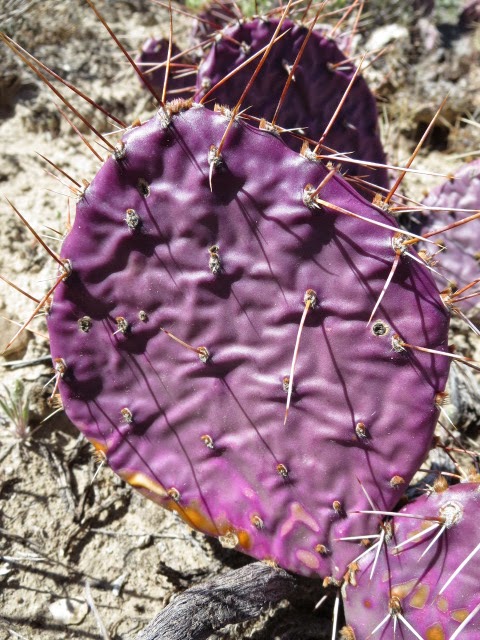
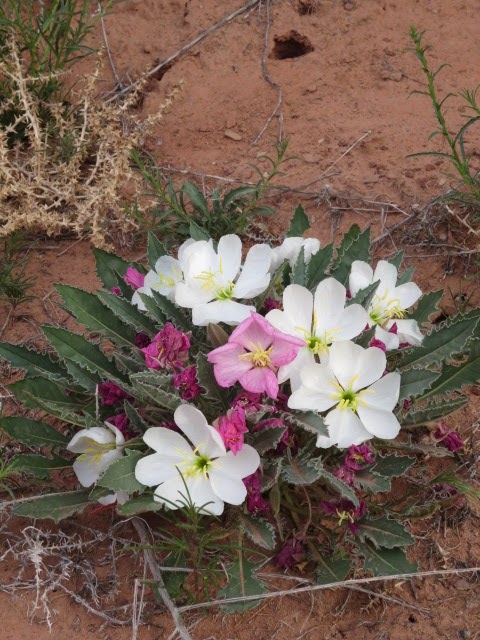
It also took us through some of the loveliest desert flowers we have seen! Pink cactus, yellow lillies, purple lupins, white primrose, some orange flowers, sages- contrasting with a deep red soil.

IMG_1053
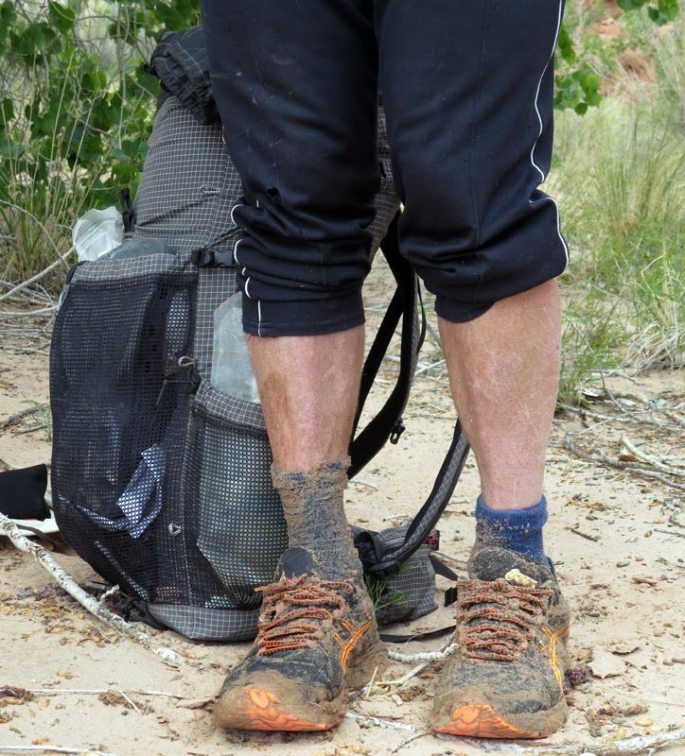
Quicksand shoes

Further south, water surfaced and into the afternoon we hit thicker scrub and bushwhacked through bamboo like willow and other tangled vegetation. We resorted to just hiking down the river for a while and some spots of quicksand kept us alert! The quicksand we came across wasn’t particularly dangerous especially with a partner to help pull the victim out! Once you emerge from the quicksand you end up with thick clinging goo over your shoes and socks though which can be hard to clean off.

Our campsite was beside the river in halls Creek nestled against a red sandstone dome, about 2 miles short of where we aim to climb out of the valley over into Stevens Canyon via a disused route called the Baker Trail. One of the tent zippers  at the front failed probably due to the excessive sandy, dry conditions- bummer (we have a otherwise wonderful Terra Nova Voyager)!

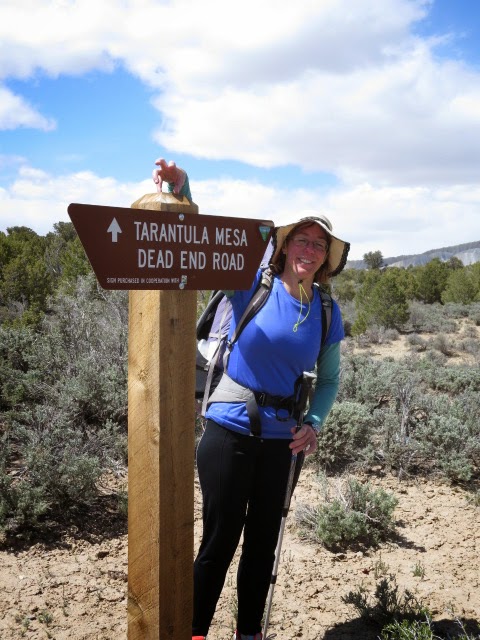
The Henry mountains and Tarantula Mesa

April 26th Poison Spring H95 to Crescent Creek 10.5 miles
The temperature dipped and it poured down as we tried to hitch out of the tiny town of Hanksville 17 miles back to where we left our hike. We soon gave up hitching and retreated back to Stan’s diner for some mid morning coffee. That then turned to lunch!! Luckily the skies brightened a bit after lunch and we finally got a lift from two guys driving down to Lake Powell to repair their boat.
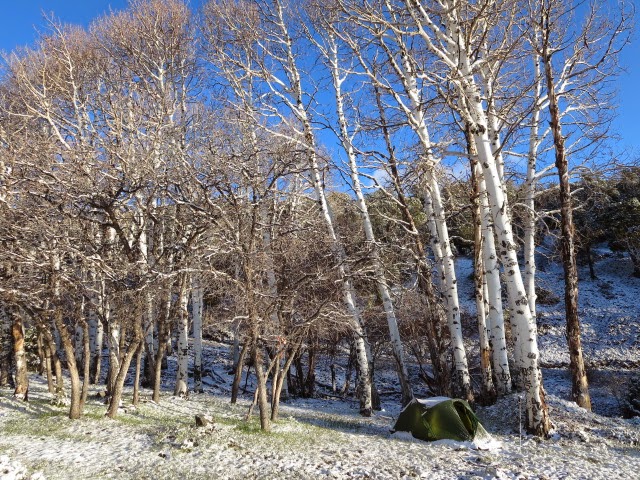
Loaded up with 9 days food for this long stretch to Escalante, we took it slowly, but there were great views upwards to the snowy mountains and back to the extensive plains to the east. After navigating around Butler Wash we headed back up on jeep tracks in pinyon juniper before hitting tall ponderosa pine and ghostly white aspen.
IMG_0886
Ascending into the Henry mountains

Some cobalt blue bluebirds fluttered around in the trees. We hiked on a big muddy dirt road from recent active mine workings and were glad to escape from it to find a pleasant grassy camp site near Crescent Creek nestled amongst aspen. Five wild turkeys strutted past and disappeared into the bush.

We enjoyed a wonderful burrito and taco from town for dinner as we listened to the drumming of hail on the tent outer as well as the sound of thunderstorms. We read about Norwegian explorer Nansen’s polar exploration though and our little bit of cold weather seems like nothing compared with his hardships!
Camp in snow amidst aspen beneath the Henry mountains

April 27th Crescent Creek to Tarantula Mesa 21 miles

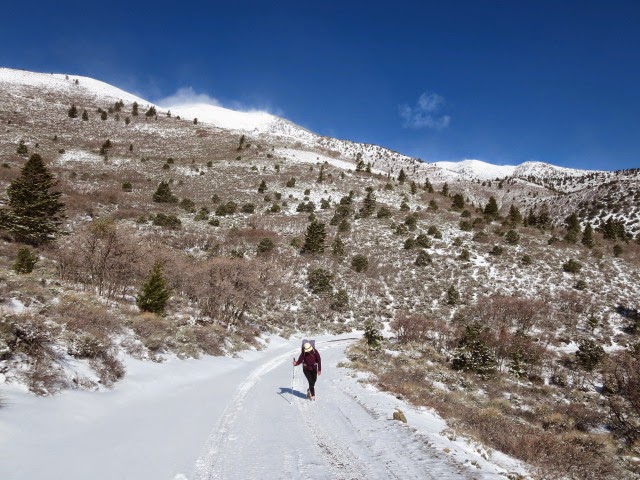
Nice day. We awoke to a white snowy scene in the morning. There was wild, windy, cold weather above the cover of our aspens and we chose reluctantly to bypass the Hayduke route over the south summit of Mount Ellen by skirting the mountain to the south and west on jeep tracks.

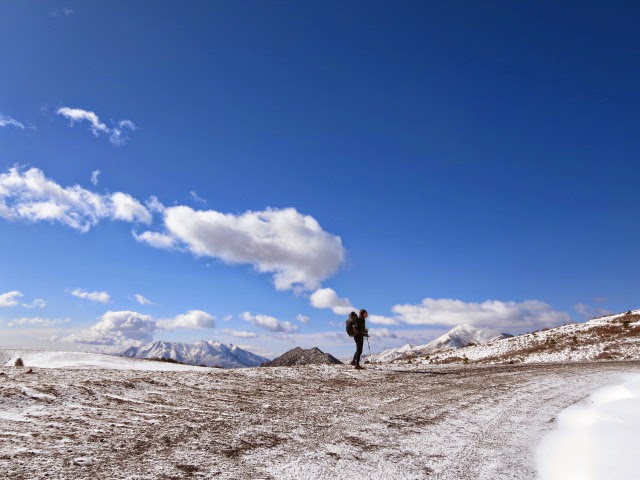
It was rather lovely though with crisp air and woodpeckers rat-tat-tatting in the trees. At Copper Ridge we tried to head back west onto the mountain ridge but were beaten back due to high winds and biting hail and spin-drift. Oh well another time -we simply didn’t have enough clothing to withstand that sort of weather! 

As we circled the mountain, the temperature increased a little and the jeep track turned into gloopy, gooey mud making for tricky going. Our high point was about 9,200 feet before we started to descend onto the northern slopes of the Henry mountains.


 Lunch was at the sunny, grassy meadow of Airplane Spring at 7,665 feet which made for a warm pleasant stop. We relaxed near the memorial plaque for a crashed airplane here with its dry water spigot. However we found water eventually about 300m down (westwards) the track in a trough.
 
From here we descended further into drier mesa country on more dirt roads to meet up with the Hayduke again. There were a couple of steep climbs but the track generally meandered easily south west. The mesa is a shelf sloping gently down westwards before dropping over a couple of cliff bands to the Waterpocket fold -our destination tomorrow hopefully-which looked great ahead. Views back to the sparkling snowy Henry’s were impressive too.

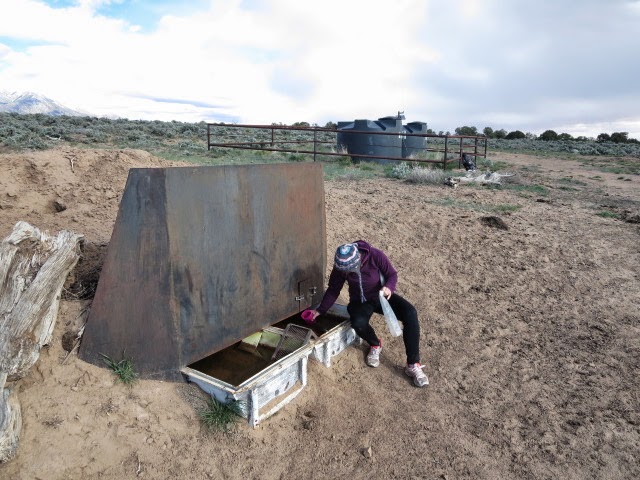
The 7 mile dirt road of Tarantula Mesa wore both of us out a bit and we are glad to reach the second of two solar panel water troughs in the evening to pick up water and camp a few hundred meters away amongst juniper for shelter.

Collecting water on Tarantula Mesa


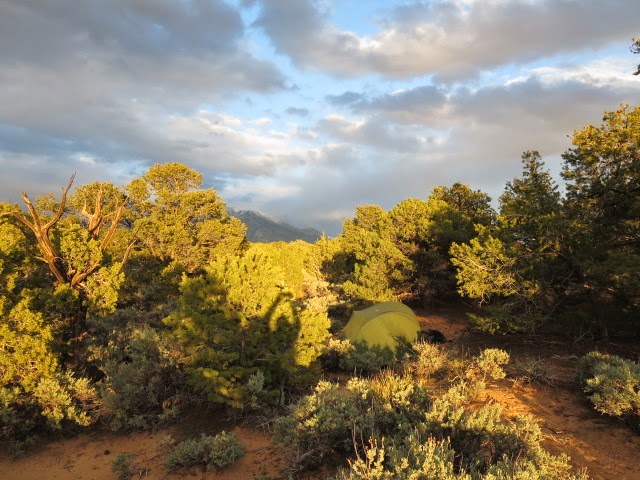
Camp on Tarantula Mesa

 April 28th Tarantula Mesa to Swap Canyon 11 miles

We woke up to cold wind and clear air. Today we were due to drop into wild country with some tricky navigation down through cliff bands and complex canyons. After a short dirt track we headed cross country through the juniper looking for the cliff edge drop off. We were pleased to pick up some welcome cairns at the top of the cliff and then scrambled steeply downwards on ledges and rock.

IMG_0912-3-pano
Above the drop down into Tarantula Mesa

After a traverse left, we dropped down a dusty rubble chute to the canyon bottom made of soft bubbly clay.The going was easier for a while along the Muley Creek’s dry gulch bottom before we headed into tremendous arid country south west across undulating benches. We ground to a halt trying to find a trail on our map and had to retrace our steps and resorted to the GPS for a bit before picking up the faint path traversing benches.

IMG_0926
Below the first cliff band of Tarantula mesa

Another gulch with some wicked quicksand(!) wound its way down towards surface water amongst thick reeds at a canyon junction. We had a fair amount of drinking water left from last night and decided not to bother with the fairly cow infested water here abouts.

We stopped for lunch in the shade of a cottonwood near the water though with hummingbirds zinging around and a dead buffalo which added to the scene.

The Hayduke route takes a loop north west and then south from here and we chose to take a more direct but interesting alternate described by Nicolas C. Barth called Below Tarantula 2

We passed what looked like a coal seam and followed some dry drainage’s upwards before a steep scrabble back to meet up with the Hayduke route (although the Hayduke itself is also cross country here!). 
 
More complex rocky terrain followed before we found another key scrambling descent with the odd cairn into Swap Canyon. From here we had easy navigation down the wide gulch to a pool of water which looked like a good stopping point. Although it was early at 4.30 we were able to have a clean and it meant that we could hike tomorrow to the next water source at Muley Tanks 19.5 miles away without carrying overnight water.


The Colorado to Hanksville

spanish-bottom
20th April Spanish Bottom to Lou’s Spring 12 miles

We left the boats behind at Spanish Bottom in Canyonlands National Park. Our plan was to hike on for 4-5 days roughly westward through desert and sandstone country to a highway where we aimed to hitchhike into the small town of Hanksville for supplies.

In the Utah desert lots of comparatively small geological or landscape features have been given names by white explorers and cattle ranchers and our hike was a sort of micro navigation from one such feature to the next.It sounded a bit like an itinerary from middle earth……

From Spanish Bottom to the Dolls House, over Ernie’s Flats past the Fins up Sweet Alice Canyon to Lou’s Spring. Climb the Golden Stair  – past ‘Mother and Child’ Rock – over a plateau to the Flint Road. Down into Happy Canyon, through the narrows to cross the Dirty Devil river, then up to Poison Spring Canyon to the highway.

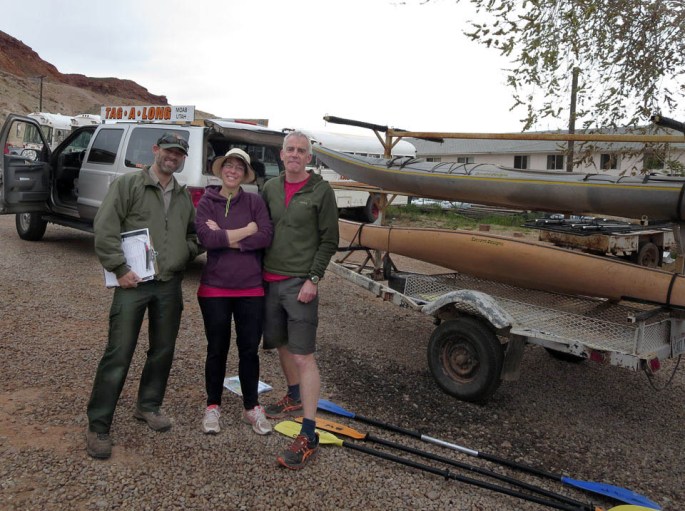
We had a nice relaxed morning beside the Colorado sorting the gear out in the shade. Our pick up boat arrived around 12.30 from Moab and they made short work of pulling our kayaks onto the boat and taking our kayak rental gear, toilet(!) and garbage bag away with them. Soon we were alone, just us and our backpacks. It got hot (high 20’s C) and we were motivated to camp at a water supply 12 miles away so we set off quickly up the steep slopes above the Colorado.

IMG_0746
Our kayaks are collected
IMG_0749
Heading up away from the Colorado river to the Dolls House

There was a trail to follow uphill which made the hot climb easier. We reached the Dolls House – an area of superb sandstone towers with a campsite reachable by a long dirt road, and we saw some people here. We picked up a faint trail through pinyon juniper out onto Main Flat, a sandy plain surrounded by pink pinnacles. The sand made for tough walking but we loved getting back into hiking and soaking up the views.

Main Flat

 Our route weaved it’s way through lovely rock garden scenery to near Clells Spring, which we don’t visit, but we do spot a couple of pools of water here that we could have drawn from. We are aiming for Lou’s Spring though further on which is supposed to be a good water source. After some rockier terrain we made it to the spring in late evening and were glad to find clear water in a tank fed by a dripping pipe. Martina spotted a hummingbird here.

We camped on a good flat spot on top of a sandy hillock, a few hundred meters away from the spring itself. Some spots of rain but the sky cleared as it got dark around 8.30 pm. A great day!

IMG_0755-pano-banner

IMG_0761
Lou’s Spring

21st April Lou’s Spring to Happy Canyon south fork 20 miles
We woke at 6 am as it got light and fetched some more water from the spring before heading out with 5 liters each as we were not sure where our next water would be. The tent is frosty but the heat soon builds up as we climbed slick rock out of the canyon and are bathed in red light from the sunrise. After crossing some jeep tracks we headed uphill through another cliff band on the Golden Stairs trail. This traverses across the cliffs finding a line of weakness up onto a higher plateau area via a neck of rock to another jeep track trailhead.

Here we met Tom who is 70 and is heading out into Ernies Country (where we have just come from) for 2 days. We had a good chat and Martina in particular was delighted when he offered us bananas (the first fresh food item for 5 days!!!) and who had lots of useful info about the way ahead (himself being a desert hiker for many decades).

IMG_0764-golden-staircase
From Golden Stairs to ‘Mother and Child’ rock
We hiked onwards on jeep tracks with heavy loads for 2-3 miles to another climb through a cliff band of Wingate sandstone. This is a jeep track called the Flint Trail which will take us up to the higher plateau at 6,800 feet. There were people around here accessing the area by the jeep tracks and we realized that it was Easter weekend as well! Lot’s of petrified wood around, and we spotted mountain bluebirds around the pinyon juniper.

Big expansive views opened out to the ‘islands in the sky’ cliff bands around. After some more jeep tracks we reached the edge of the plateau at Happy Canyon campground and searched out our route down through cliffs into Happy Canyon itself.

We picked up what looked like an old disused mining track zig-zagging down into colourful blue, white, bright orange and lavender bands of rock – part of the Chinle group which is also a source of minerals and uranium.

Descending down into Happy Canyon south fork

This route was quite clear, if a bit bouldery in places but the drop into Happy Canyon felt like we were entering wonderful wild country with no one else around. Once we dropped into the canyon bottom we just followed the sandy dry wash as it meandered downwards.

We stopped just after a prominent feature above the canyon called ‘The Hat’ (a rock tower) and found some shade under an overhang to read and rest. Brian’s feet were blistered from the hot hiking but otherwise we were holding out well and loving Happy Canyon.

Shady juniper rest in Happy Canyon south fork


Happy Canyon south fork camp
 22nd April Happy Canyon south fork to the Dirty Devil river 21 miles
Alarm at 5am this morning (super early for us!) and we breakfasted in the dark. We made good pace down the south fork following the twisting dry, sandy bottom of the wash. Cheerily, we saw a number of pools of water in the slickrock along the way, although we are carrying enough for today through to our intended campsite by the Dirty Devil river and we hoped to have some pools of water in the canyon before then.
We soon joined the main Happy Canyon and headed south west with a few more hummingbirds around. A fox dashed up the canyon slopes when we surprised it.
This main canyon has some cool honeycombed cliffs maybe 100 feet high and still the occasional pool of water. It was dry and windy though and both of us put on headphones for the first time whilst walking and start listening to music. This worked well, no navigation was required for a few miles as we simply headed down the dry riverbed and watched the scenery change subtly as the canyon twisted along.
A strong wind got up later though, at one point blasting us with swirling sharp sand grains and forcing us to take shelter- like the ‘Jibli’ in the Sahara that we have seen in the movie ‘The English Patient’!
Hiking down the alkaline wash in Happy Canyon
 We arrived at a point where Happy descends into a narrow slot canyon in the afternoon, providing a great chance to shelter from the sandstorm.
We clambered down a dryfall into the rocky slot canyon and took the opportunity to have a sheltered lunch. The slot canyon is wonderful, with beautifully sculpted walls, seamed with curving white layers of rock. We loved this hike with the odd scramble but too soon eventually emerge at a widening to the Dirty Devil river itself.
This river can change in nature very quickly but our crossing was easily achieved in ankle deep refreshing cool water! We found a place to pitch the tent by the river but the wind was gusting hard and whipping sand finding its way into everything.
Happy Canyon
Happy Canyon
 23nd April Dirty Devil river to near Poison Spring 16 miles
The wind had thankfully died down when we woke up making things a bit more relaxed. We even managed a wash in the river before leaving at 7.20 am.

Our climb out of the Dirty Devil was steep but fairly straightforward on some faint trails as we generally just kept heading up until we hit an old mining track contouring around the west side of the canyon. This was a viewful ‘balcony trail’ along the colourful Chinle rock strata and we could see back down to Happy Canyon and south along the Dirty Devil river as it makes it’s way to its confluence with the Colorado river itself.

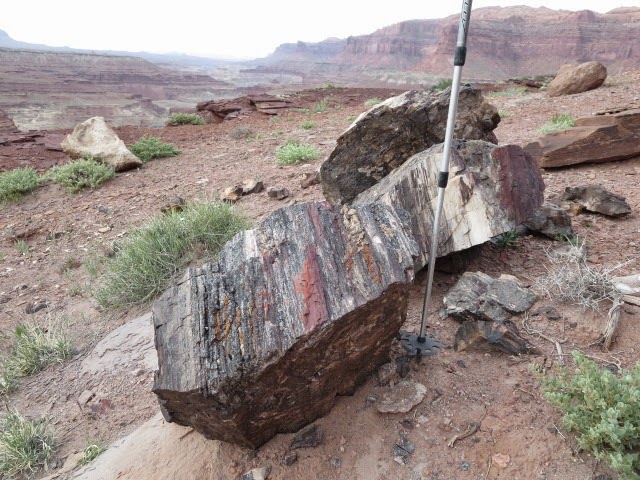
Lots of petrified wood at the side of the trail before we swung west away from the Dirty Devil to parallel Poison Spring Canyon and meet up with the actual Hayduke Trail. The wind picked up again and we took a break behind a large boulder for shelter and snacks.

Petrified wood above the Dirty Devil river

 A jeep trail provided relaxed, easy hiking and there were seeps of water on the track. The canyon walls were now the smooth red Wingate sandstone and with lush green cottonwood trees on either side,  it was very welcoming.  Poison Spring was just up the track where we decide to camp in late afternoon on our 8th night out by the clear piped spring (no poison).

Once the tent was up we headed out for a few hours east of the canyon by scrambling up slabs and broken rock onto the plateau for some grand distant views both back east to Canyonlands National Park and west to the snow capped Henry mountains where we are heading next! We reached a canyon overlook and disturbed some swifts – a grand wander!

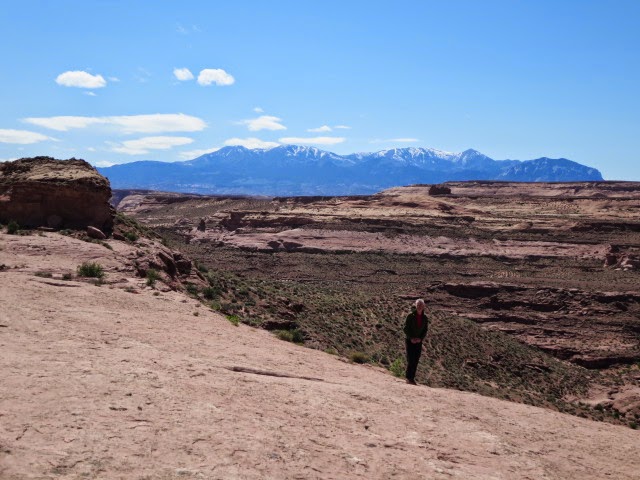
Looking to the Henry mountains from above Poison Spring Canyon
Camp in Poison Spring Canyon under cottonwoods
 24th April Poison Spring to Highway 95 (hitch to Hanksville) 10 miles
Today we headed for town for some food and a clean – yay!
The highway was about 10 miles away and we started with a sandy jeep road. It made for pleasant hiking with more green cottonwoods and smooth Wingate sandstone walls changing to the blonde Navajo sandstone further on, higher up.
Walking out of Poison Spring Canyon
We hiked quickly in the cool morning air and made it to Highway 95 by about 11 am with wide vistas ahead to the Henry mountains. Got a lift to Hanksville from the 3rd car passing after about 15 minutes – hikers from Steamboat Springs Colorado who have been in hiking at Salt Creek canyon in Canyonlands National Park.
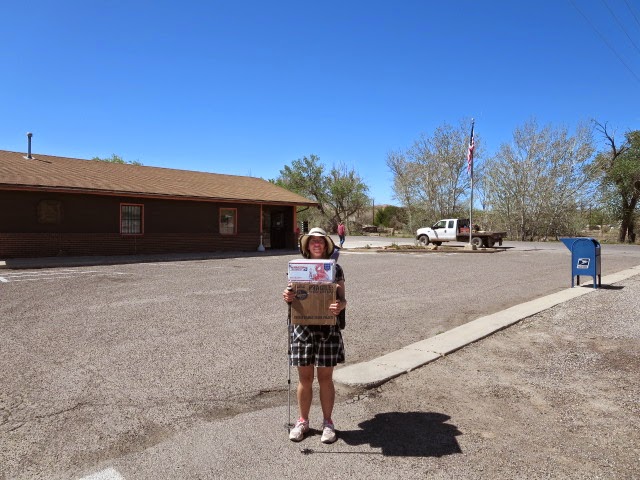
Hanksville is a small place which you would imagine that tumbleweed is invented for, but it has motels, diners, a post office and a small grocery- all we needed!
Hanksville post office – we collect our supplies!

Paddling down the Colorado

16th April Moab to south of Potash 17 miles
Our plan from here was to hire two sea kayaks in Moab and paddle down the Colorado River from just outside the town where we walked past yesterday.  Loaded with 9 days of food we intended to paddle for 70 miles or so, have the kayaks picked up for us and returned to Moab whilst we shoulder our backpacks and hike on for another 65 miles through Canyonlands National Park before reaching a road.
IMG_0609IMG_0611
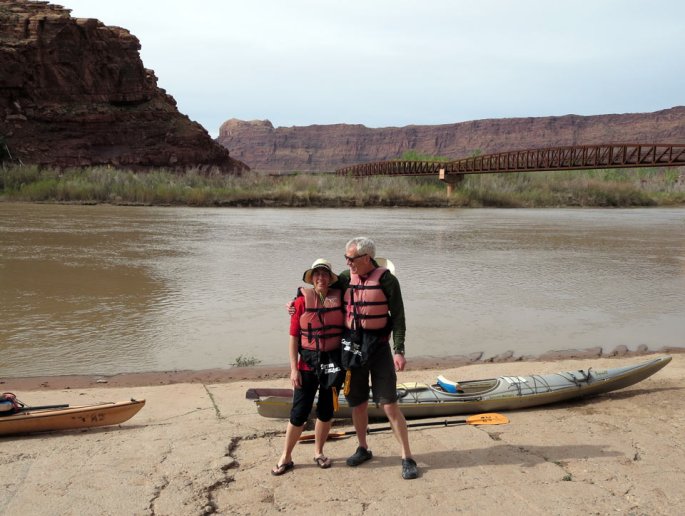
 The boats were a tad silty looking (for reasons which were to become obvious to us in due course). We had never paddled a river before and were pleasantly surprised when we put in that even without paddling we were moving at walking speed. Keeping up a relaxed paddling pace we made 5 miles per hour!
We are off!
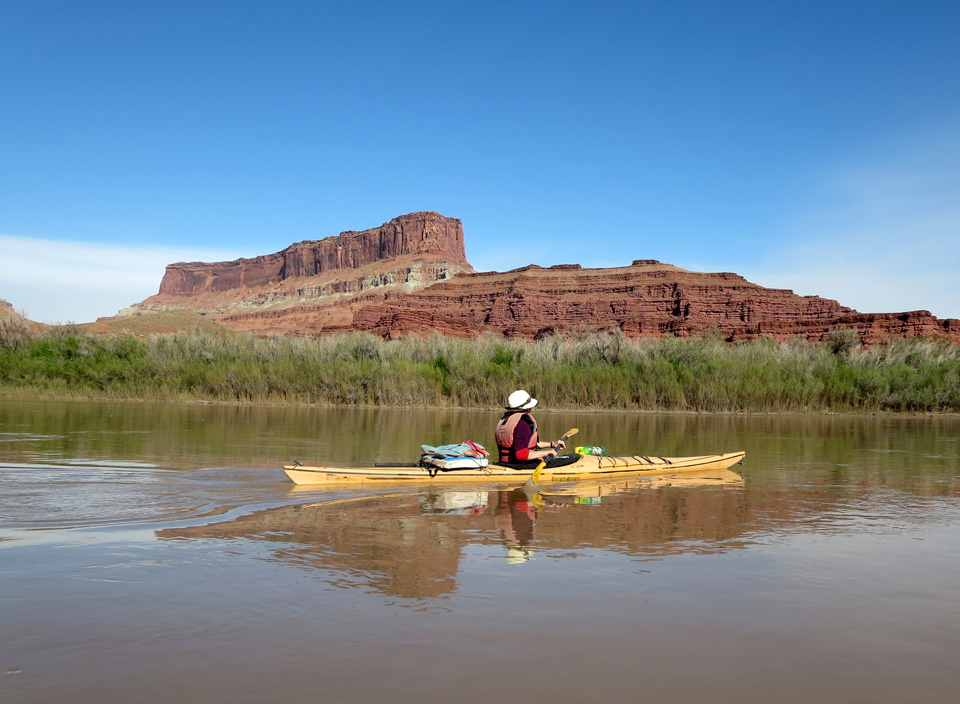
This was the life!
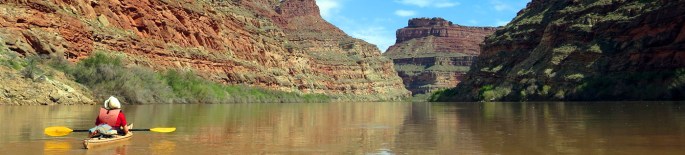
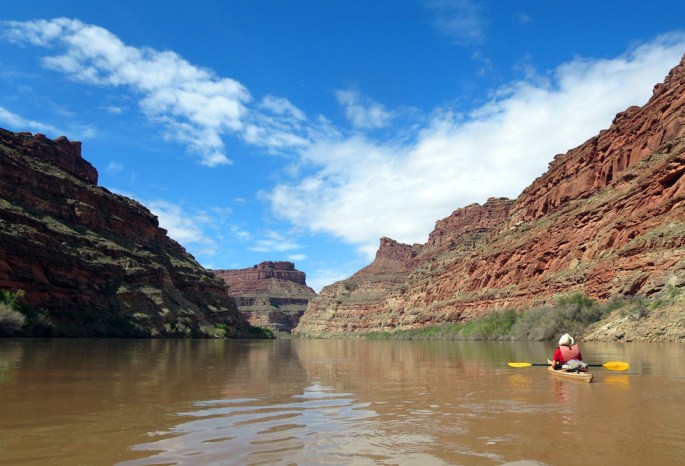
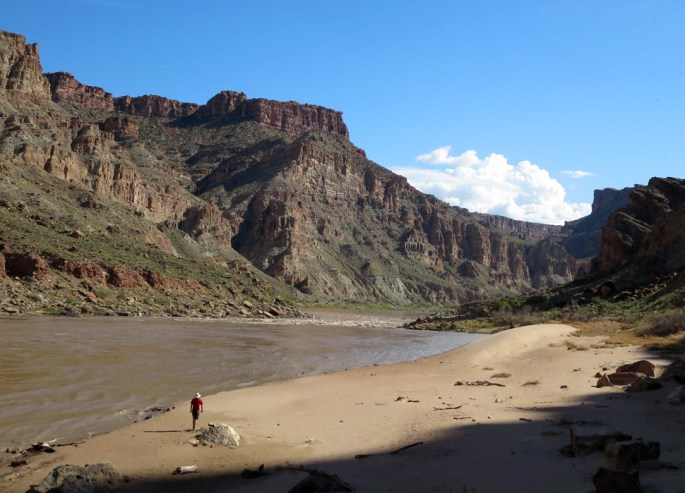
The water was a thick cappuccino, silty brown color and the paddles disappeared from sight once submerged under the water. Although on our first day a minor road followed the river it was still a pleasure staring up at the big red, black walls above the thick green vegetation lining the river.

Our schedule gave us plenty of time so we stopped at midday to hike up to Corona Arch. The shore was made up of deep silty mud and we already become caked in it! We passed a canoeist on this first day and a motorized tour boat came up river but that was all the river traffic we saw. Later on we saw Potash Mine but soon floatedby in our own world.

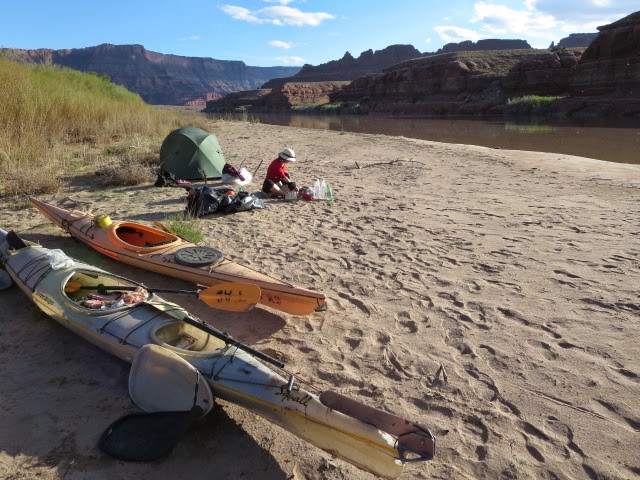
We found ourselves an idyllic sand flat to hitch up the kayaks and set up camp for the evening. What a great day!

First river camp by the Colorado

17th April Potash to Lockhart Canyon 17 miles
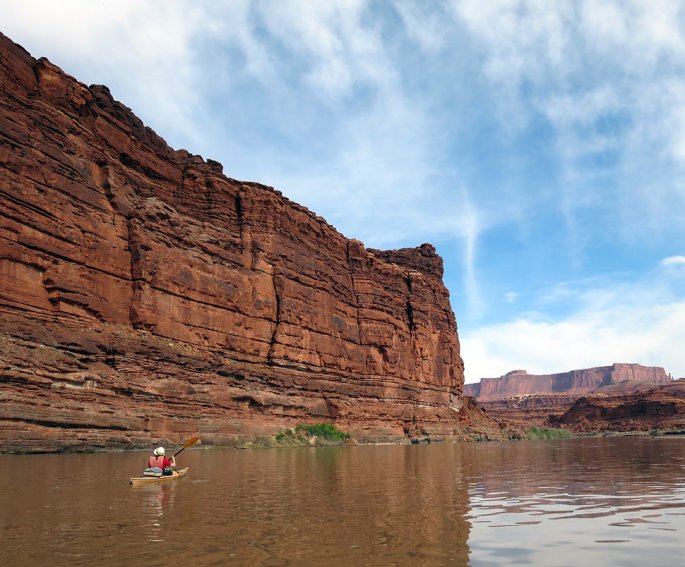
And so we followed the meandering river for another day underneath red and pink and orange and maroon walls and towers, camping on sandbars and ledges. The unexpected things were 1) the deep incredibly sticky mud and 2) the number of beavers and Canada geese we encountered!

Today we crossed into Canyonlands National Park and the water levels dropped along with the water flow rate- probably settling after the rain a few days ago.
We stopped at Lockhart Canyon paddling through the rushes up a small inlet before getting out and hiking up canyon for a while. It was super hot though, the air was definitely cooler kayaking on the river. Back at the kayaks we set up camp on a little sand bank island in the river. The river flowed silently by on both sides and it was another great spot. Luxury meal of tortilla, beans, salsa mashed potato and Chardonnay wine. Bats, ravens and Canadian geese around the campsite- we could get used to kayaking on the river!

IMG_0671pano
2nd campsite at sandbank island

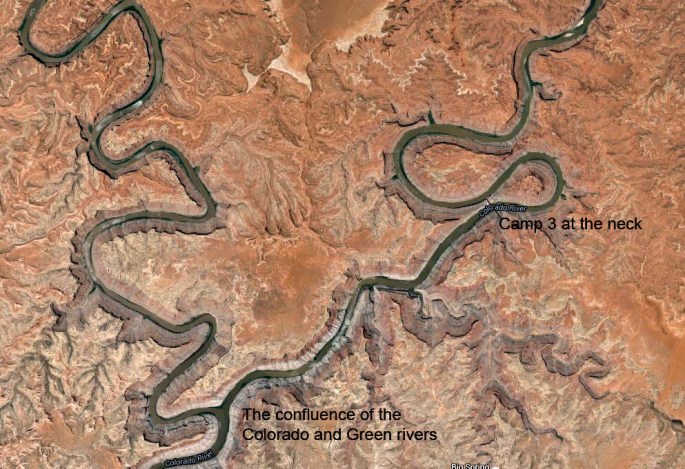
18th April to the Loop ‘neck’ camp 19.5 miles
A slow start today as we had plenty of time. Martina paddled into the inlet again to collect some fresh drinking water to save us cleaning the silty Colorado River water. It was cool first thing but the cloud overhead soon dispersed to give hot conditions again. The dreamlike meandering down the river continued until we stop at midday at Rustler Canyon on a steep mudslope. Behind the thick tamarisk though there was a cleared area for camping and we met a family there paddling with their children- what an adventure!

We hike up Rustler Canyon to a scenic waterfall and pools and manage a dip in lovely cold water. Further upstream the Hayduke trail crosses Rustler Canyon.

Rustler Canyon
IMG_0680
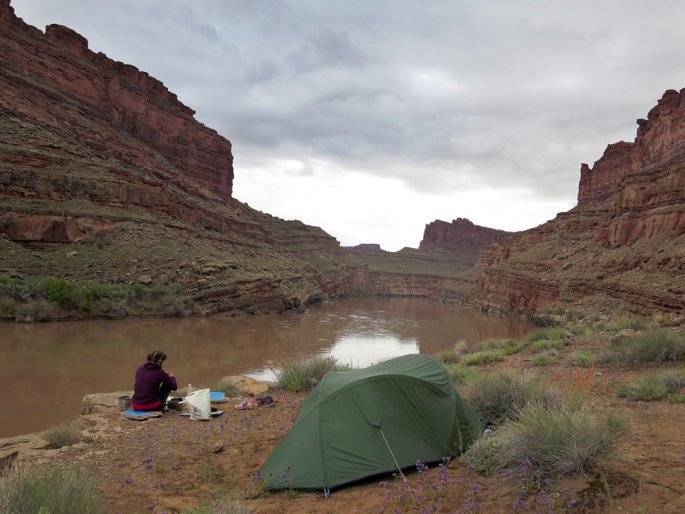
 Back in the kayaks a wind got up and it clouded over, but still remained hot. The wind made it harder work for us- funneling upstream against us. Further on the character of the canyon changed as the rock walls closed in on us and the river took some dramatic ‘gooseneck’ meanders. The options for beaching the kayaks disappeared so we kept paddling until we saw a high muddy ledge and go for that. It turned out to be an excellent pre-used site with a fantastic perch for the tent 100 feet above the river. Lots of desert flowers around and a boulder with a petroglyph panel.

IMG_0710


confluence
IMG_0723

19th April to Spanish Bottom 11 miles plus hiking 
There was rain overnight but otherwise we had a very comfortable camp in a dramatic spot with no-one else around. In the morning we hiked up to the narrow neck between the loop of the Colorado river in a unique spot.
After a bit of ferrying the gear down to the mud take off point, we floated off again in a very still, gently flowing river.

Brian spotted a beaver at close quarters swimming near a sandbank. We guessed that the river is too powerful for dams so we think they stay in burrows in the river banks instead.

Later the clouds broke up and the sun poked out so we ‘rafted up’ to remove our fleeces before paddling on to ‘the slide’. This is an area of small rapids which we were a bit unsure about! Its a narrowing of the river caused by a rock slide and we knew we were nearing it as a dull roar rather intimidatingly got louder and louder. It was short though and we were soon through but the eddies afterwards swept us round off to the side before we both managed to take control again and paddle on.

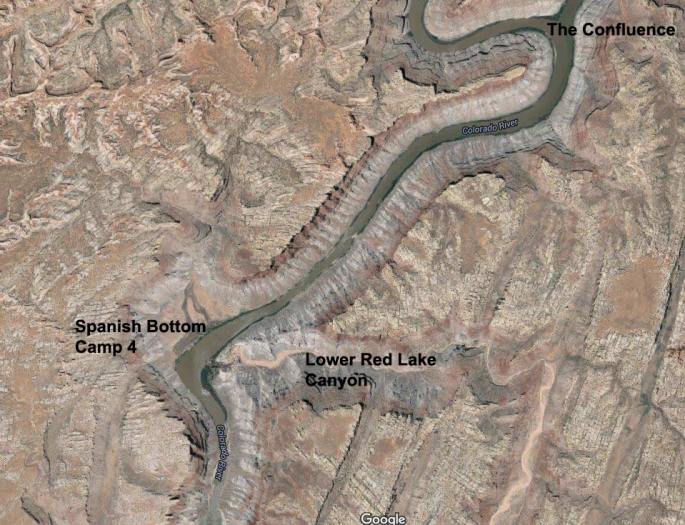
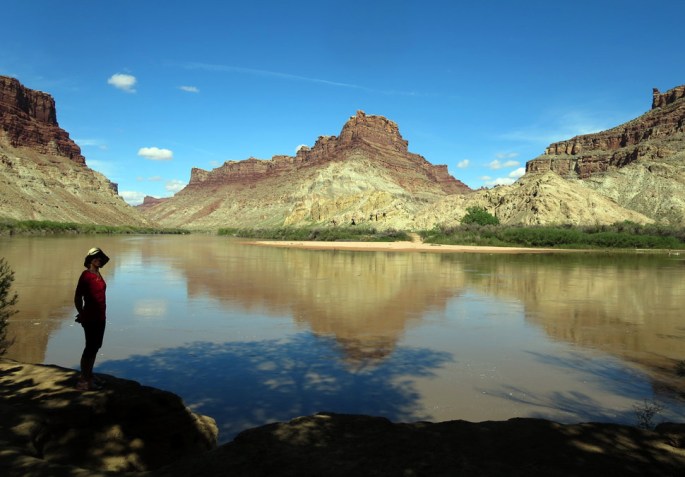
The confluence of the Green and Colorado rivers is an iconic landmark which we passed by quickly before settling onto a sand bank for some lunch.

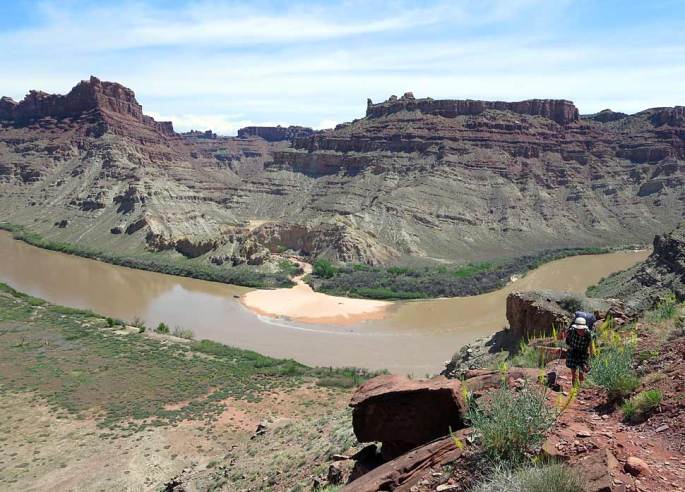
We had three miles now of faster flowing water down to ‘Spanish Bottom’, an open area of the canyon where we had pre-arranged for the kayaks to be picked up by a tourist boat the next day. We both agreed we will be sad to leave the river- it has been sublime! Just beyond ‘Spanish Bottom’ the canyon narrows and the river plummets into a series of rapids- ‘Cataract Canyon’, a no-go area for us!

IMG_0731
Spanish Bottom


IMG_0733
Approaching Cataract canyon rapids

After pitching the tent we wandered downstream to have a close look at the rapids of Cataract Canyon. It’s a lovely short hike in its own right, and we felt lucky to have this spot to ourselves.

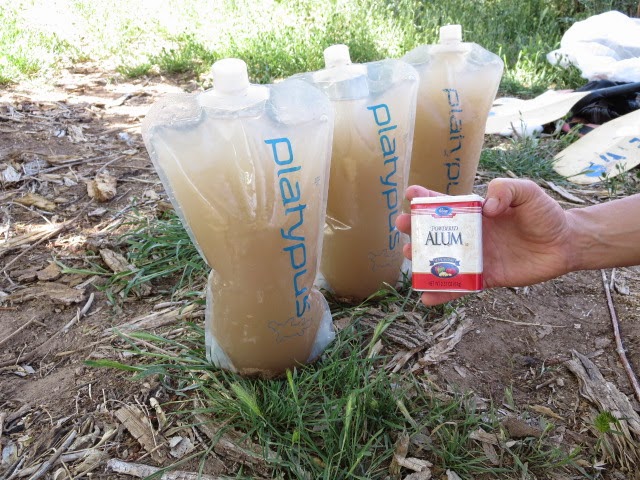
Tomorrow the boat hire company will picked up the kayaks and we will shoulder our packs and continued on foot, taking as our drinking water some of the Colorado (and its silt).

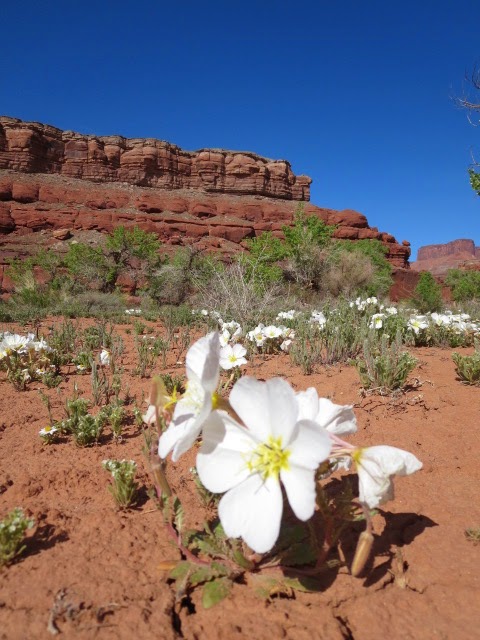
Desert bloom
We used Alum to sort the sediment out of the silty Colorado River water for drinking
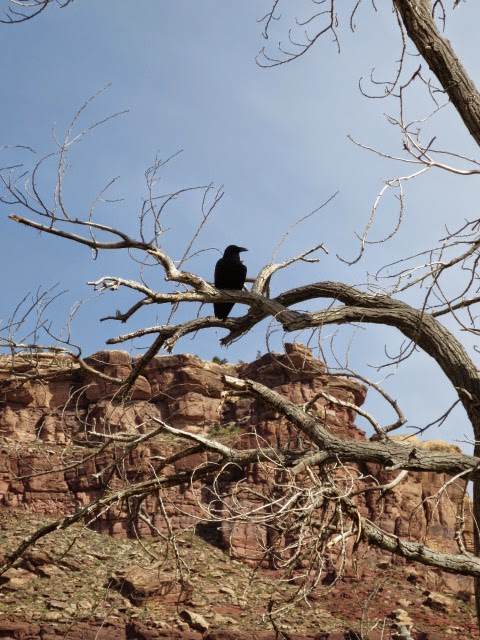
Raven looks on

First 3 days in arches national park

We are setting out on our version of the Hayduke Trail, a wonderful hiking and scrambling route that winds its way through the canyons and plateau of southern Utah and northern Arizona.  We have lots of alternates planned from the published version but hope to follow the general spirit of the trail and seek out some wild, beautiful territory!

The first part of our route is through Arches National Park and, as we are intending to rent kayaks for the next section and have to stick to a schedule, we find ourselves with a leisurely three days to do this part of the route.

Starting out!

13th April Klondyke Bluffs to Devil’s Garden 17 miles
It rained hard on Sunday April 13th as we tried to hitch from Moab to our planned start point 18 miles to the north. After getting soaked at the side of the road we retreated to the ‘Sweet Cravings’ cafe to regroup! Luckily for us fellow Scots Mathew and John from Largs (thanks guys, and enjoy the rest of your holiday) gave us a lift to the Klondike Bluffs junction near Moab airport and we started our hike in driving rain across the sage brush plains.

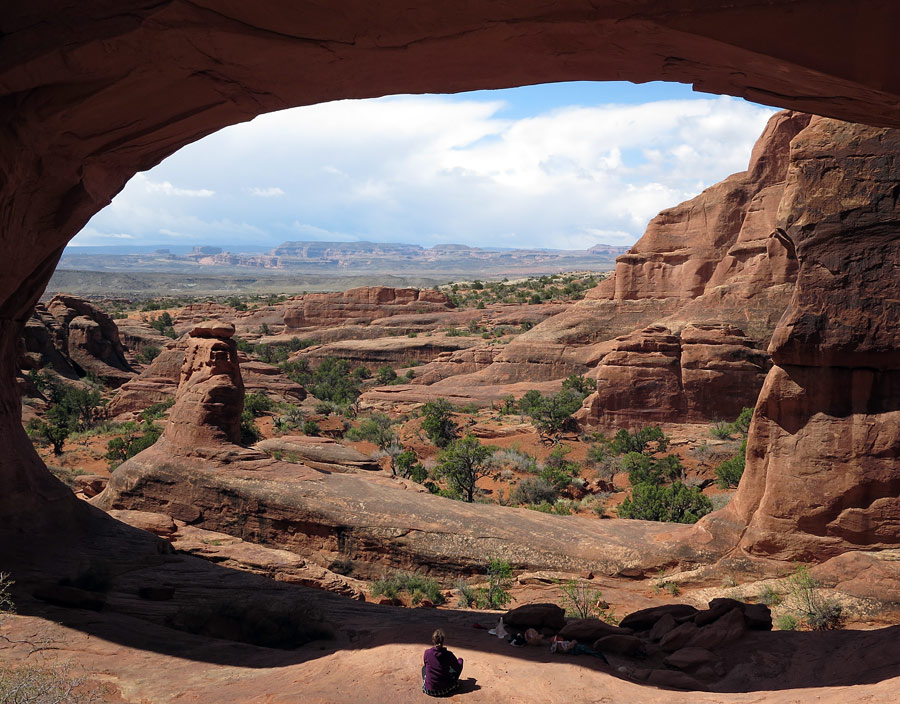
We headed north east on dirt road in the rain for about 3.5 miles to a trailhead possibly used by mountain bikers. From here we headed out east cross country over washes and rising sandstone slabs. This was great and what we had traveled from Scotland for! We aimed for the ‘Marching Men’ tower formation on the horizon and the sky gradually cleared as we reached Tower Arch in Arches National Park. Sitting under the arch we looked out to a magnificent canyon view framed by the arch itself.
Starting out from Klondyke Bluffs

Tower Arch


From Tower Arch we followed a cairned trail winding through sandstone towers, then a jeep trail into the wide open Salt Wash. Here we crossed the Hayduke trail to head out again on an alternate north east. We had our first scramble up a cliff band towards Dark Angel tower and vast open views all around. Now on proper trail we took the Primitive Loop through the Devil’s Garden area of Arches NP through its labyrinth of vertical fins and gullys. A superb start to our journey!

We camped at Devils Garden and got hit by freezing cold wind and rain….long may it continue as we know that heat will be our enemy later on this hike rather than cold. Our sleep was broken during the night caused by us needing to get out to move and repitch the tent after a large puddle formed underneath.

14th April Devil’s Garden to Courthouse Wash 16.5 miles
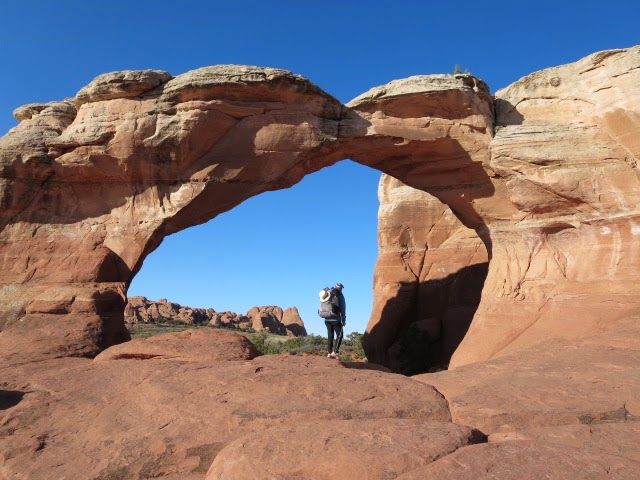
Next morning we awoke to clear blue sky and frozen puddles around the tent. Firstly we did a wee extra hike around Broken and Sandy Arches which were fantastic.

Broken Arch, Arches NP

Crossing the Arches NP road, we then headed cross country south west to aim for the Hayduke trail again. Both of us wore all our clothing to keep out a biting cold wind on this exposed stretch but views opened out to the La Sal mountains covered with fresh snow.

Our mid morning break was taken sheltering from the wind beside a rock fin before we climbed up to a fence line forming the park’s western boundary. Back on the Hayduke, we crossed country south, weaving on sand between bushes and cacti before arriving at a semi circular slab dropping below us. A scramble down this led to Willow Spring wash and it was heartening to see some water in potholes in the slabs.
The wash was left further down to allow us onto the slabby plateau following a route described by Nicolas C. Barth called Arches Slickrock. This provided a great hike with expansive views to the La Sal mountains to the south east, still with a spring snow cover. A sea of grainy, ripply slick rock interspersed with sandy joints, juniper, cactus undulates but it was easy going.

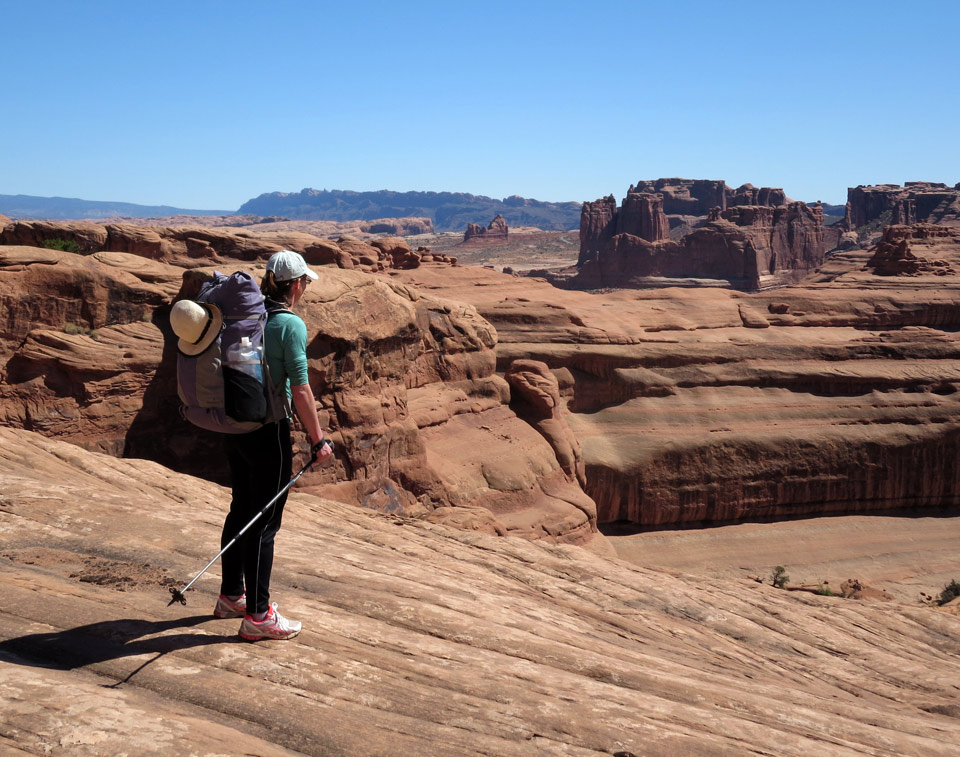
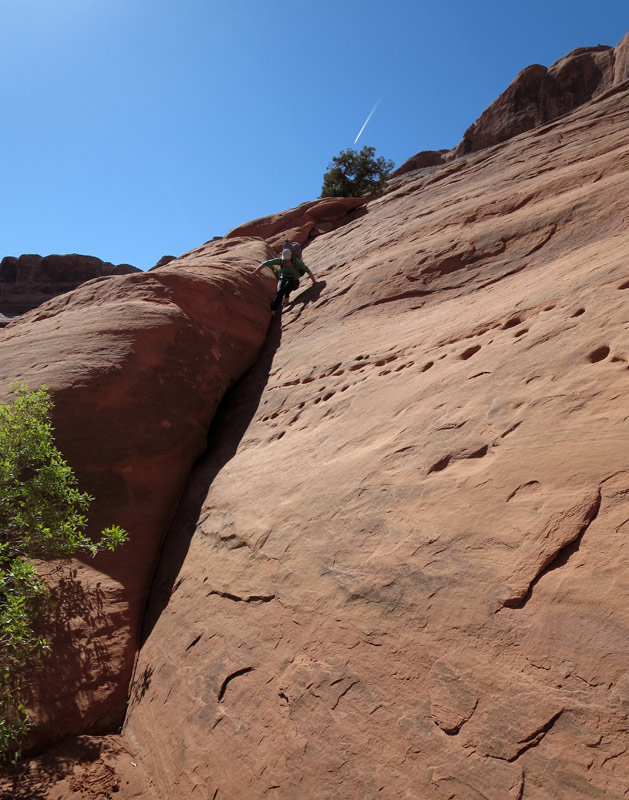
Arriving above Courthouse Towers we looked down into a slightly intimidating great amphitheater of rock. The first step down was easy followed by a traverse rightwards along a slabby ledge. We then scrabbled down slightly slippy, grainy slabs using our 3mm cord to lower the backpacks a short way from a juniper tree. Then down a chimney crack back into a sandy wash- phew that was interesting!

Looking down to Courthouse Towers
Descend down final chimney

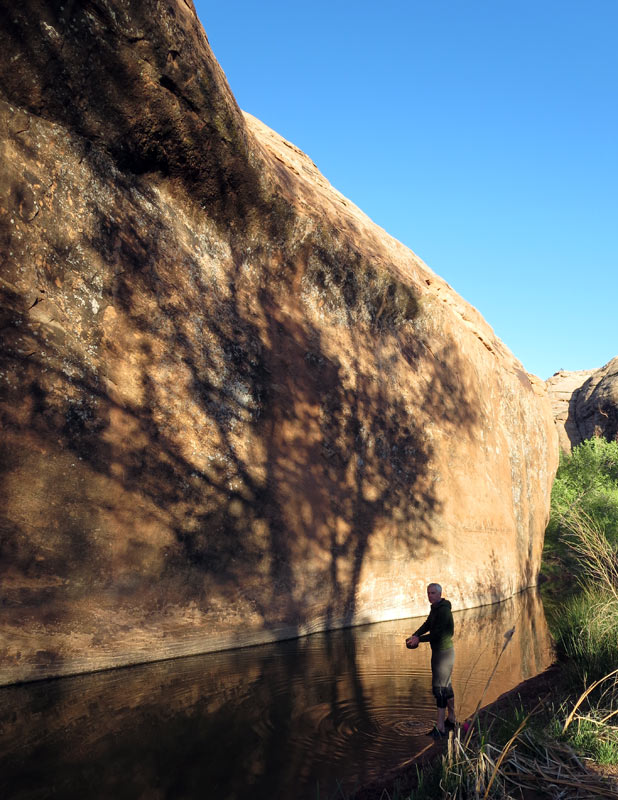
We found the main Courthouse wash valley and followed that for a while through vegetation crossing the park road again. Pools of water here and signs of beaver activity in the wash. There was a faint path and we stayed dry as there are logs handily spanning the pools. Our tent was pitched on a small patch of grass in the canyon next to the river under cottonwood trees. A superb day!

Courthouse Wash

15th April Courthouse Wash to Moab 7 miles
A crisp frosty morning but the sun was up quickly and we were able to lay the tent out to dry before moving off. The canyon is not narrow, generally about 50-100m wide, with red walls and shimmering green cottonwoods with mild breezes and the trickle of water- it is beautiful. We see what look like raccoon tracks in the mud and enjoy our easy walk downstream before breaking out onto the road into Moab.

Our first crossing of the mighty Colorado river is by footbridge and then we hiked on by road into the town of Moab. We had some logistics to sort out for our next long stretch and enjoy the luxury of a motel for the night – the Adventure Inn. Moab is a great vibrant town…but it was a bit weird as it is ‘Jeep week’ and the town is packed full of the strangest looking ‘souped up’ Jeeps!

Tomorrow we pick up kayaks for 70 miles paddling down the Colorado followed by 65 miles hiking. Next stop Hanksville, Utah in 9 days ….

First impressions

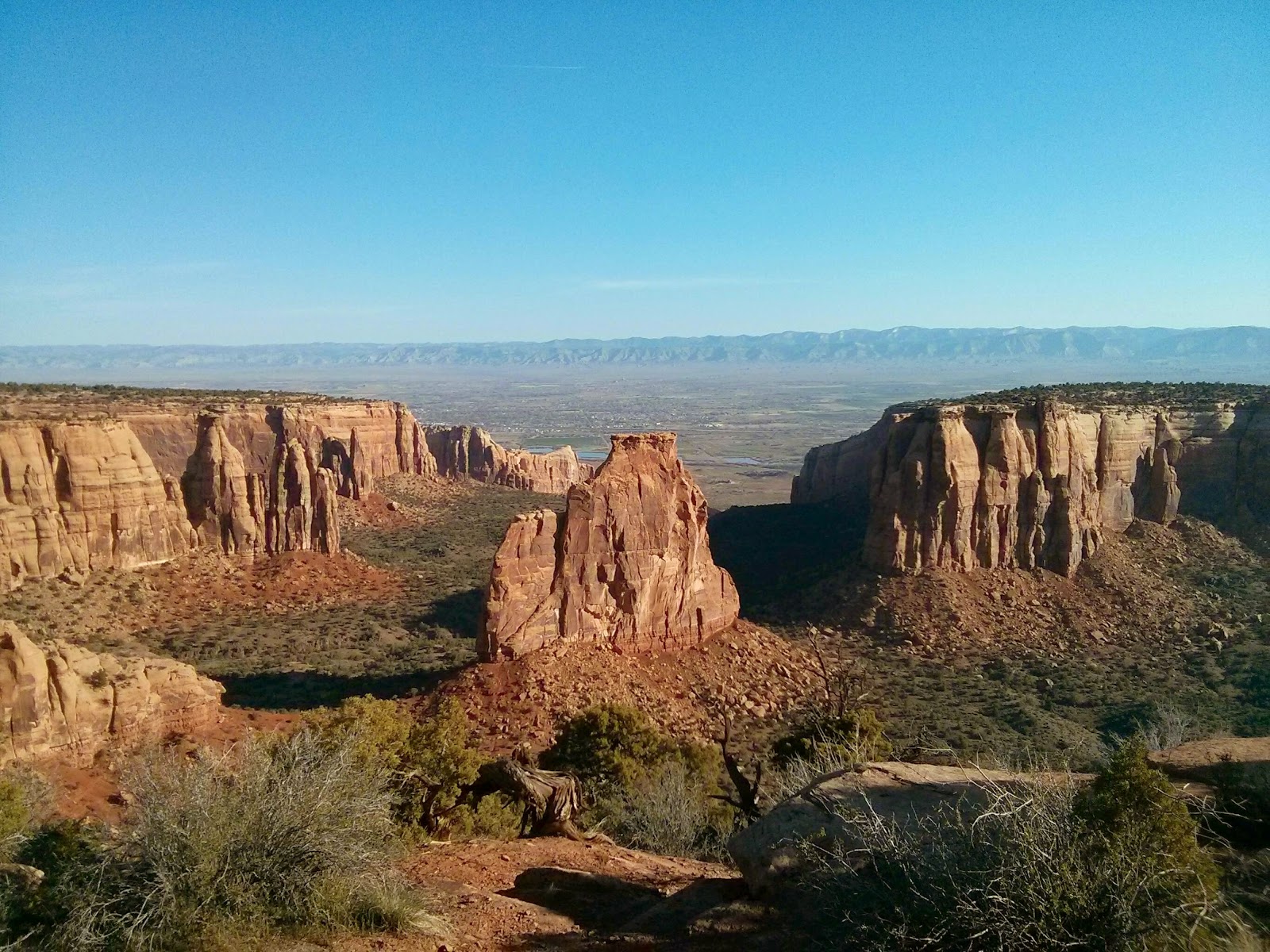
Our first camp before starting the Hayduke trail itself was car camping in Colorado National Monument (like a national park). We had great views down from a canyon rim onto towers including independence monument shown here.

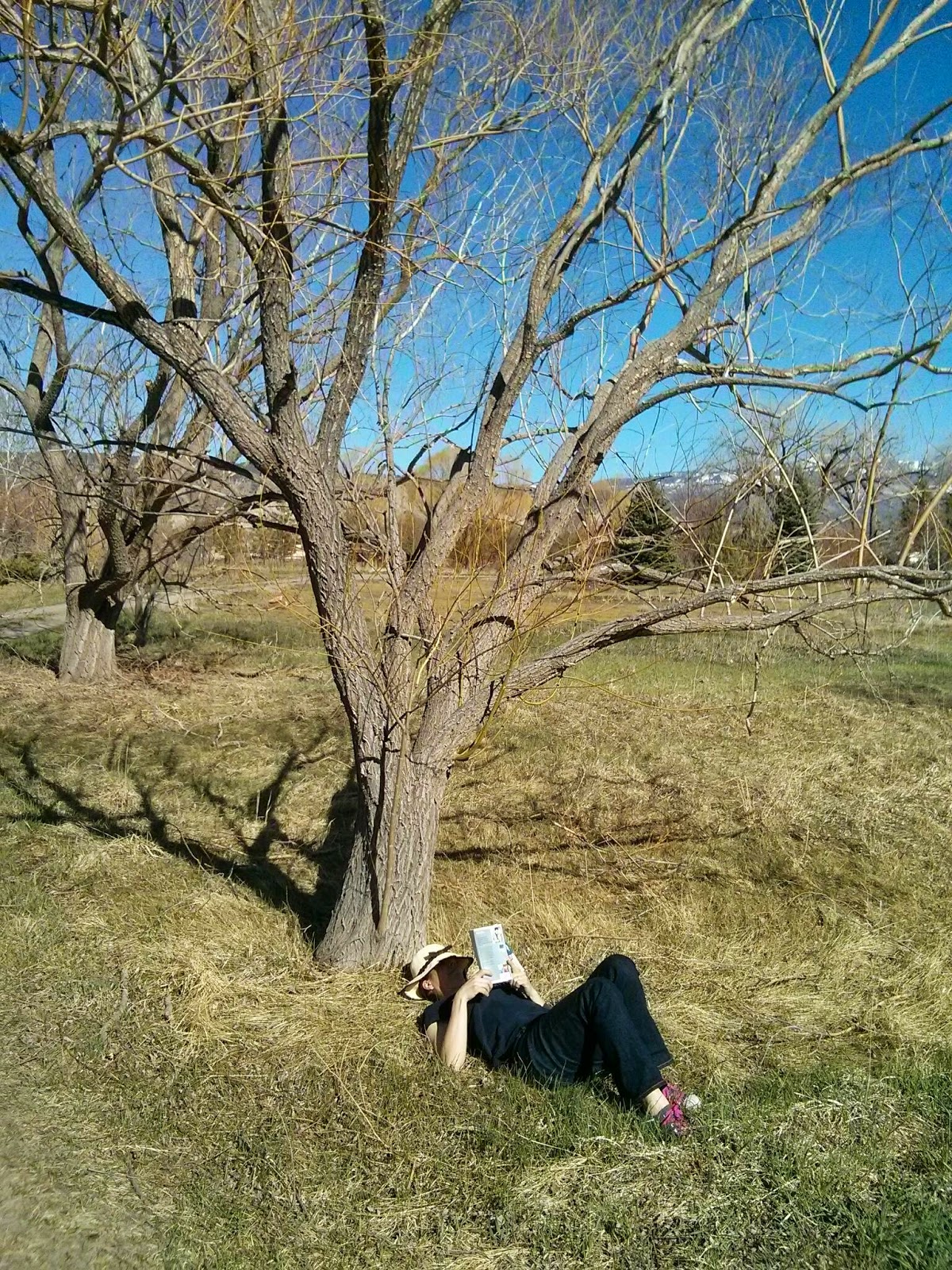
Organised some food parcels to send forward to ourselves to collect at post offices… Which was hard work but fun! Martina rests in the sun….

Getting sorted to get going

We are in Montrose, Colorado, with our friend Mary-Joy and have just shopped for food for 28 days in the desert. The plan is to head into Utah tomorrow and to start with a short 2 day section through Arches National Park before renting kayaks for 4 days and letting the Colorado river do some of the work for us (from Moab downstream for 70 miles). After that it is 5 days hiking through desert (an area called “the maze” – ominous!) before we get to the next resupply town, Hanksville. We’ve been down the canyon of the Gunnison River yesterday with Mary-Joy and saw lots of interesting things including a burrowing owl, lots of prairie dogs and vultures circling above – apparent they can dispatch a carcass (human) in under an hour! Happy to be back in red desert country and smelling the sweet juniper and pine. Photos to follow!

Burrowing Owl